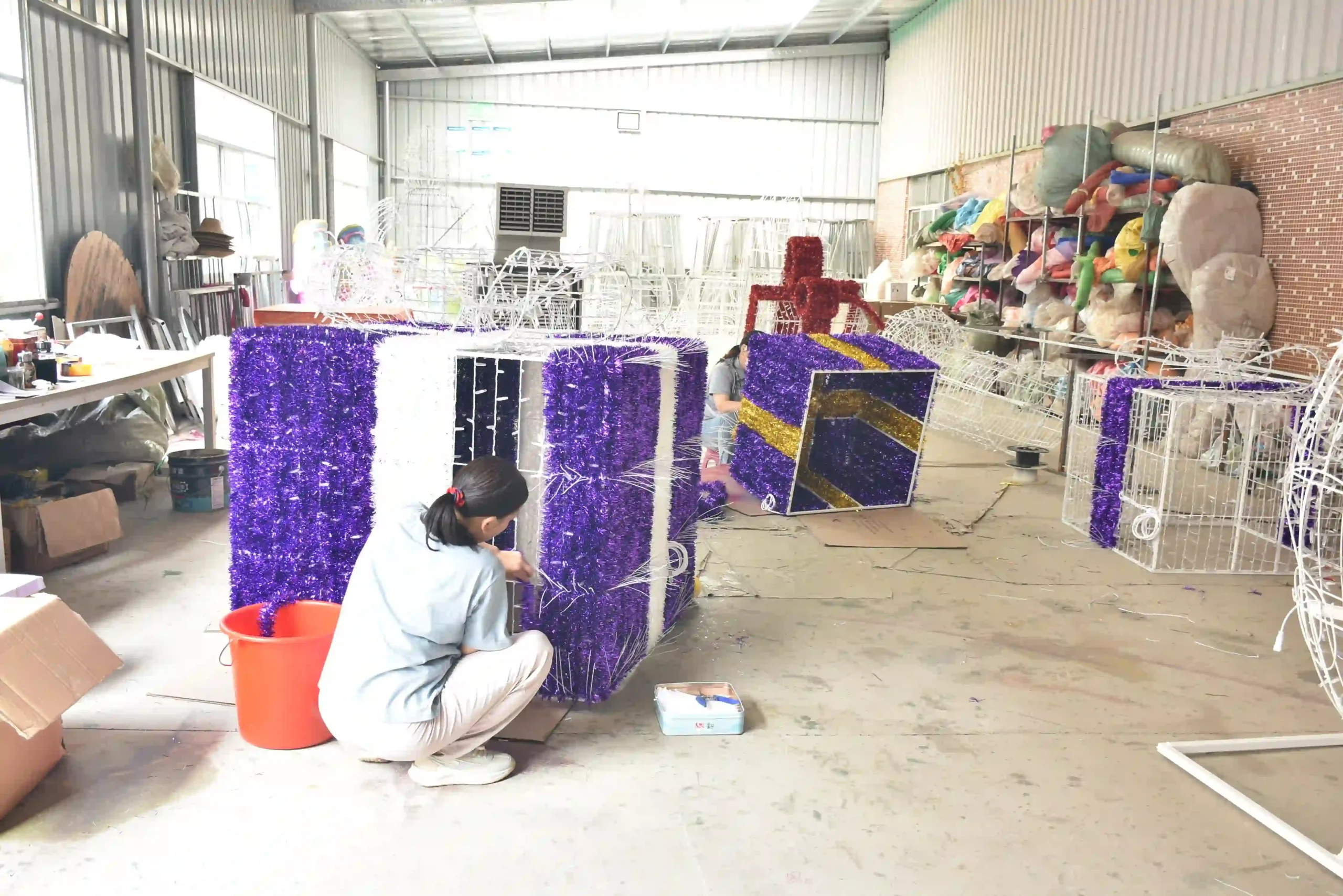
How Large Christmas Decorations Are Tested Before Shipment
After production is completed, large Christmas trees, illuminated arches, 3D sculptures, and other large Christmas decorations must be inspected before leaving the factory.
The inspection covers the metal frame, modular connections, LED lighting, electrical components, surface decoration, accessories, and export packaging. Any required adjustments are completed at the factory before the product is dismantled and prepared for shipment.
Metal Frame and Connection Inspection
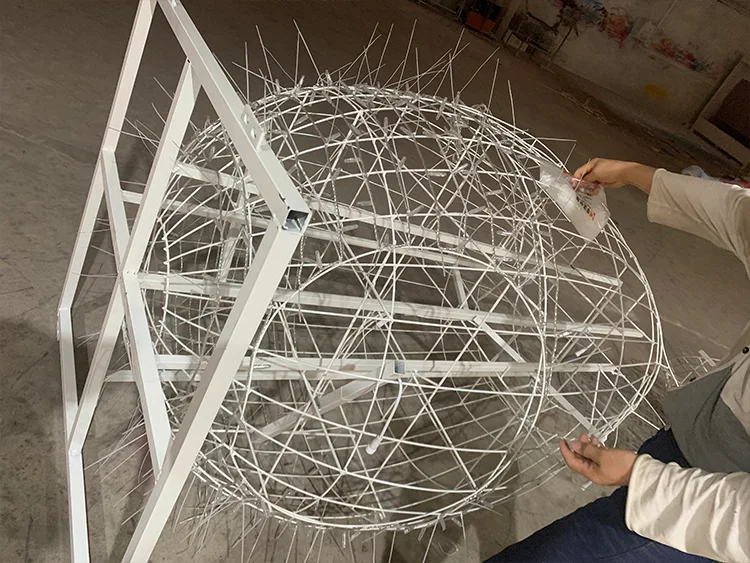
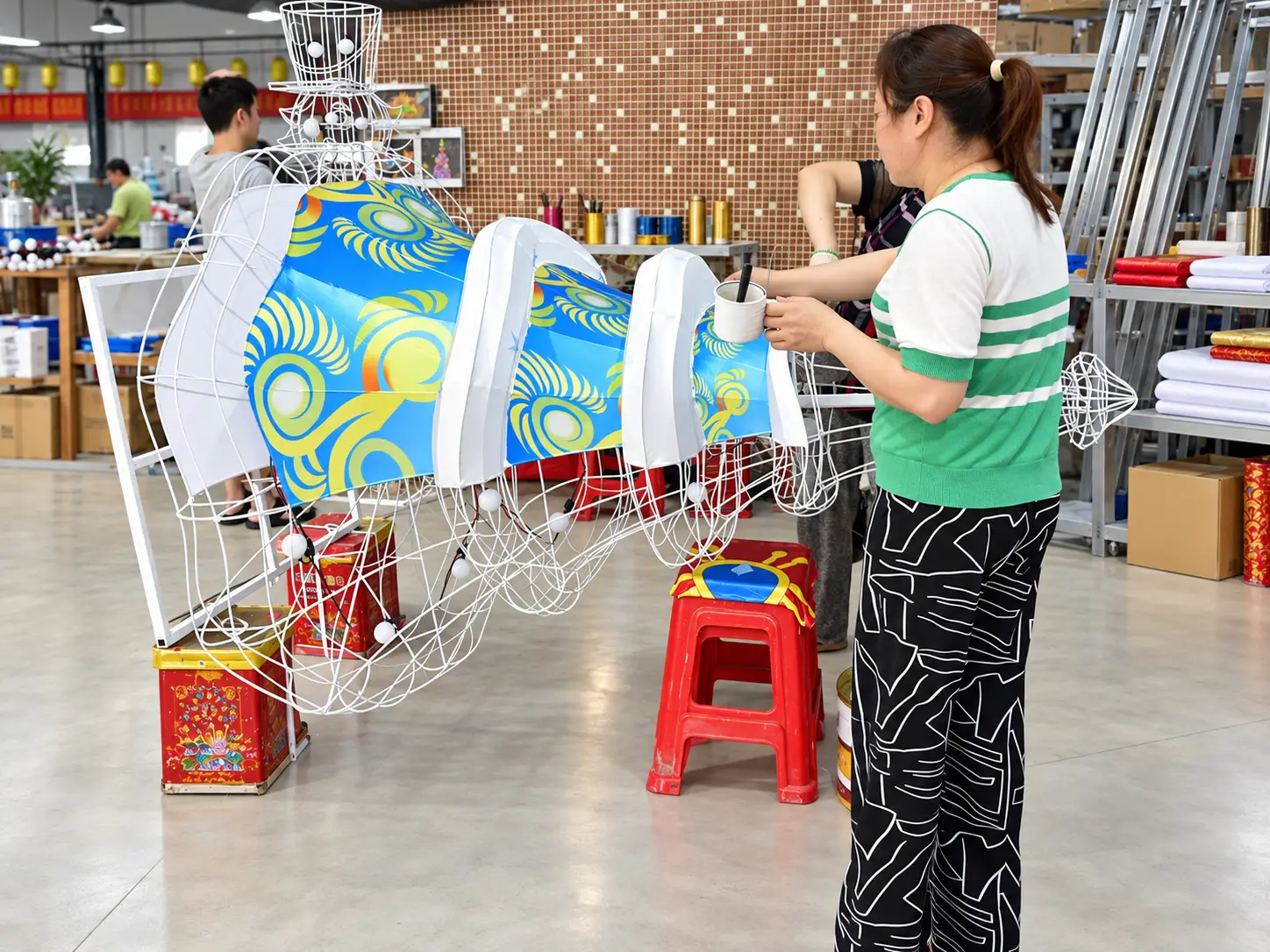
The inspection begins with the welded metal frame. Workers compare the finished structure with the approved production design and check the base, supporting members, welded joints, mounting plates, and removable sections.
For giant artificial Christmas trees , walk-through arches, and irregular 3D light sculptures, this step is especially important. These products are usually divided into several sections before export, so every connection point must fit correctly before packing.
The factory checks:
- Welded joints and reinforced areas
- Frame alignment and overall shape
- Base stability and support points
- Bolt holes, brackets, and connection plates
- Removable sections and installation joints
- Left-right balance and visual proportions
For human and animal sculptures, workers also inspect the outlines of the head, body, arms, and decorative features. Small structural errors can become more visible after the LED lights and surface materials are installed.
Factory Pre-Assembly
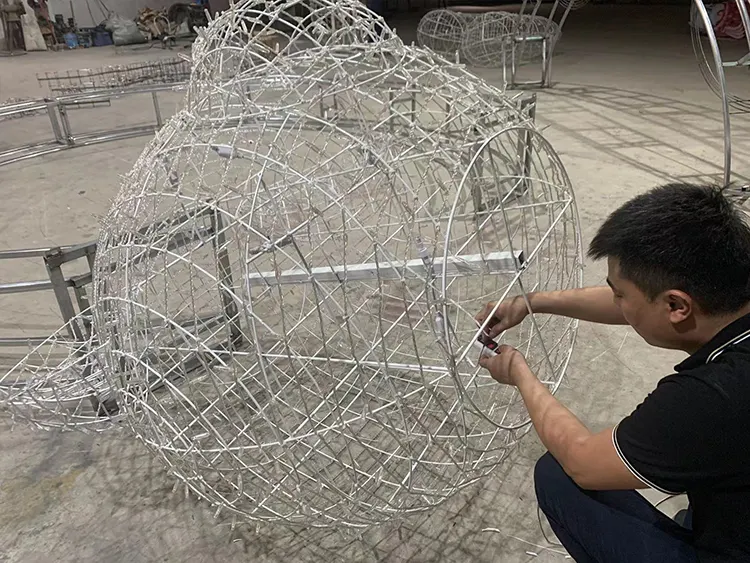
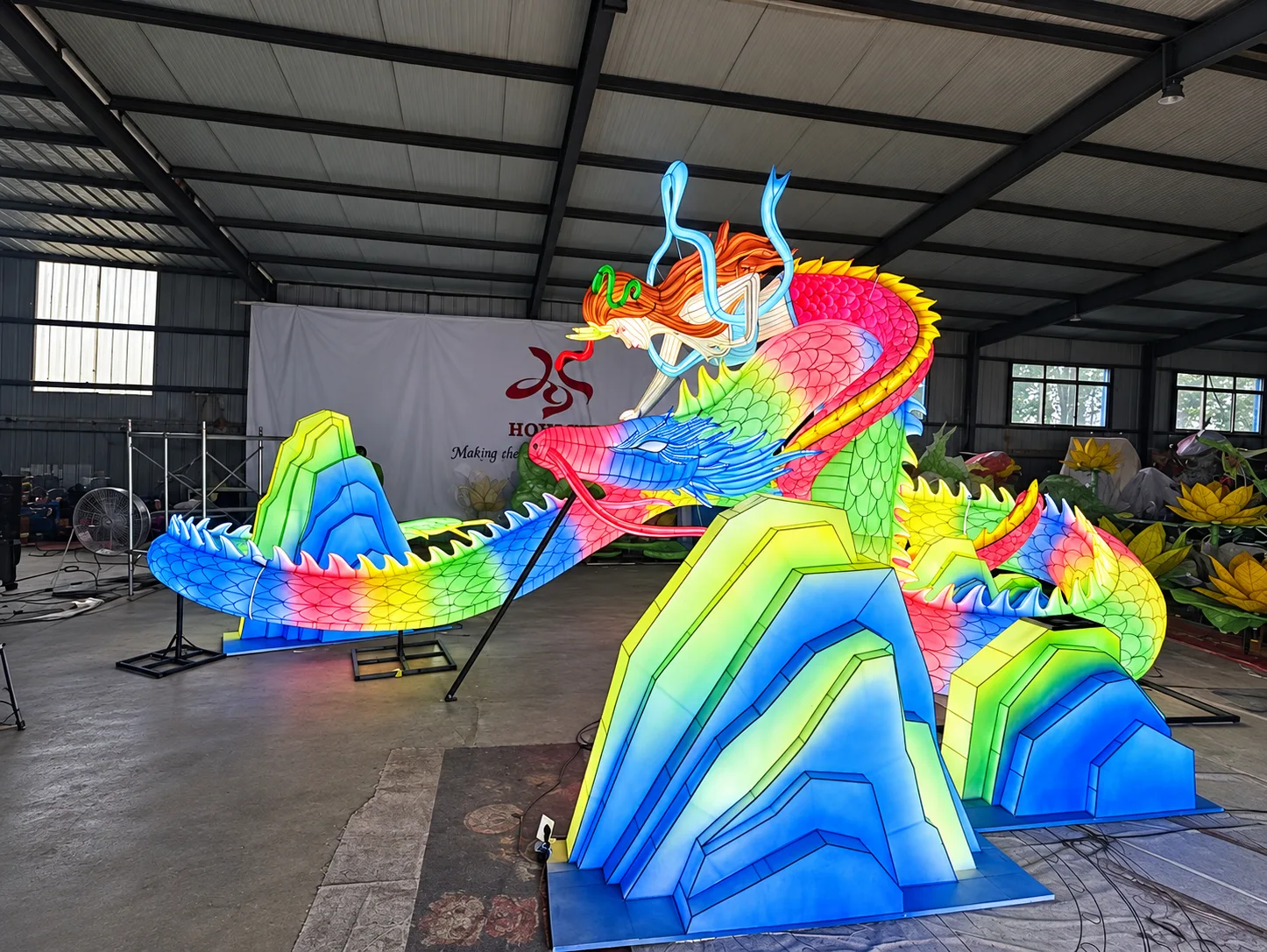
Large modular decorations can be fully assembled in the workshop before shipment. The sections are connected in the same sequence that will be used at the project site.
For giant Christmas trees, the factory checks the base, sectional frame, upper structure, branch coverage, ornaments, and tree-top star. For walk-through Christmas arches, the inspection focuses on side supports, upper connections, internal clearance, and ground fixing points.
Factory pre-assembly allows workers to correct connection positions, adjust uneven sections, and identify any missing components before export. After the structure passes inspection, the sections are dismantled again and marked for installation.
LED Lighting and Electrical Testing
After the LED lights are installed, the entire decoration is powered on. Workers inspect every lighting area to confirm that the final colors and brightness match the approved design.
The test covers LED string lights, rope lights, power cables, transformers, controllers, and waterproof connectors. Cable routing is also checked to ensure that the wiring is securely fixed and remains accessible during installation and maintenance.
For products with dynamic lighting functions, the factory tests:
- RGB color changes
- Chasing and flashing programs
- Synchronization between separate modules
- Controller response
- Power supply operation
- Brightness consistency
Large decorations may remain powered for an extended test period. Workers observe the lighting output and electrical components during continuous operation and replace any unstable light section before packing.
Outdoor Connector and Cable Inspection
Outdoor decorations require careful inspection around the electrical connection points. Waterproof connectors must be fully locked, cables must be firmly fixed, and power components must be positioned away from areas where water may collect.
The inspection includes:
- Waterproof plugs and cable connectors
- Power supply and controller enclosures
- Cable exits and sealed openings
- Wire length reserved for site installation
- Strain relief around cable connections
- Voltage and module identification labels
These details are checked before the decoration is dismantled. Once the modules are separated and packed, hidden wiring positions become more difficult to inspect.
Surface and Decorative Finish
The decoration is inspected in both unlit and illuminated conditions.
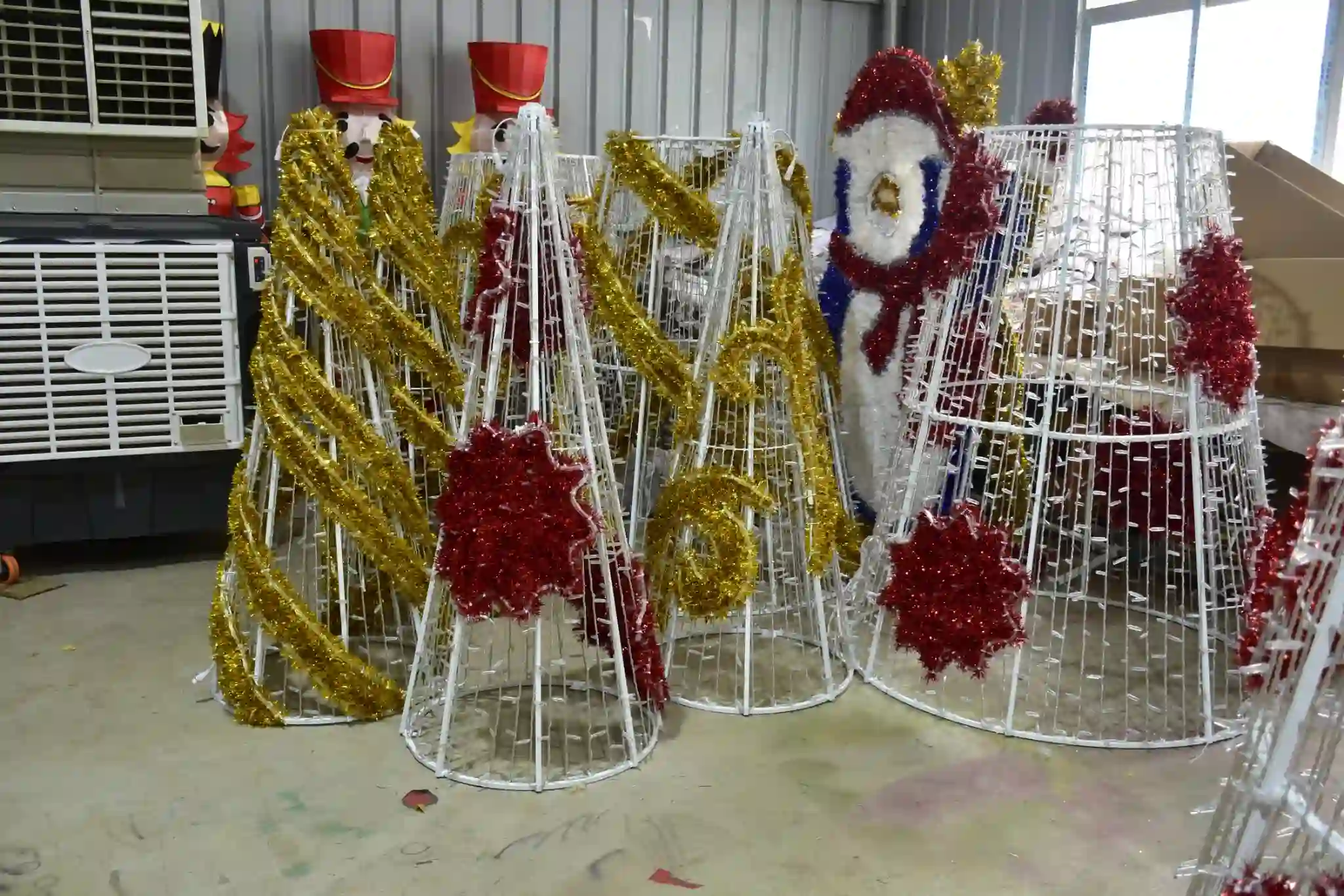
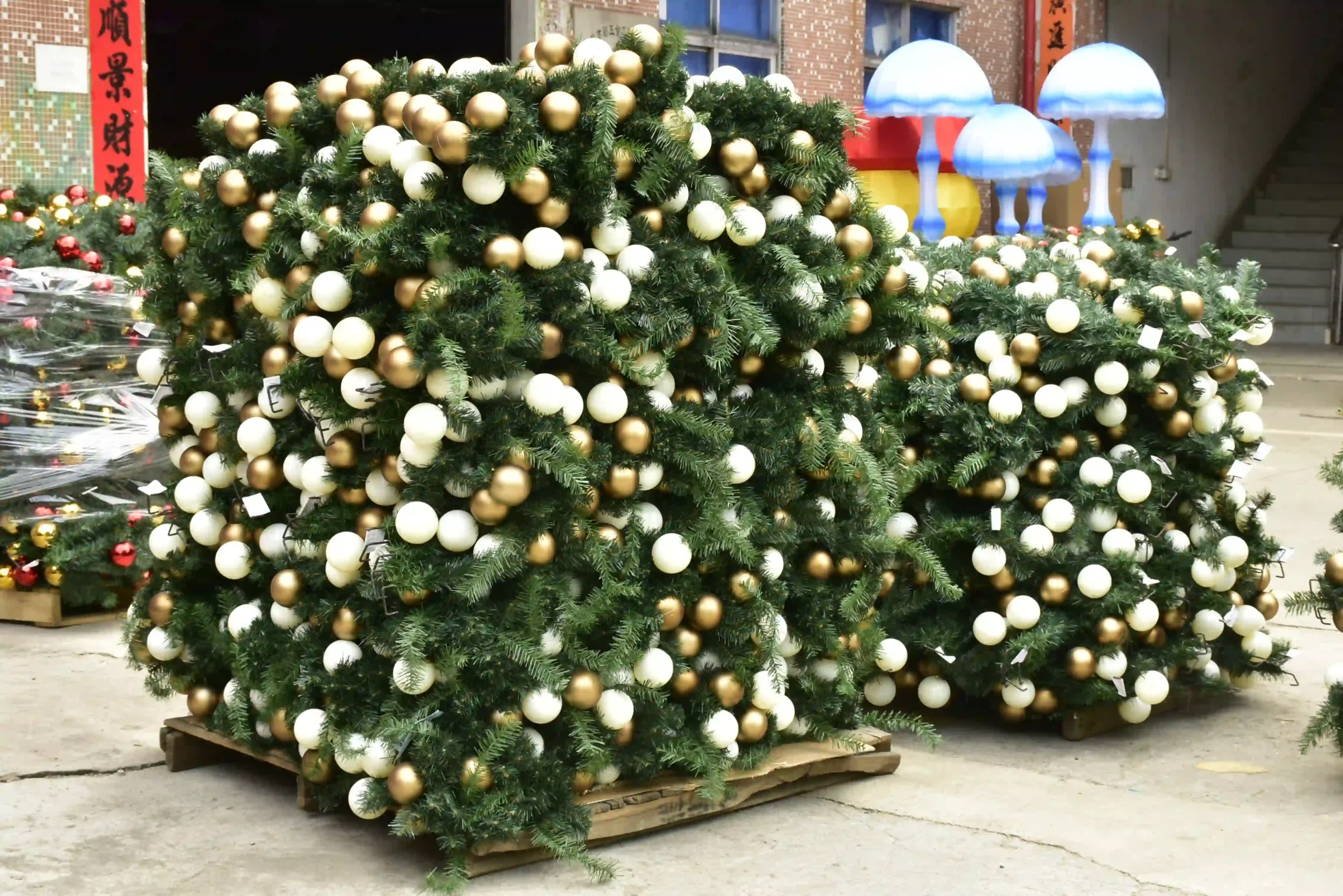
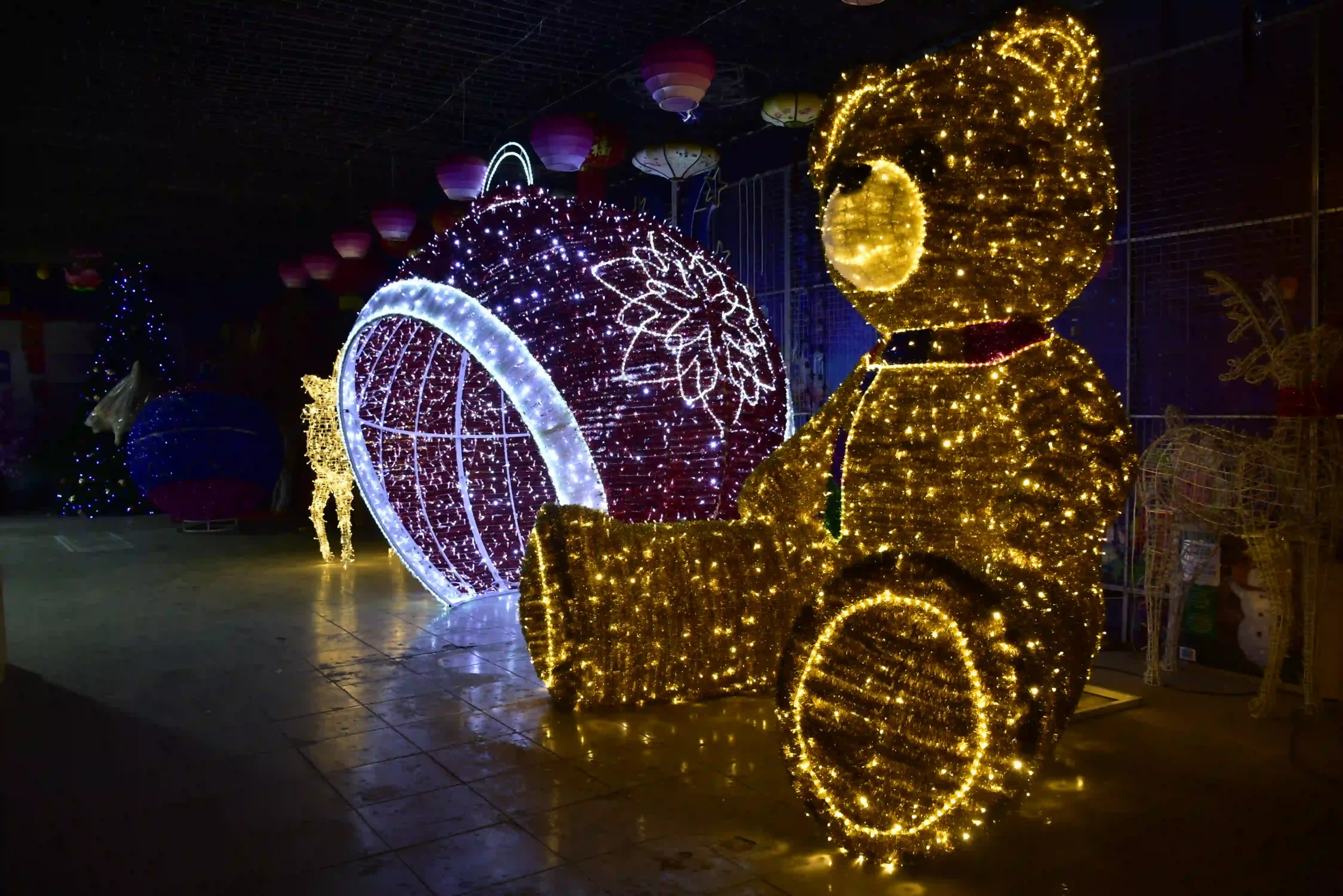
For large Christmas trees, workers check branch density, ornament distribution, visible gaps and color balance. For
3D Christmas light sculptures, the inspection covers tinsel, mesh, PVC material, fabric panels, painted details and the outline created by the lighting.
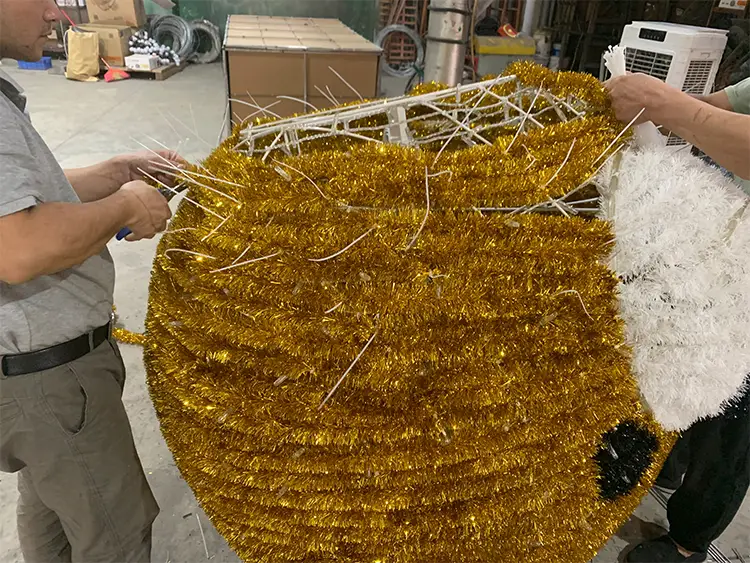
The surface material must remain securely fixed during handling and transportation. Loose tinsel, poorly secured ornaments and exposed wires are repaired before the product enters the packing area.
Part Marking and Accessory Check
After the structure passes inspection, each removable section is marked according to the installation sequence. The section numbers correspond with the assembly drawing and packing list.
This is important for products containing several similar frame sections. Clear identification helps the installation team match the correct connection points without repeatedly moving heavy components.
Before packing, the factory confirms the quantity of:
- Main frame sections
- Bases and supporting members
- Bolts, nuts and connecting plates
- Power supplies and controllers
- Power cables and waterproof connectors
- Tree toppers, ornaments and detachable features
- Spare LED lights and electrical parts
- Installation drawings and section references
Small accessories are packed separately and labelled with the corresponding product or module number.
Finished Product Photos
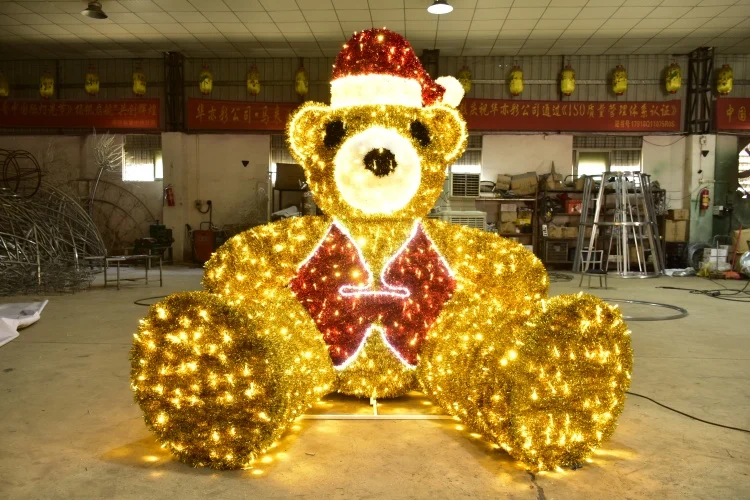
After the structural and lighting inspections are completed, the factory records the finished decoration with daytime, nighttime and detail photos.
For customized orders, these photos allow the buyer to confirm the shape, lighting colors, decorative finish and main project details before shipment. They can also be used as a visual reference during installation.
More production and shipment records are available in the
Holilite project planning cases.
Dismantling and Export Packing
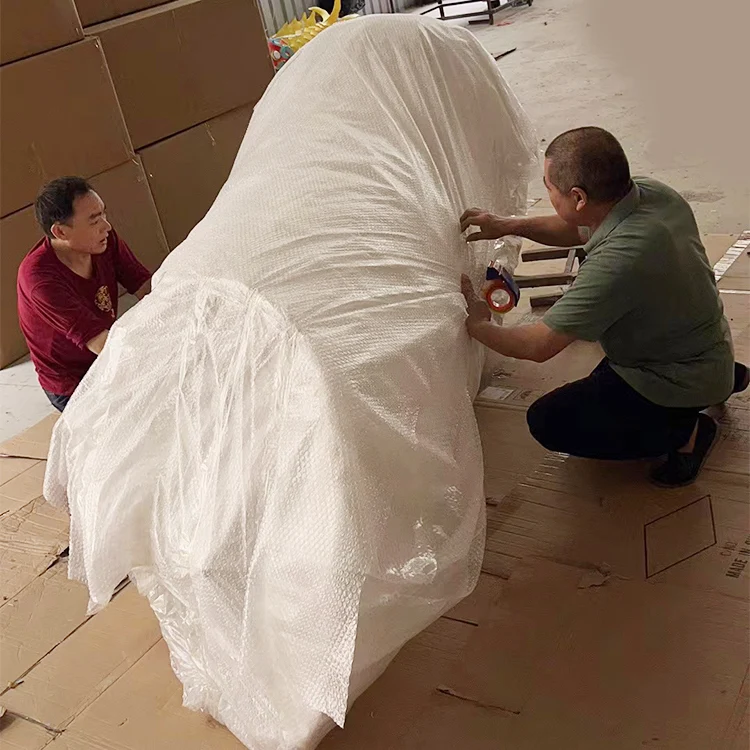
After testing is completed, the decoration is dismantled according to the transport plan. Before each section is moved, workers protect the LED lights, cables, painted surfaces, ornaments, and projecting parts.
Depending on the product, packing may include bubble wrap, foam, stretch film, cartons, wooden cases, pallets, or reinforced transport frames. Irregular 3D sculptures require additional protection around the head, arms, corners, and decorative surfaces.
Module labels remain clearly visible after packing. Installation accessories are grouped together so they can be located immediately when the shipment arrives at the project site.
Container Loading
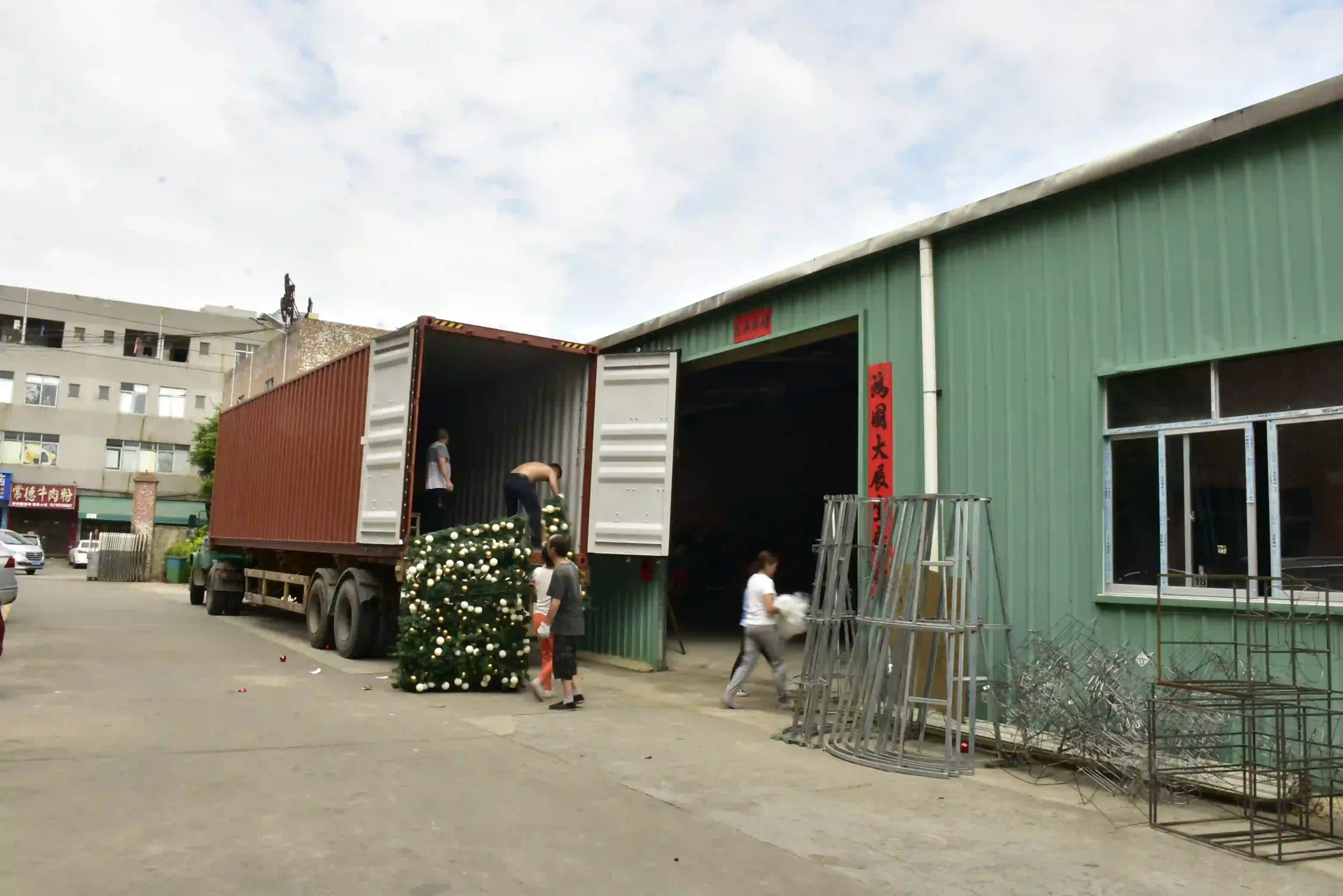
The container loading plan is prepared according to the size, weight, and shape of each section. Large structural parts are positioned first, while fragile decorations, electrical components, and small accessories are kept away from heavy sections.
The loading team also considers the unloading sequence. Sections required first during installation should remain easy to access when the container is opened.
For oversized products such as giant Christmas trees, pre-decorated trunk sections can be shipped directly after packing. This reduces installation work at the destination and allows branch density and ornament placement to be checked at the factory.
Ready for Site Installation
Large holiday decorations should arrive ready for assembly. Frame inspection, factory pre-assembly, lighting tests, section marking, and accessory checks reduce unnecessary work after delivery.
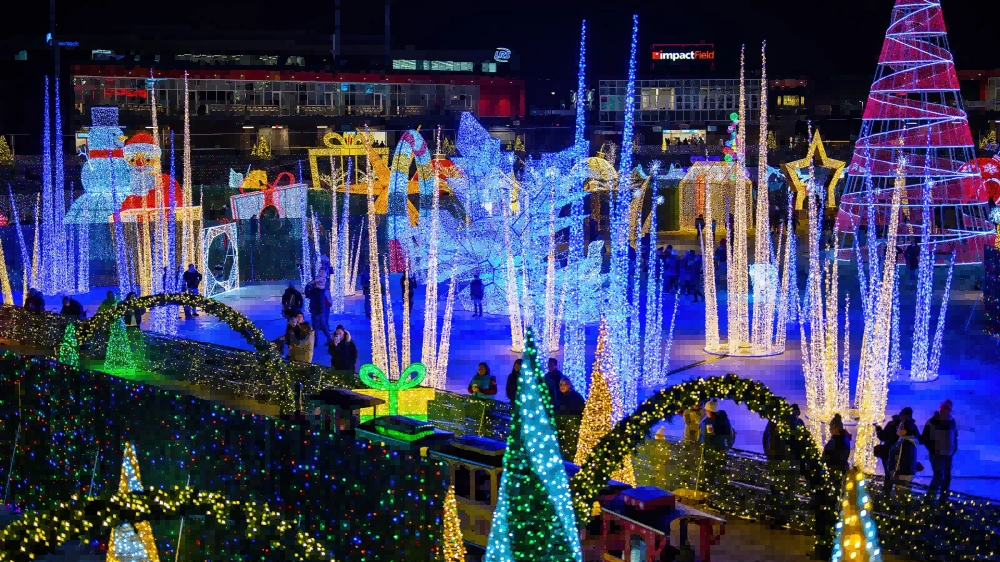
Holilite produces custom Christmas trees, light sculptures, entrance arches, and complete holiday decoration installations. The complete custom Christmas decoration production process covers design confirmation, metal fabrication, LED installation, surface finishing, testing, packing, and shipment preparation.
Contact Holilite with the product reference, required size, quantity, installation country or region, and project date to discuss a custom production plan.