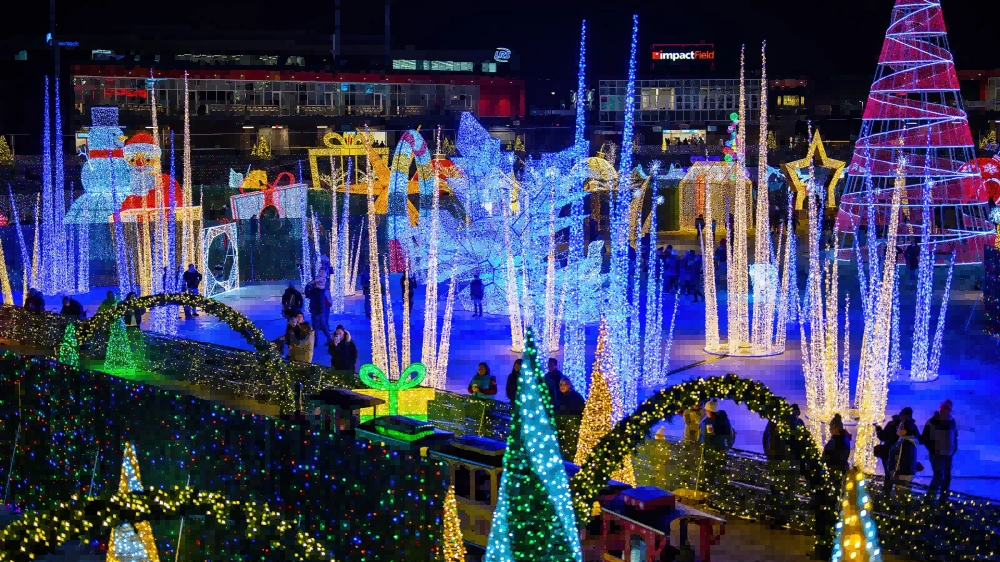
Large outdoor Christmas decorations are widely used in shopping malls,
public parks, city squares, theme parks, resorts, Christmas markets,
and seasonal light events.
Common examples include giant Santa figures, snowmen, reindeer,
gift boxes, Christmas baubles, sleighs, illuminated arches,
walk-through displays, and large Christmas trees.
For large commercial displays, two production methods are especially common:
traditional lantern construction and
LED light sculpture construction.
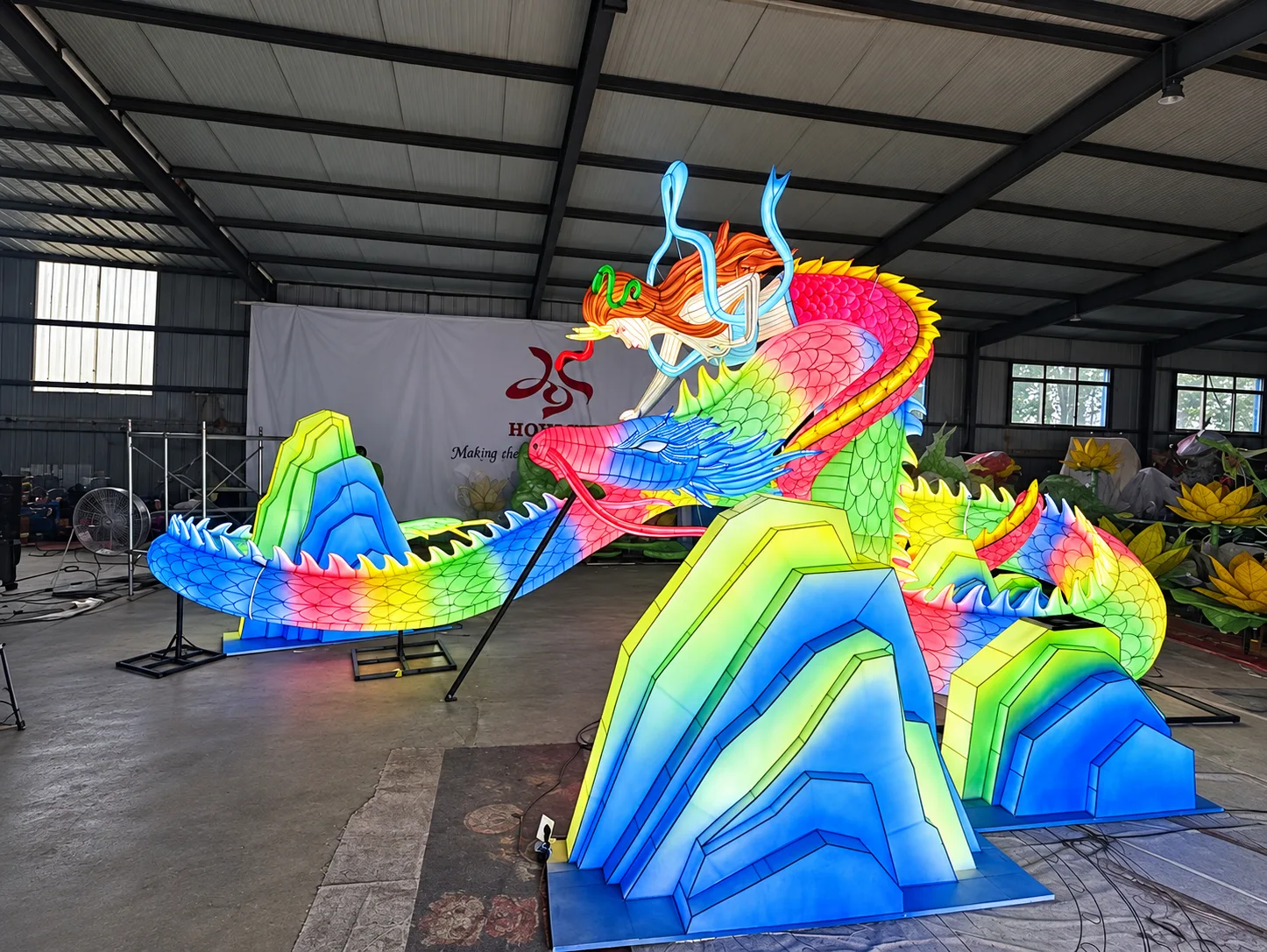
Lanterns use a shaped metal frame, internal LED lighting, translucent fabric,
and painted details. LED light sculptures keep more of the steel structure
visible and use LED strings, tinsel, mesh, artificial foliage, and other
decorative materials to build the finished surface.
Holilite currently produces
outdoor Christmas baubles
in diameters from about 1.5 to 4 meters,
giant gift box arches
around 5 meters high, and
large artificial Christmas trees
from approximately 3 to 50 meters.
Chapter 1: How Large Christmas Lantern Decorations Are Made
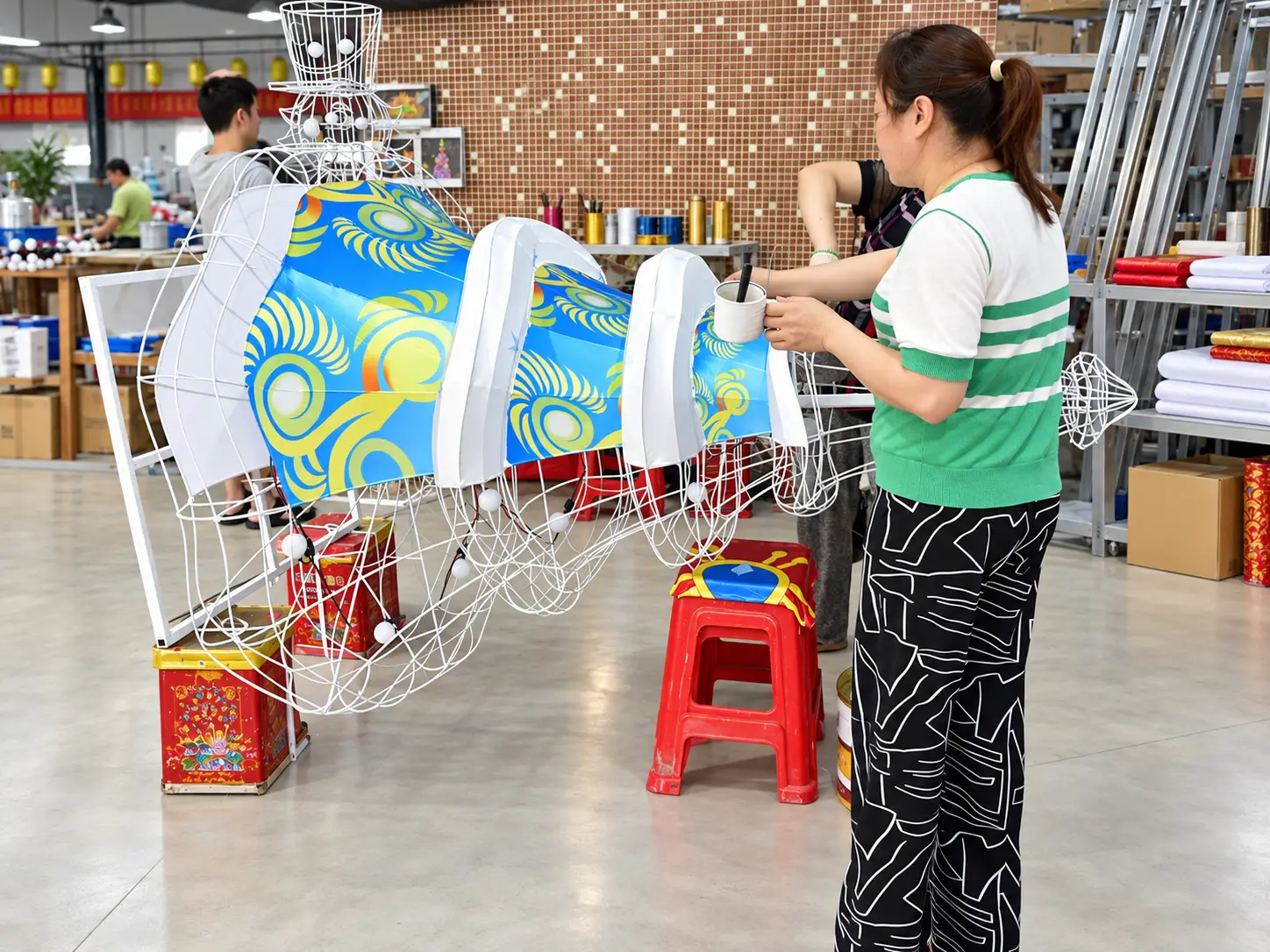
Large Christmas lanterns are built from a metal frame with lighting installed
inside. Colored translucent fabric is fitted over the frame, followed by
painting and detail work.
This method works well for Santa Claus, snowmen, reindeer, penguins,
polar bears, gingerbread characters, nutcracker soldiers, and other
Christmas figures that need clear colors and detailed surfaces.
Holilite’s
custom lantern sculptures
can range from around 1 meter to more than 10 meters.
Outdoor models use welded steel frames, waterproof and UV-resistant fabric,
and outdoor LED lighting.
1. Building the Metal Frame
Production starts with the three-dimensional frame.
The design is divided into individual sections before steel bars and wire
are bent and welded into shape.
A large reindeer, for example, may be divided into the body, legs,
neck, head, antlers, ears, tail, and supporting base.
Heavier steel is used around the main support points, while thinner wire
is used for facial features, antlers, clothing lines, and smaller contours.
Christmas characters are built in the same way. A Santa figure may have
separate frames for the body, head, hat, arms, and gift sack.
A nutcracker soldier includes individual sections for the hat, head,
torso, arms, legs, boots, and decorative uniform details.
Metal frame production for a custom Christmas Nutcracker Soldier Lantern.
Holilite also produces outdoor animal lanterns at much larger scales.
Its giraffe lanterns can reach approximately 2–6 meters,
while dinosaur lanterns can reach around 2–8 meters.
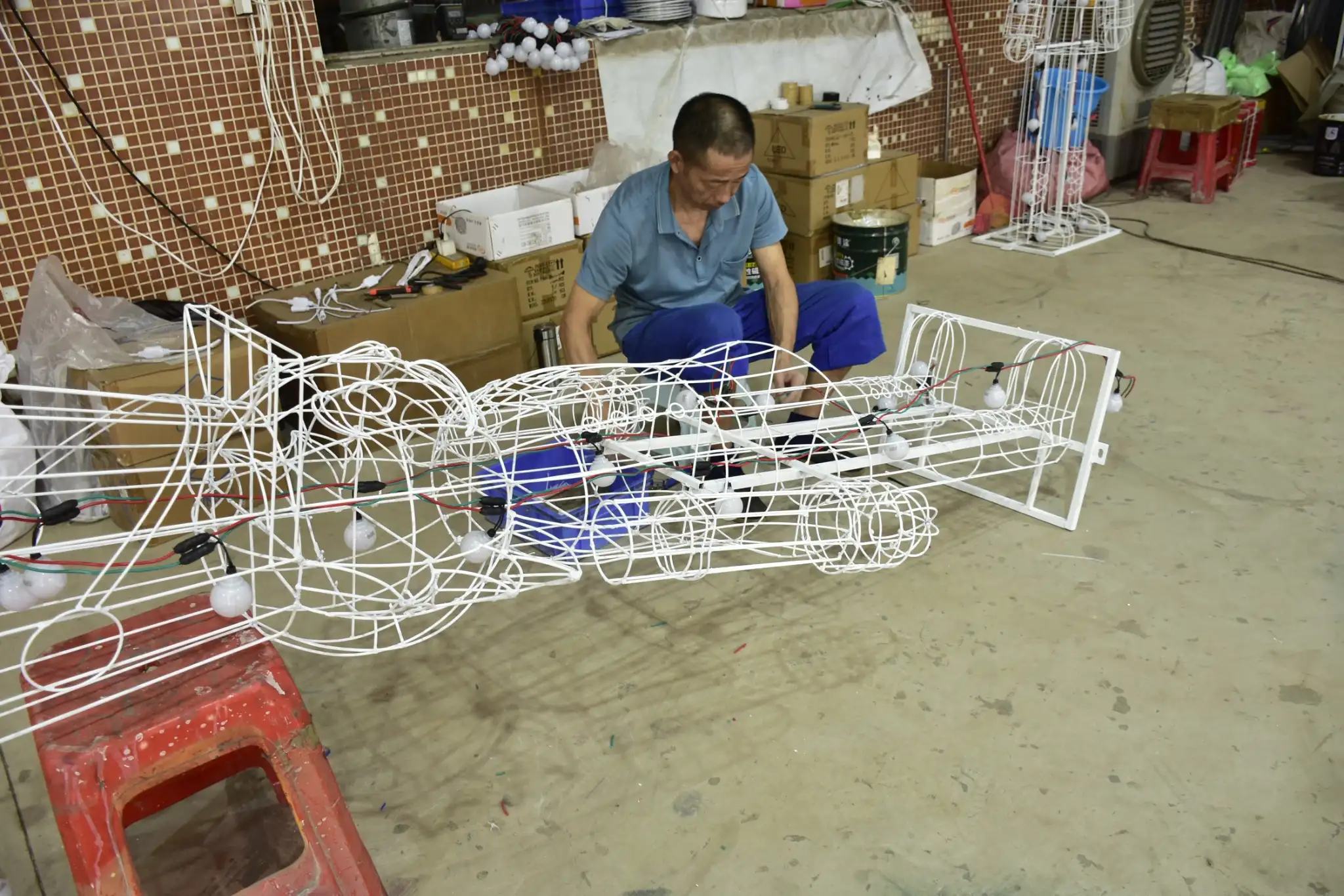
The internal steel structure is completed before lighting and surface
materials are added.
2. Installing the Internal Lighting
After the frame is complete, LED lighting is fixed inside the structure.
Wider areas such as the body and head need even light coverage.
Narrow sections such as arms, ears, antlers, and decorative details
follow separate lighting routes.
The wires are secured along the frame before the outer fabric is installed.
Workers power on the structure and check the LED positions, connections,
brightness, and any visible dark areas.
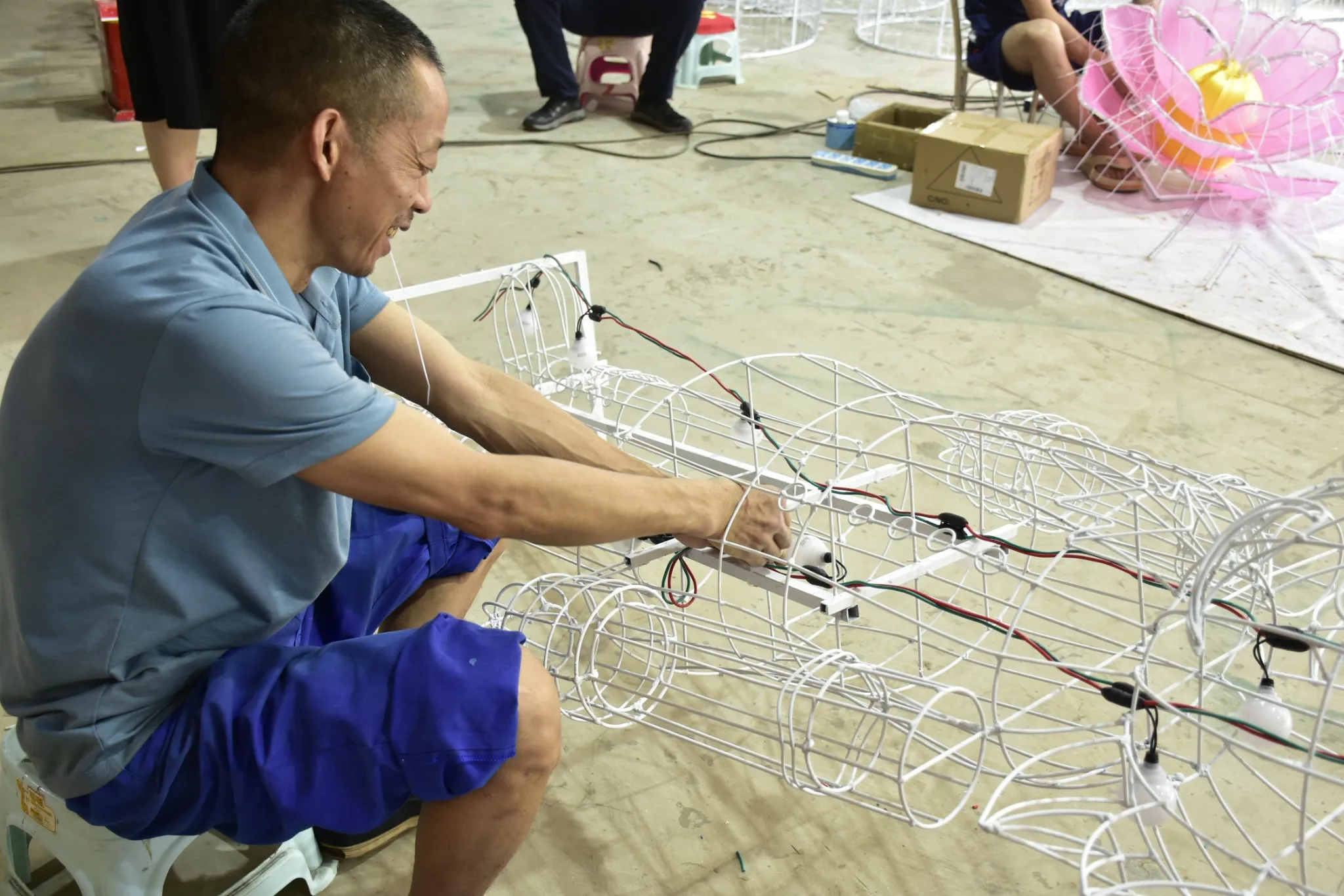
Internal wiring and bulb positions are arranged before the fabric covering is completed.
3. Applying the Translucent Fabric
The frame is covered after the lighting test.
Outdoor lanterns can use waterproof fabric, PVC cloth, nylon-based fabric,
satin, or other light-transmitting materials.
The surface is divided into separate color sections.
A Santa display may use red fabric for the coat and hat, white for the beard,
skin tones for the face, and black for the belt and boots.
A reindeer may combine brown, gold, white, and other tones.
Snowmen can use a white main body with separately finished scarves,
hats, buttons, and facial details.
Each piece of fabric is cut to match the frame, stretched over the wire,
and fixed section by section. Smaller fabric pieces are used around faces,
hands, ears, antlers, and curved areas.
4. Painting and Finishing the Surface
Hand-painted work is added after the main fabric covering is complete.
Eyes, noses, mouths, clothing patterns, shadows, animal markings,
and color transitions can all be painted directly onto the surface.
Christmas characters can also be finished with additional details.
Santa figures may receive facial shading and clothing patterns.
Reindeer can have painted eyes, noses, and fur markings.
Gingerbread figures can include icing lines, buttons, and other decorative patterns.
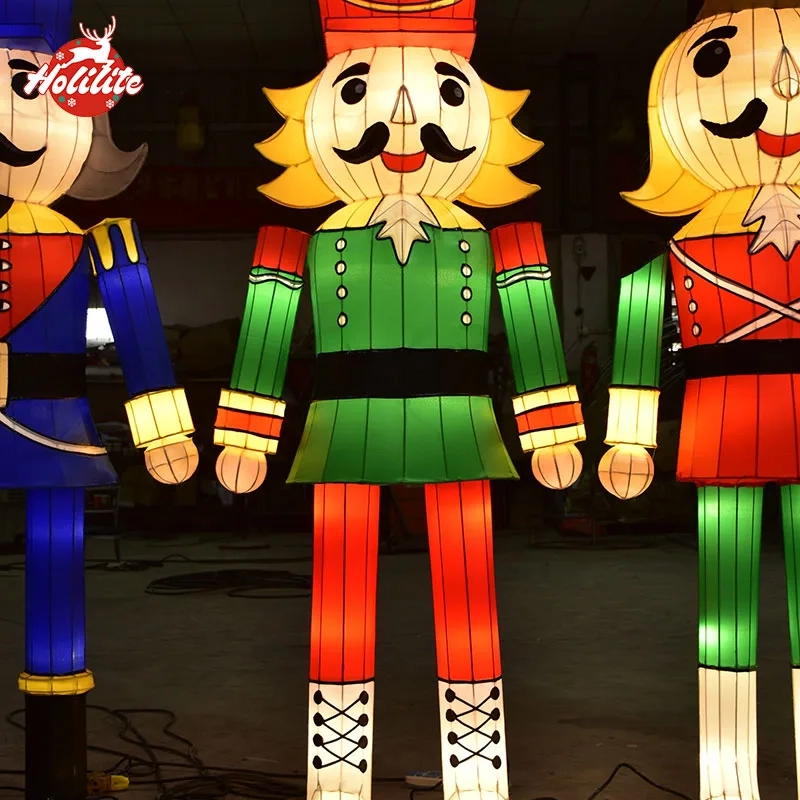
Finished Christmas Nutcracker Soldier Lanterns after frame, lighting, fabric, and color work.
5. Dividing Large Lanterns into Modules
Large lanterns are often divided into sections before shipping.
A large character can have separate head, body, arms, base,
antlers, or oversized decorative components.
Bolt positions, steel connection points, electrical connectors,
and assembly markings are prepared during production.
The complete lantern can be trial assembled at the factory,
checked, and then dismantled again for packing.
6. Preparing the Base for Outdoor Installation
Outdoor lanterns need a stronger structure at the bottom.
Depending on the product size and installation site,
the fixing system may include steel base frames, base plates,
ground anchors, bolts, counterweights, or supporting cables.
Wiring, connectors, and power components are also prepared for outdoor use.
The complete decoration is assembled and illuminated again before packing.
Chapter 2: How Large LED Christmas Light Sculptures Are Made
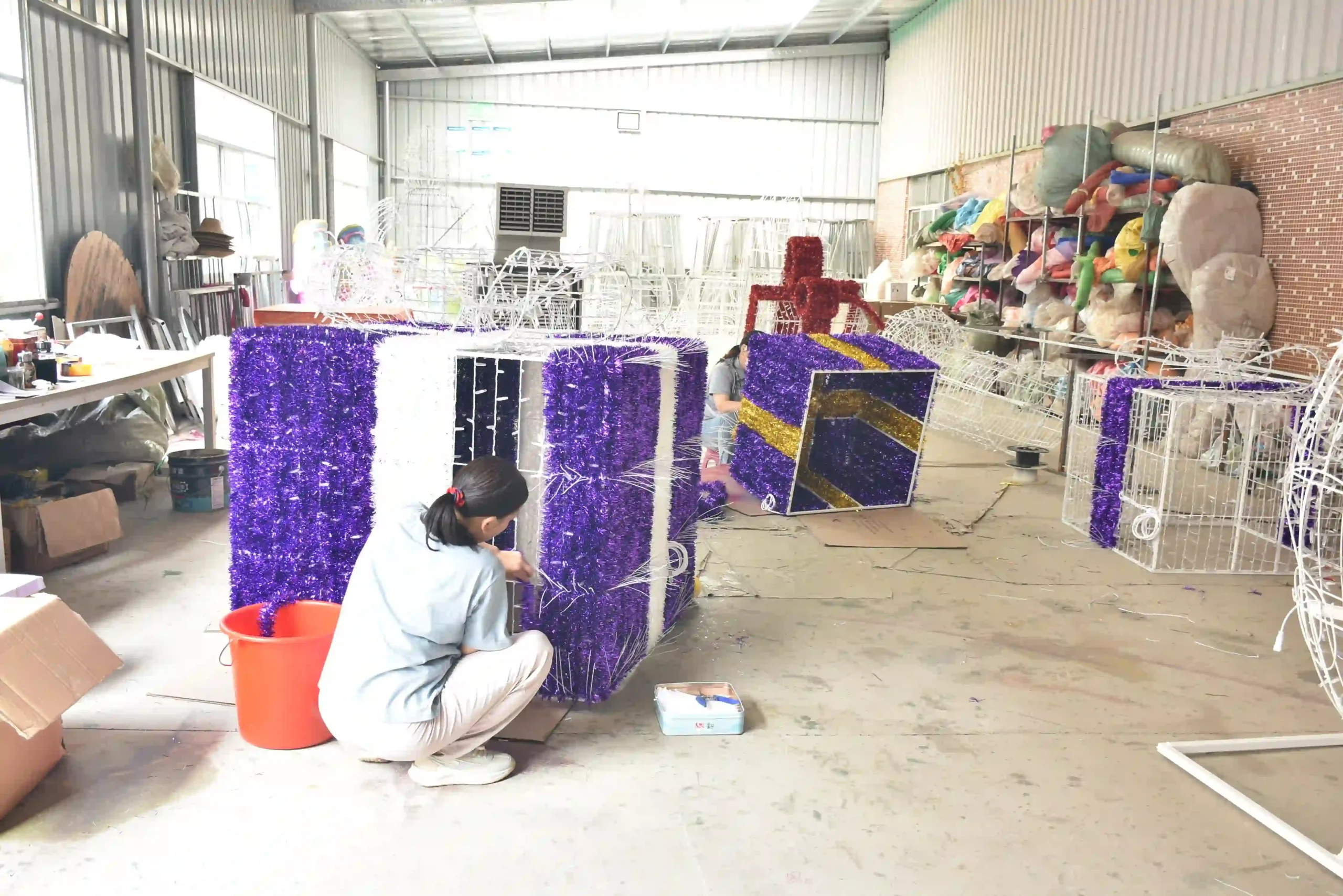
LED Christmas light sculptures use a more open construction.
The steel frame remains part of the finished appearance,
with LED lights and decorative materials attached directly to it.
This method is commonly used for Christmas reindeer, Santa sleighs,
giant gift boxes, Christmas baubles, stars, snowflakes,
illuminated arches, light tunnels, giant bears, and large Christmas trees.
1. Forming the Steel Structure
The main shape is formed during metal fabrication.
For a reindeer, workers shape the body, legs, neck, head,
antlers, and supporting frame separately before assembly.
For a giant bauble, the curved steel sections must form an even sphere.
Walk-through arches require reinforced side supports and a clear central opening.
Three-dimensional character sculptures also use a dense wire framework
over the main load-bearing steel structure.
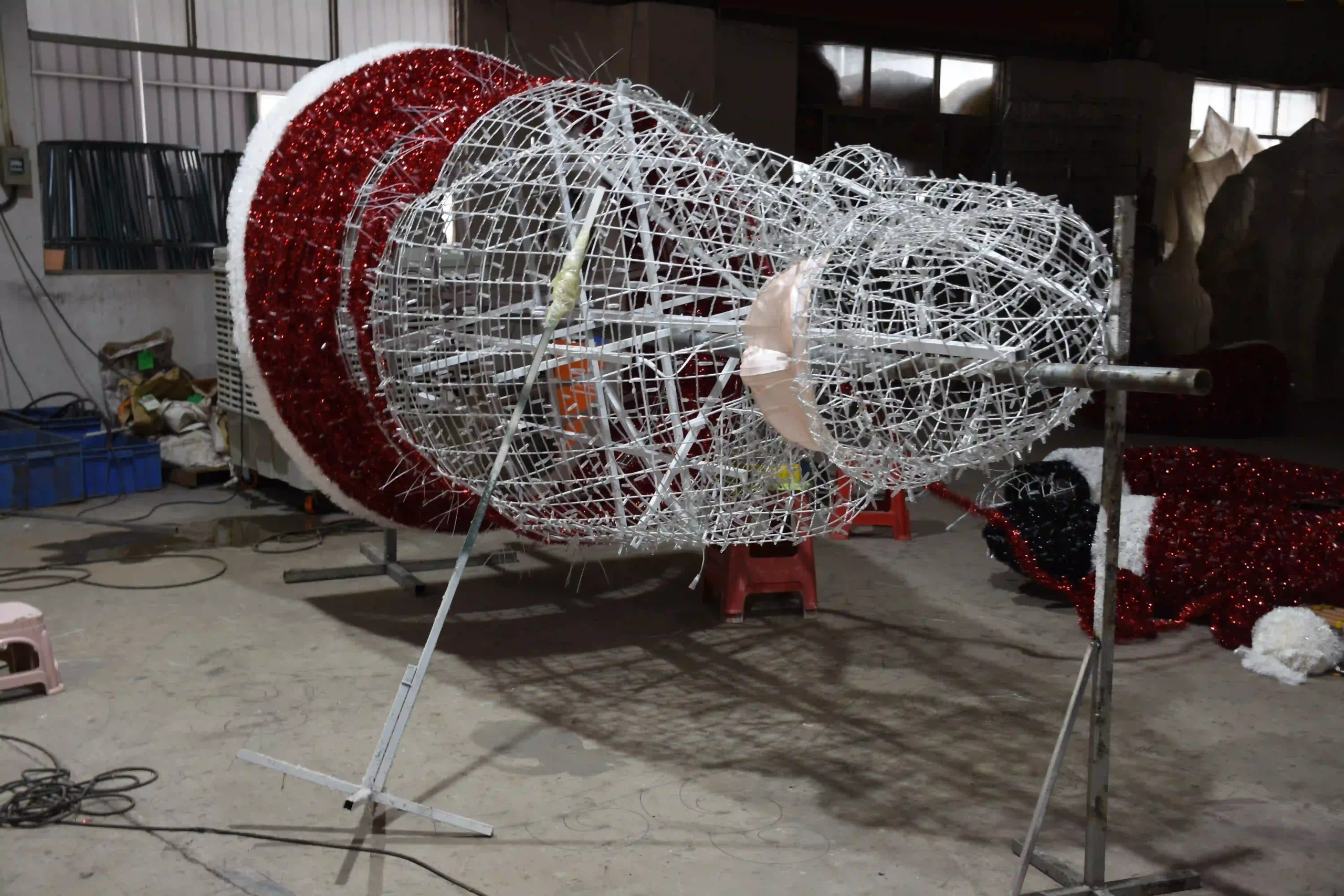
A large Santa light sculpture during metal-frame and surface construction.
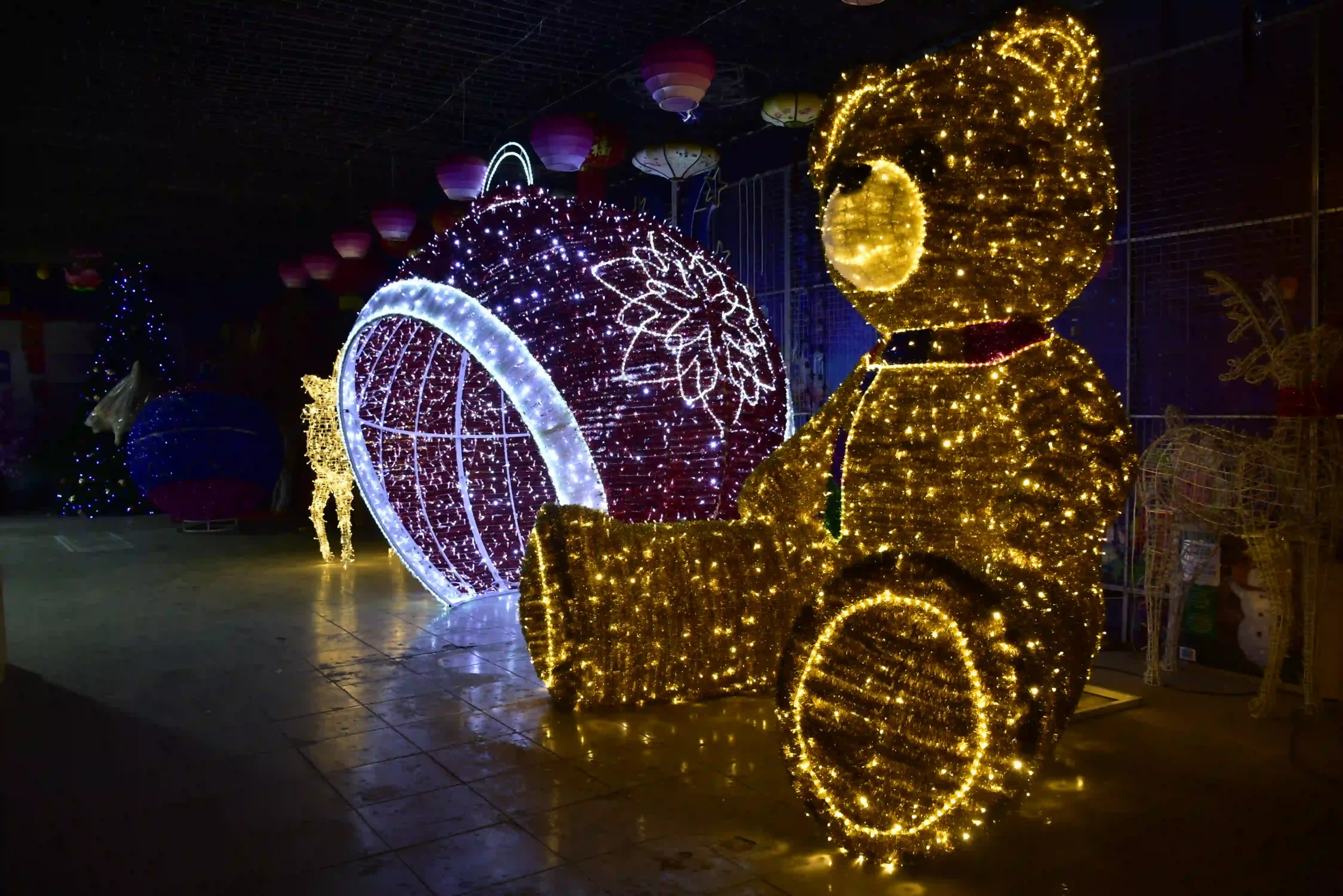
Holilite’s
Giant LED Christmas Bear
measures approximately 3 × 3 × 5 meters,
weighs around 500 kg, and has a packed volume
of approximately 28 m³.
The head, body, arms, facial area, and lower supports are shaped around
the internal framework before the lighting and decorative surface are completed.
2. Installing LEDs Across the Frame
LED strings are installed after the main frame has been shaped.
Some decorations use light mainly along the outline,
while others use dense LED coverage across the full three-dimensional surface.
Regular shapes such as stars, gift boxes, and Christmas baubles
can follow the steel grid. Reindeer, Santa figures, bears,
and other irregular sculptures need lighting routes that follow their body contours.
Cables are fixed along the inner or less visible side of the frame.
The lighting is tested in sections before surface finishing continues.
3. Adding Tinsel, Mesh, and Decorative Materials
LEDs are often combined with other materials to give the decoration
a stronger daytime appearance.
Tinsel is commonly used on Christmas bears, reindeer, gift boxes,
stars, and baubles. Decorative mesh can cover larger open areas,
while PVC or PE foliage is used on Christmas trees, wreaths, and arches.
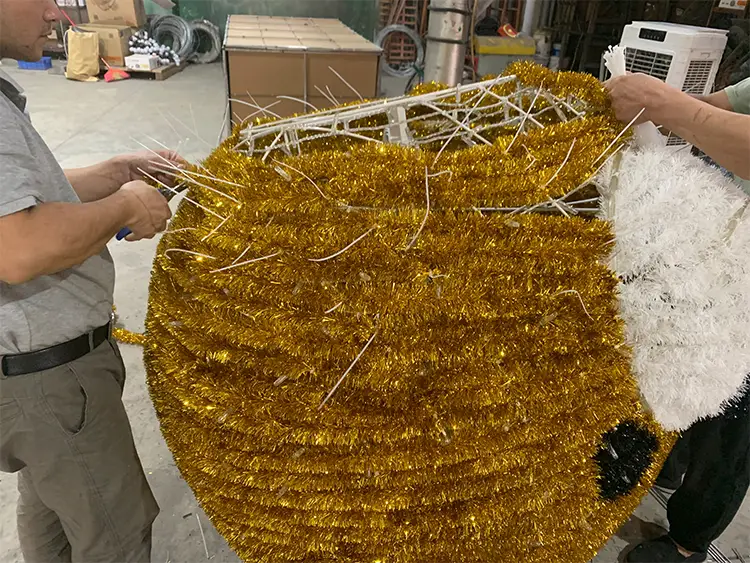
Golden tinsel is fixed over the lighting and frame of a large Christmas bear sculpture.
Different colors and materials can be applied as separate sections.
On a Christmas bear, for example, the main body can use gold tinsel,
while the face, nose, hat, bow tie, and other details use separate finishes.
4. Building Walk-Through Christmas Decorations
Large arches and walk-through displays add another requirement:
the steel structure must form the decoration while leaving a usable opening for visitors.
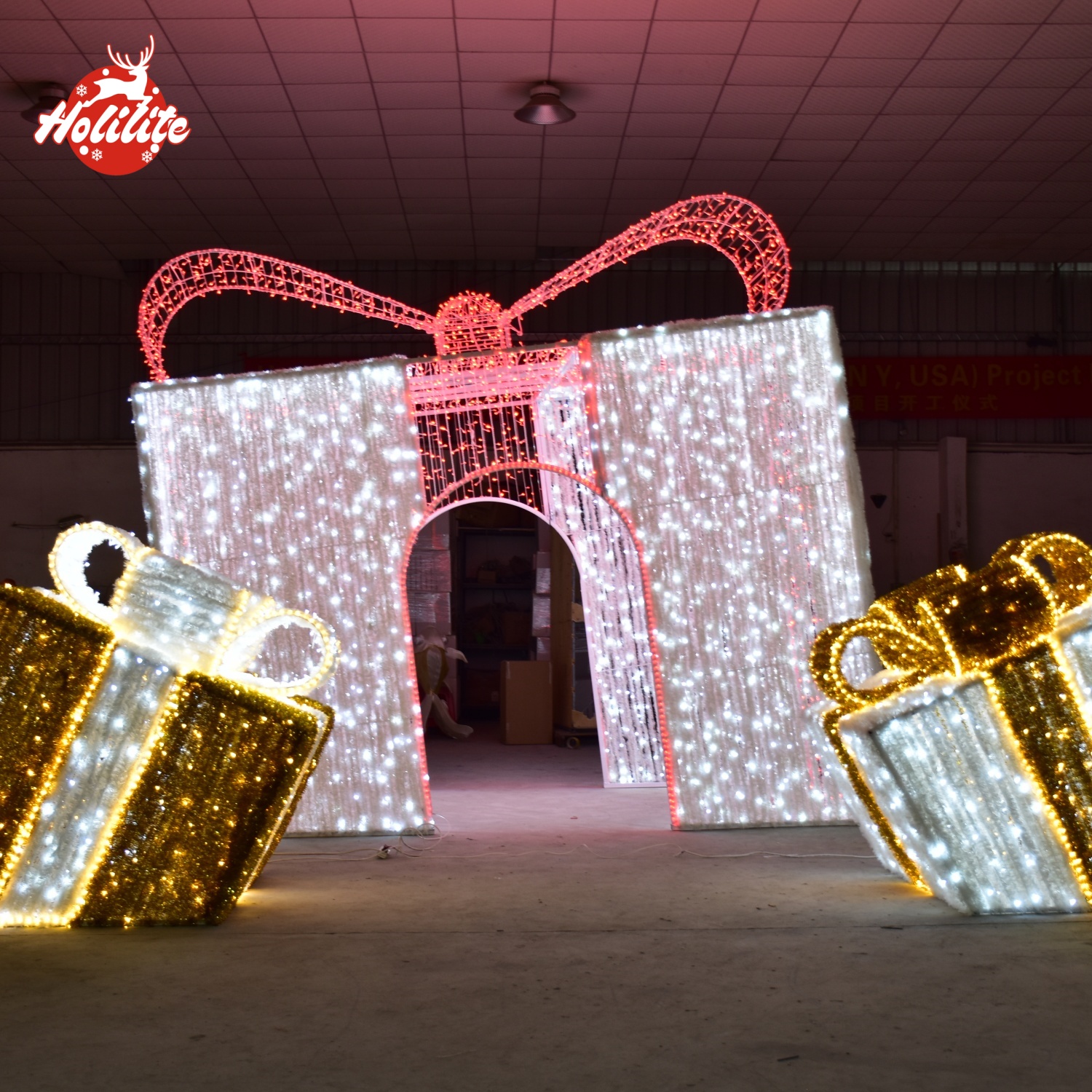
Holilite’s
Giant Christmas Gift Box Arch
has a standard height of approximately 5 meters.
It uses a hot-dip galvanized steel frame,
waterproof LED string lights, and tinsel surface decoration.
A large illuminated gift box arch produced for walk-through Christmas displays.
The sides support the upper gift-box and bow structure,
while the center remains open for pedestrian access.
Large arches can also be divided into left, right, and upper modules
for transportation and site assembly.
5. Building Giant Christmas Trees in Sections
Large Christmas trees use a sectional steel structure.
Holilite’s
artificial Christmas trees
can be produced from approximately 3 to 50 meters,
including common project heights such as
5m, 6m, 7m, 10m, 15m, 20m, 25m, and 30m.
These trees use a reinforced internal frame, flame-retardant PVC branches,
LED lighting, ornaments, and a detachable modular structure.
Outdoor versions can use IP65 lighting with
24V or 110–240V power options.
Holilite also manufactures
light-up Christmas trees
from approximately 4 to 50 meters.
These designs use metal frames with LED lighting and decorative elements
such as acrylic panels, snowflakes, stars, gift boxes, and illuminated motifs.
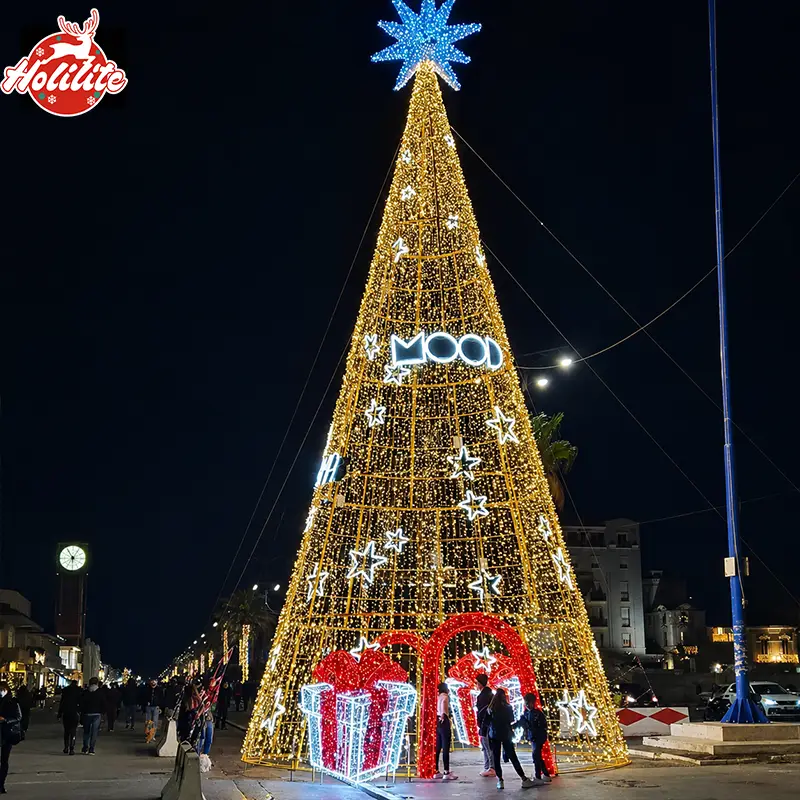
A large outdoor light-up Christmas tree built around a tall modular metal structure.
The main structure is separated into levels or modules.
These sections are connected on site before the lighting,
decorative motifs, ornaments, and top structure are completed.
Larger trees may require lifting equipment during assembly.
6. Designing Large Decorations for Shipping
Oversized Christmas decorations are divided according to their shape
and container dimensions.
A large Christmas bauble can be separated into curved sections.
Gift boxes can be split into side and upper panels.
Reindeer and sleighs can be packed separately.
Large three-dimensional figures can be divided around the base,
body, head, or projecting parts.
Connection plates, bolt holes, electrical connectors,
assembly numbers, and installation directions are prepared
before the product leaves the factory.
7. Trial Assembly and Lighting Test
Finished modules are assembled at the factory before final packing.
Giant baubles are checked for roundness.
Gift box arches are checked at their side and upper connections.
Reindeer and sleigh sets are positioned together to confirm spacing.
Christmas tree sections are checked for frame alignment,
lighting coverage, and upper connections.
The complete lighting system is switched on during the trial assembly.
LED operation, lighting color, cable connections, structural joints,
and surface decoration are checked before the display is dismantled again.
After inspection, each section is numbered, protected,
packed, and prepared for shipment.
Lanterns or LED Light Sculptures?
Lantern construction is commonly used for Christmas characters and animals
that need solid colors, facial details, clothing patterns,
and a fully illuminated surface.
Santa Claus, snowmen, nutcracker soldiers, gingerbread figures,
penguins, polar bears, and themed animals can all use this method.
LED light sculpture construction is widely used for Christmas baubles,
gift boxes, reindeer, sleighs, illuminated arches, light tunnels,
giant bears, and large Christmas trees.
A large Christmas installation can use both methods in the same project.
The entrance may use a 5-meter illuminated gift box arch,
the main square may feature a 10–30 meter Christmas tree,
while reindeer, baubles, sleighs, Santa figures,
and Christmas lantern characters are placed throughout the visitor route.