Why Are Nutcrackers Associated with Christmas?

Nutcracker soldiers appear beside Christmas trees, at hotel entrances, in shopping mall displays, and across holiday stages every December. Their tall hats, painted uniforms, square teeth, and upright stance have become instantly recognizable Christmas imagery.
The connection grew from several traditions rather than a single event. German woodcraft gave the nutcracker its familiar figure, Christmas gift customs brought it into the home, a nineteenth-century story turned it into a heroic character, and The Nutcracker ballet carried it onto stages around the world.
Over time, the small wooden figure developed into a much larger part of Christmas design, from collectible ornaments to giant nutcracker soldier statues used in hotels, shopping centers, theme parks, and public holiday events.
What Is a Nutcracker?
A nutcracker was originally a practical tool for opening walnuts, hazelnuts, and other hard-shelled nuts. Simple versions used pressure or leverage to split the shell without crushing everything inside.
Figure-shaped nutcrackers added a decorative character to that mechanism. A lever at the back moved the lower jaw, allowing the figure’s mouth to hold and crack a nut. The broad body concealed the working parts, while the large teeth, strong jaw, and exaggerated facial features made the object memorable.
Many nutcrackers sold today are decorative rather than functional. Their jaws may still move, but painted surfaces, artificial hair, fabric trim, and delicate accessories are rarely intended to handle hard shells.
Where Did Christmas Nutcrackers Come From?
Decorative wooden nutcrackers became closely associated with Germany, particularly the Erzgebirge region in Saxony. The area developed a strong tradition of woodturning and carving, producing Christmas pyramids, candle arches, incense smokers, angels, miners, and painted figures.
Winter craft production became an important part of local life, and these wooden objects found a natural place in Christmas markets and family celebrations. Nutcrackers shaped as kings, guards, soldiers, hunters, and other authority figures became popular seasonal gifts.
The bright uniforms and expressive faces made them suitable for display long after their practical purpose became less important. By the time modern nutcracking tools became common, the carved figure had already gained a separate identity as a collectible Christmas decoration.
Why Do Nutcrackers Look Like Soldiers?
Nutcrackers have appeared as kings, policemen, hunters, miners, and members of the military, yet the soldier remains the best-known form.
A military uniform gives the figure a strong visual structure. The tall hat extends the silhouette, the belt separates the body, boots define the base, and shoulder details make the upper section appear broader. Red, green, blue, black, white, and gold remain easy to recognize from across a room or outdoor plaza.

The soldier’s rigid posture also suits the nutcracker mechanism. Its straight body can conceal a rear lever, while the large mouth and jaw fit naturally into the face.
Once nutcrackers moved into Christmas displays, the soldier design gained another role. Standing on either side of a doorway, the figures resemble ceremonial guards welcoming visitors into a festive setting.
The Story That Brought the Nutcracker to Life
In 1816, German author E. T. A. Hoffmann published The Nutcracker and the Mouse King . Set during a Christmas Eve celebration, the story follows a young girl who receives a nutcracker as a gift.
After the household goes to sleep, toys come alive, an army of mice appears, and the nutcracker leads a group of toy soldiers into battle. The wooden figure is no longer a household object. It becomes a brave character with a hidden past and a magical transformation ahead.
The original story contains darker and stranger elements than most modern Christmas adaptations. A later version by French writer Alexandre Dumas softened the narrative and made it more suitable for family audiences.
This literary change was important. The nutcracker now belonged to a complete Christmas world filled with gifts, toys, children, snow, danger, courage, and imagination.
How the Ballet Made the Nutcracker a Christmas Icon
Pyotr Ilyich Tchaikovsky’s ballet The Nutcracker premiered in St. Petersburg in 1892. Its Christmas Eve setting brought together a decorated tree, a family party, toy soldiers, the Mouse King, falling snow, and a journey into a fantasy kingdom.
The ballet did not immediately become the worldwide Christmas tradition known today. Its popularity expanded during the twentieth century as more companies added it to their December schedules.
George Balanchine’s 1954 production for the New York City Ballet played a major role in establishing the annual American tradition. Television broadcasts, touring productions, school performances, and regional theatre programs introduced the story to audiences far beyond major opera houses.
For many families, attending The Nutcracker became part of the Christmas season. The music, costumes, stage tree, snow scene, and toy soldier imagery kept the character visible year after year.
What Does a Nutcracker Symbolize at Christmas?
There is no single meaning shared by every historical nutcracker. Modern Christmas culture has connected the figure with several ideas.
Protection
The guard-like stance gives nutcracker soldiers a protective presence. When placed at an entrance, they appear to watch over the celebration and welcome guests into the space.
Courage
In the story, the nutcracker faces the Mouse King and leads the toy soldiers into battle. This helped turn the character into a symbol of bravery and loyalty.
Good Luck
Nutcrackers are often described as figures that bring good fortune and keep harmful influences away. This meaning became part of later collecting and gift-giving traditions.
Transformation
The story moves from an ordinary wooden toy to a living hero and prince. The character carries themes of change, hidden value, and seeing beyond outward appearances.
Christmas Memory
For many people, the strongest meaning is personal. A nutcracker may recall childhood decorations, a family collection, a school performance, a theatre visit, or a figure displayed in the same place every December.
Can Traditional Nutcrackers Still Crack Nuts?
Some wooden nutcrackers retain a working lever and movable jaw. That does not mean every figure should be used as a kitchen tool.
Collectible models often include hand-painted surfaces, glued details, artificial hair, fabric, or small wooden accessories. Applying pressure to a hard walnut may crack the paint, damage the jaw, or loosen the lever.
A product marked “decorative” should be treated as an ornament. Functional models will normally state that they are designed for actual nut cracking.
From Wooden Figures to Giant Christmas Displays
The traditional tabletop nutcracker has now been adapted into large-scale commercial decoration. Designers preserve the recognizable hat, beard, teeth, uniform, and boots while changing the materials and internal structure.
Fiberglass models offer sculpted facial details, smooth surfaces, and strong daytime color. They work well in hotel lobbies, shopping centers, department stores, and sheltered entrance displays.
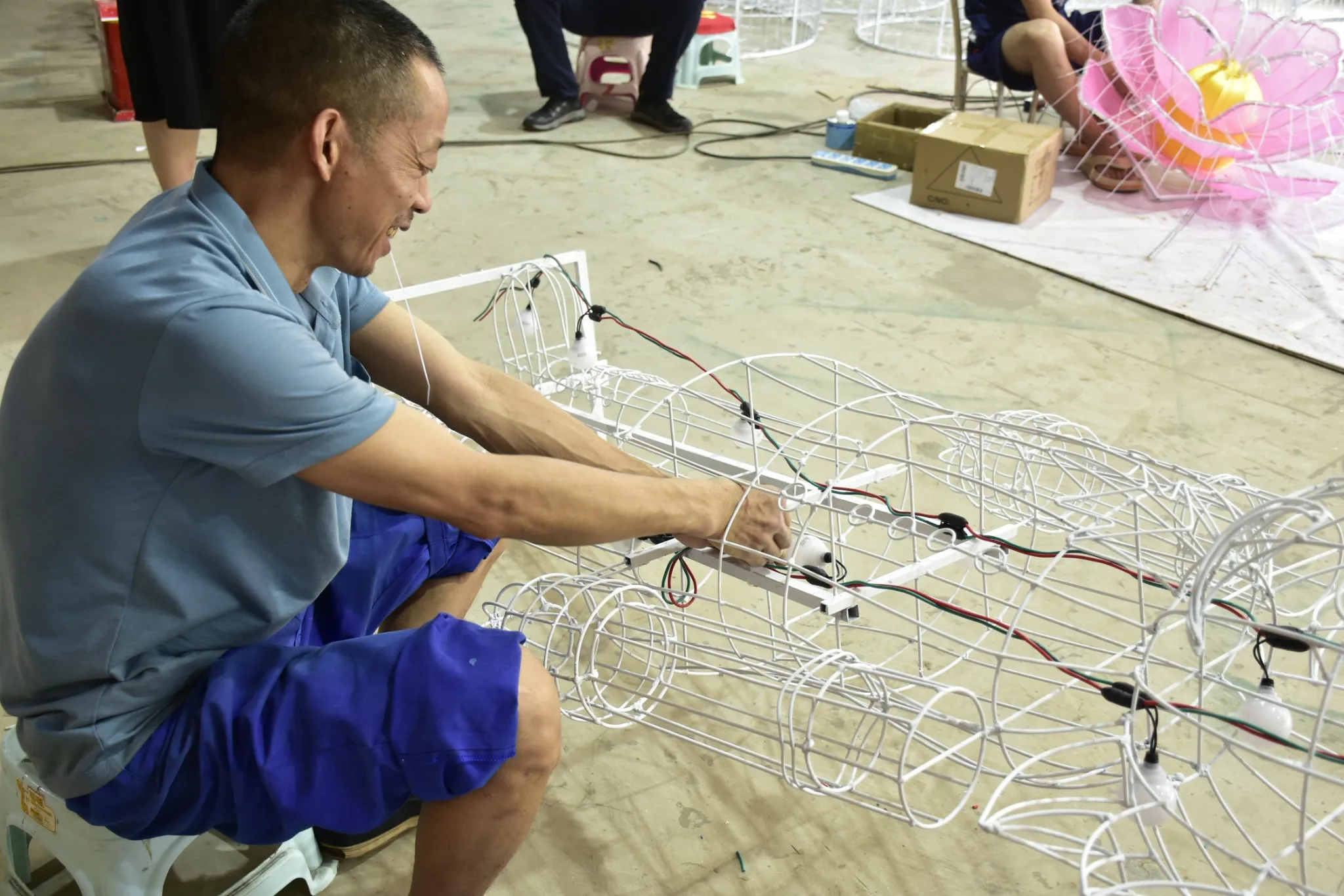
An illuminated nutcracker lantern figure uses a hand-shaped metal frame, light-transmitting fabric, and internal LED lighting. This version creates a clear nighttime silhouette for outdoor plazas, lantern festivals, parks, and evening events.
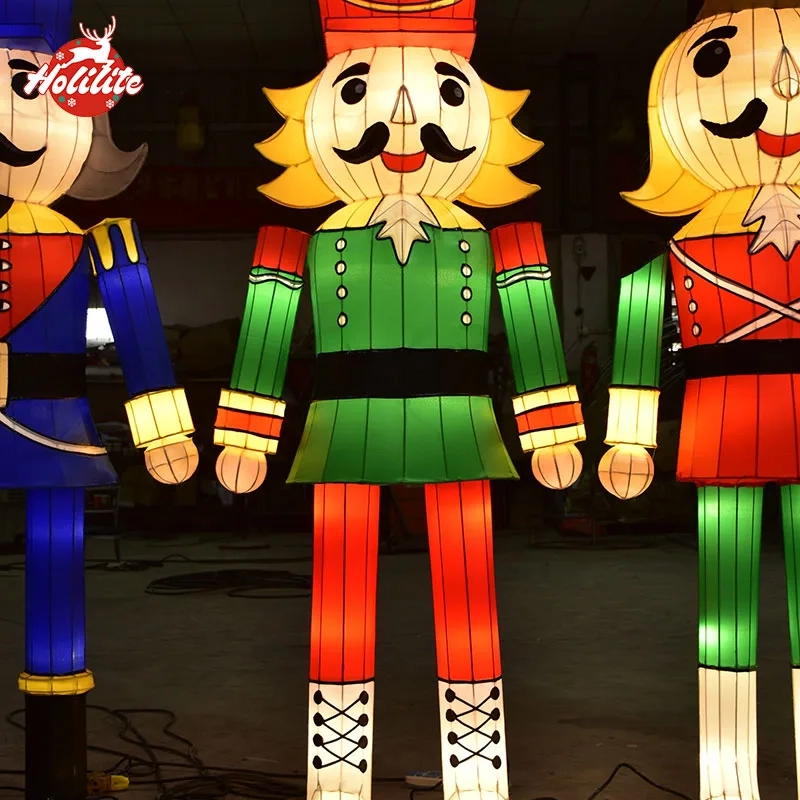
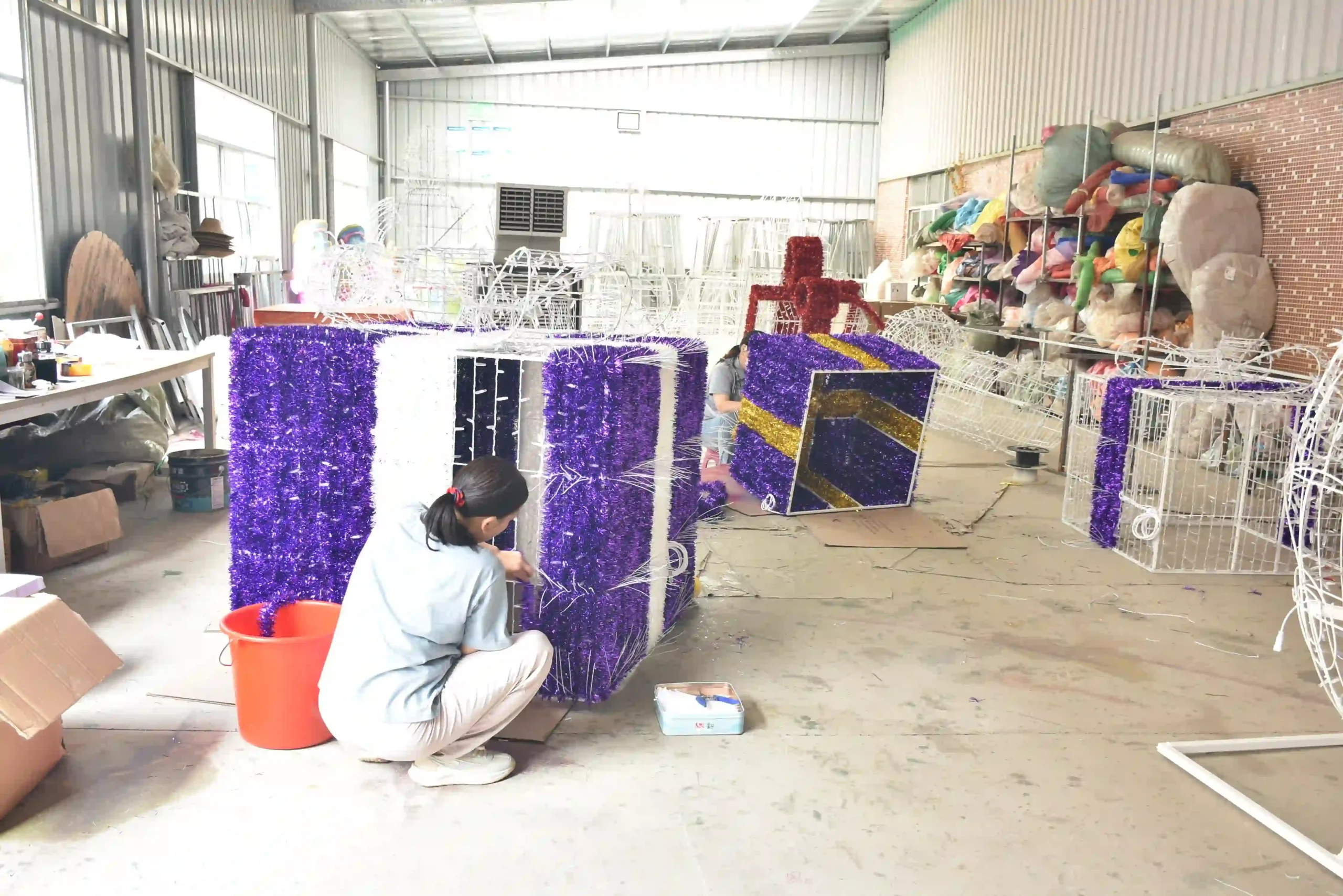
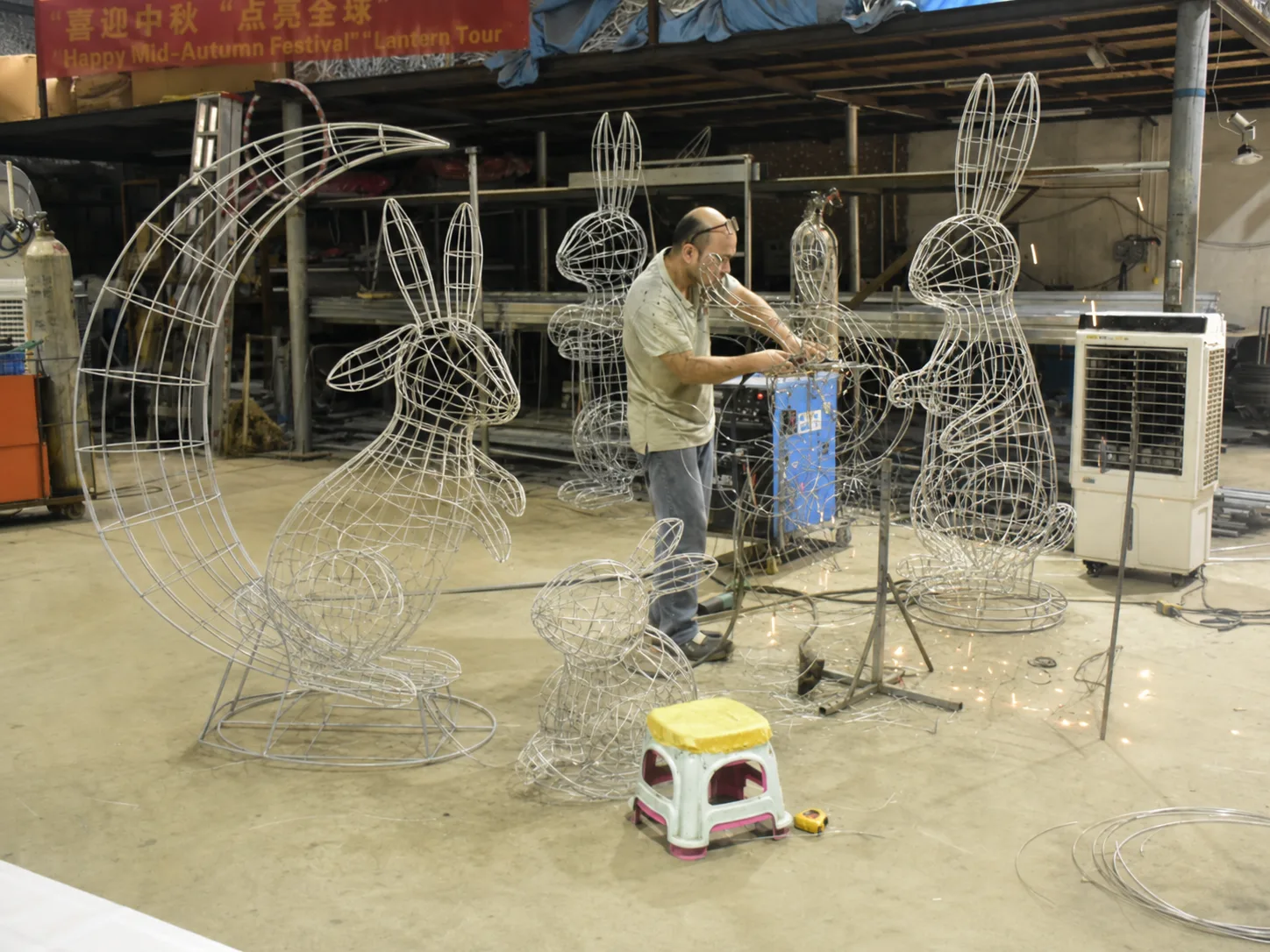
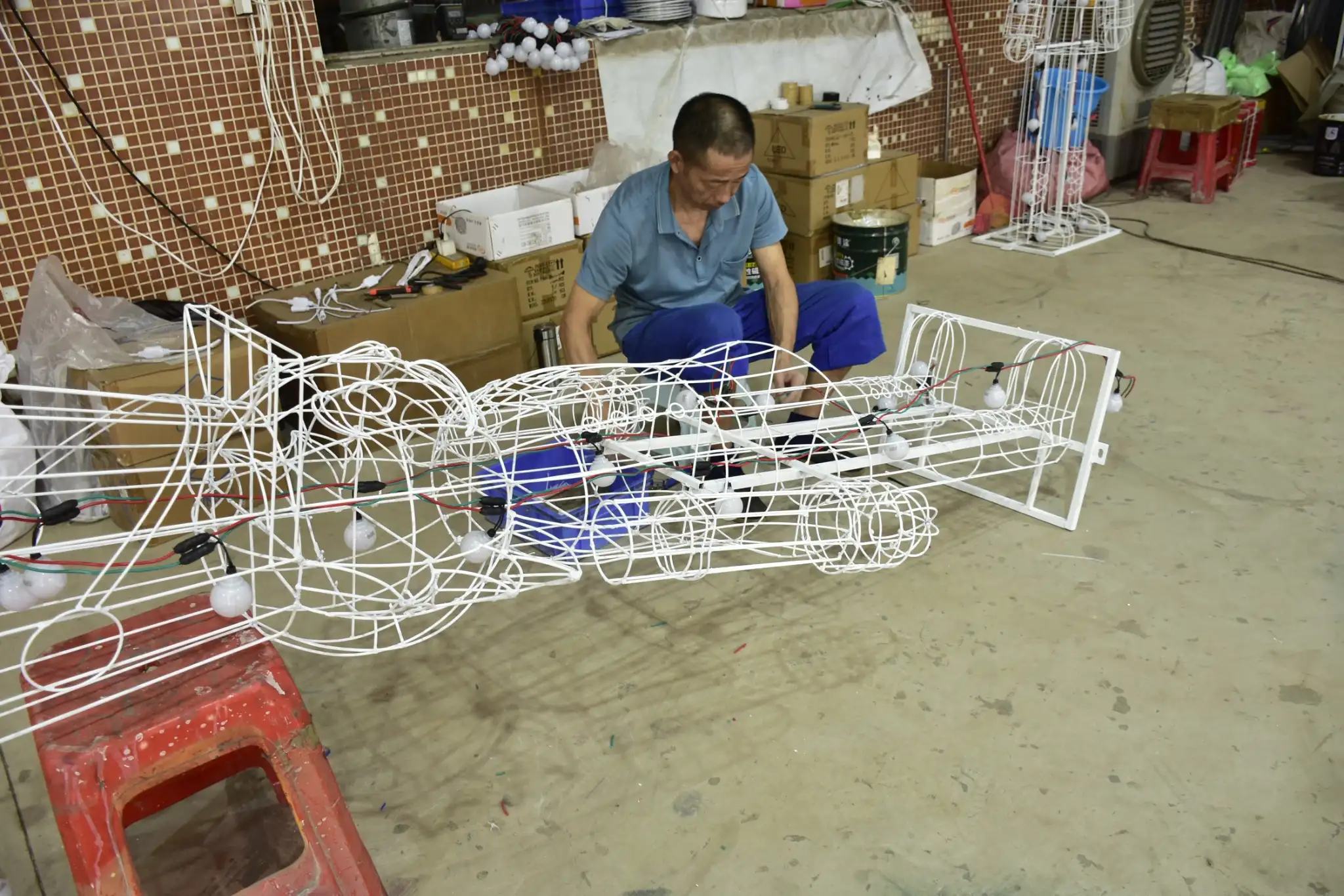
Large figures can also be produced with reinforced metal frames and decorative lighting fixed around the outline. The construction method depends on the required size, surface detail, viewing distance, installation environment, and lighting effect.
The main production stages are covered in Holilite’s guide to making a large Christmas nutcracker soldier .
Why Giant Nutcrackers Work Well at Entrances
A nutcracker has a tall, narrow profile. It creates height without occupying as much walkway space as a wide sculpture or full scenic installation.
Two matching soldiers can frame a doorway while leaving the central route open. The arrangement creates symmetry, strengthens the sense of arrival, and gives visitors an obvious place to stop for photographs.

The red, gold, green, and white color palette also works naturally with wreaths, garlands, baubles, gift boxes, and a commercial Christmas tree .
For a larger entrance, nutcracker figures can stand beside a walk-through Christmas gift box arch . The soldiers define the sides while the illuminated arch creates a clear route into the event area.
Where Are Large Christmas Nutcrackers Used?
Shopping Mall Entrances
Paired nutcrackers help establish a Christmas theme before visitors enter the main atrium. They can be coordinated with store colors, hanging ornaments, garlands, or a central tree.
Hotel Lobbies
Fiberglass figures suit daytime lobby displays, while illuminated models add stronger evening impact near exterior entrances, driveways, and garden areas.
Theme Parks
Nutcrackers fit toy workshops, candy kingdoms, Christmas villages, parade routes, and character photo zones. Multiple figures can be produced with different instruments, poses, or uniform details.
Christmas Markets
Soldier figures can mark the main gate, stage, food area, or central gathering point. Their vertical form remains visible above visitors and market stalls.
Public Squares and Light Festivals
Illuminated nutcrackers can become part of a larger route featuring tunnels, arches, trees, reindeer, gift boxes, and other customized holiday light displays .
Stage and Photo Areas
A single figure can serve as a side element beside a stage backdrop. Two or more figures can create a full Nutcracker-themed scene with candy props, toy drums, presents, snowflakes, and a palace-style background.
How to Arrange Nutcrackers in a Christmas Display
Use a Matched Pair
Place one soldier on each side of an entrance. Keep their height, base level, viewing direction, and distance from the doorway consistent.
Build Around a Central Tree
Position the soldiers near the lower sides of a Christmas tree, leaving the center open for gift boxes, benches, or visitor photographs.
Create a Toy Kingdom
Combine nutcrackers with drums, rocking horses, candy canes, wrapped gifts, castles, and toy trains. Repeating several colors across the scene helps the products feel connected.
Keep the Main Figure Visible
A large nutcracker should not disappear behind branches, banners, or smaller decorations. Leave enough open space around the hat, face, and shoulders to preserve the silhouette.
Plan for Day and Night
Painted fiberglass performs well in daylight. Internally illuminated or outline-lit versions become stronger after dark. Mixed projects can use both, provided the color palette and proportions remain consistent.
Why Nutcrackers Remain Part of Christmas
The nutcracker carries several layers of Christmas history in one figure. It reflects German woodcraft, appears as a Christmas Eve gift in a famous story, and stands at the center of one of the world’s most frequently performed holiday ballets.
Its visual identity is equally durable. The tall hat, broad shoulders, painted uniform, beard, and square teeth remain recognizable at almost any scale.
A figure once placed on a mantel can now stand several meters high at the entrance to a shopping mall or holiday park. The materials may have changed from carved wood to fiberglass, metal, fabric, and LED lighting, but the character still belongs unmistakably to Christmas.
Frequently Asked Questions
Why is the nutcracker a Christmas symbol?
German Christmas craft traditions, E. T. A. Hoffmann’s Christmas Eve story, and the popularity of The Nutcracker ballet gradually established the figure as a Christmas symbol.
Why are Christmas nutcrackers dressed as soldiers?
The upright body and military uniform suit the traditional lever mechanism and create a strong, recognizable figure. The guard-like appearance also works well beside doors, trees, and ceremonial entrances.
Are nutcrackers originally German?
Tools for opening nuts existed in many regions. The painted wooden soldier-style nutcracker became especially associated with German craftsmanship and the Erzgebirge region.
What does a nutcracker represent?
Common modern meanings include protection, courage, good luck, transformation, and Christmas tradition.
Do Christmas nutcrackers actually crack nuts?
Some traditional models have functional jaws, but many modern nutcrackers are made only for decoration. Check the product description before using one on real nuts.
Where should large Christmas nutcrackers be placed?
Common locations include shopping mall entrances, hotel lobbies, Christmas markets, theme parks, public squares, stage areas, and holiday photo zones. A matching pair works especially well on both sides of an entrance.