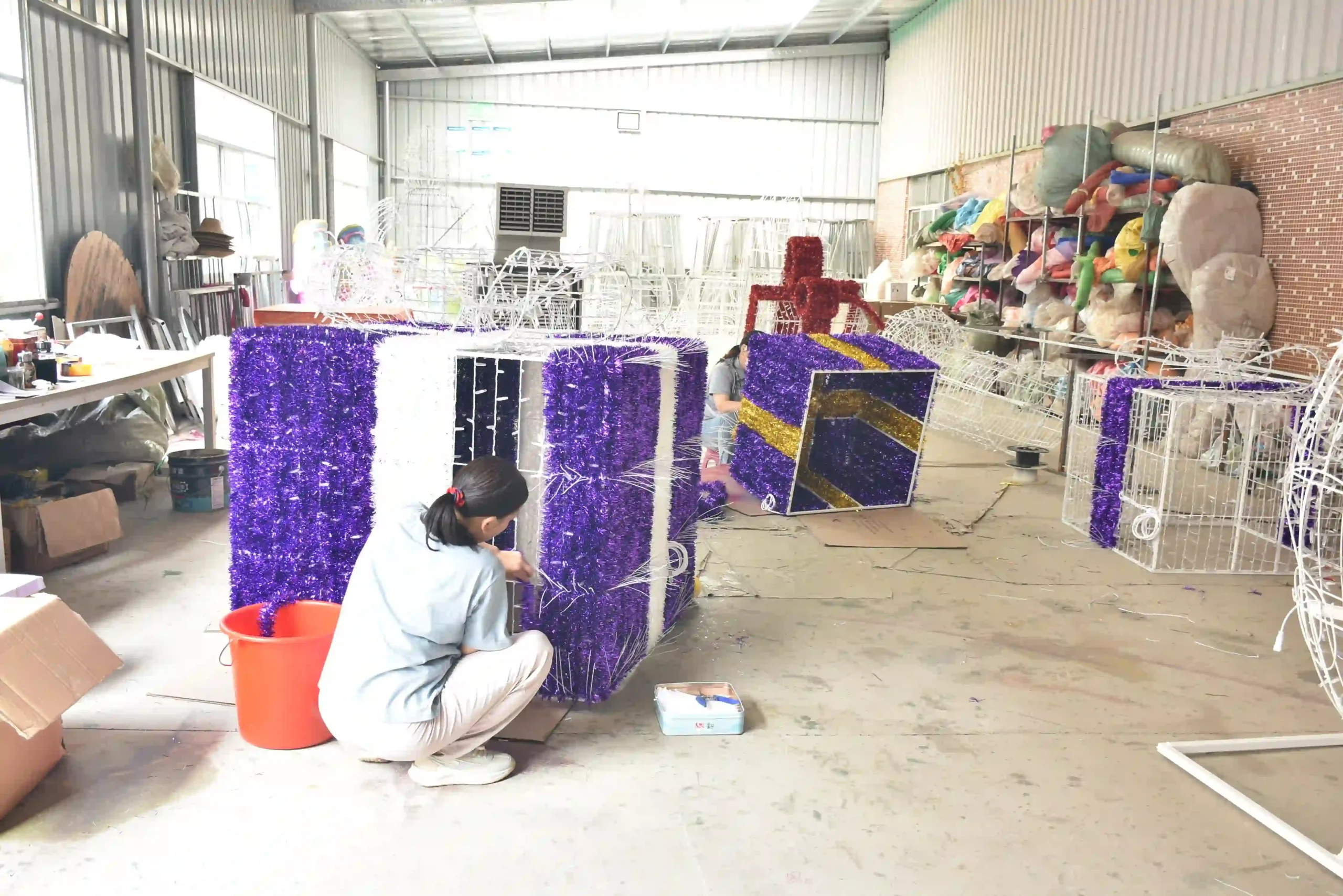
Custom Christmas Decorations Factory Process
Custom Christmas decorations start with a confirmed design, but the real work happens inside the factory.
Large Christmas trees, Santa light sculptures, reindeer sleigh displays, gift boxes, Christmas arches, lantern scenes, and shopping mall holiday decorations all need structure, lighting, surface finishing, testing, packing, and shipment planning.
As a holiday decoration manufacturer, Holilite produces commercial Christmas displays, outdoor lighting decorations, giant Christmas trees, lantern displays, fiberglass sculptures, and custom seasonal installations. Each project has different size, material, lighting, and installation requirements, but the factory process follows a clear production line.
Design Confirmation Before Production
Before production, the factory confirms the product design with the buyer.
The project may start from a reference picture, a venue size, a theme plan, or a product drawing. The factory checks the product height, width, main viewing side, base structure, lighting color, voltage, outdoor protection, packing method, and delivery time.
For a giant Christmas tree, the factory needs to confirm the tree height, bottom diameter, section structure, branch density, LED layout, and ornament style.
For a Christmas light sculpture, the factory needs to confirm the shape proportion, metal frame, lighting route, surface material, and bottom support.
For a walk-through arch or tunnel, the factory checks the opening height, width, side support, decorative parts, and site fixing method.
These details are confirmed before cutting, welding, lighting, and packing. Large decorations need to fit the venue, container, and installation plan.
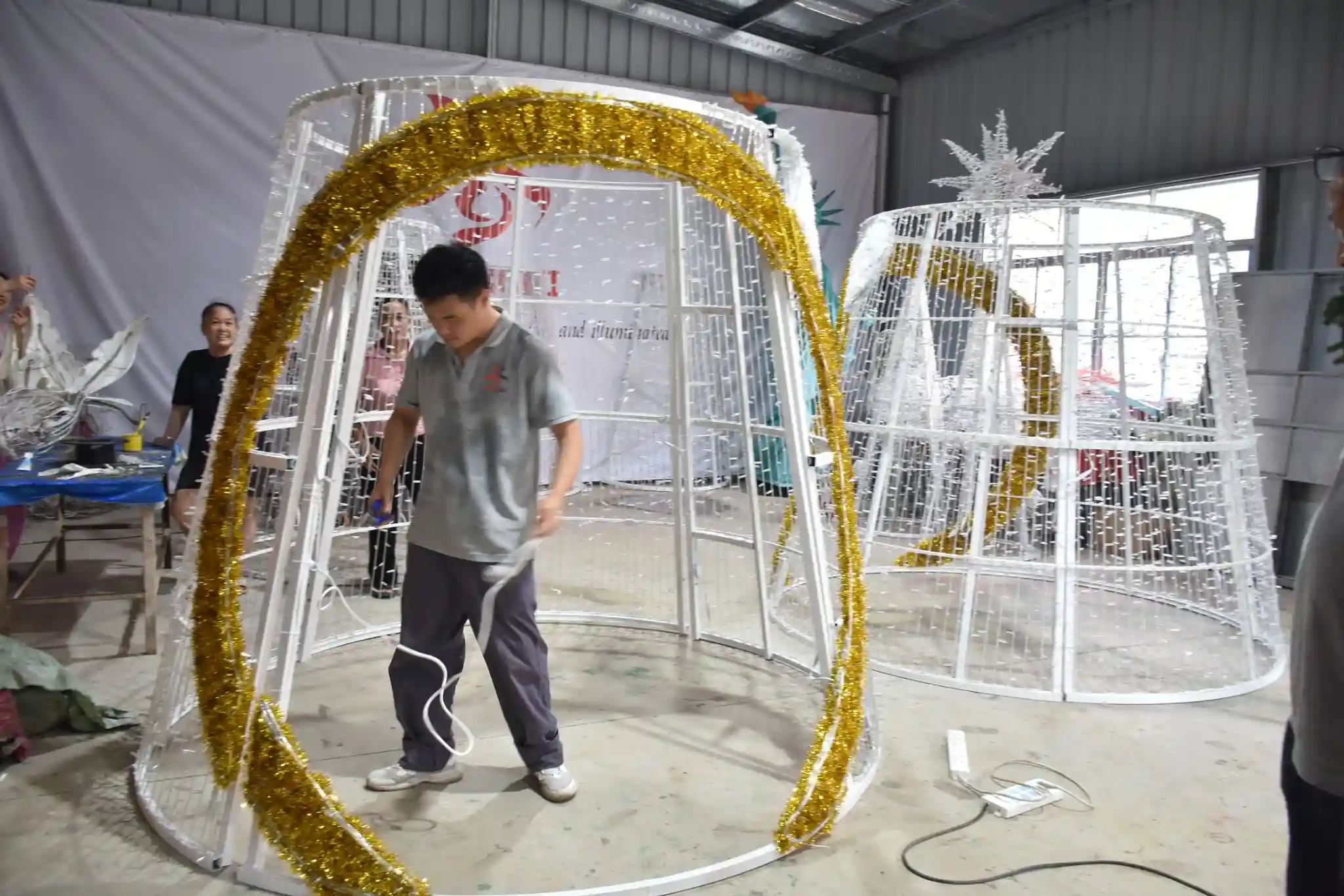
Metal Frame Cutting and Welding
Many custom Christmas decorations begin with an internal metal frame.
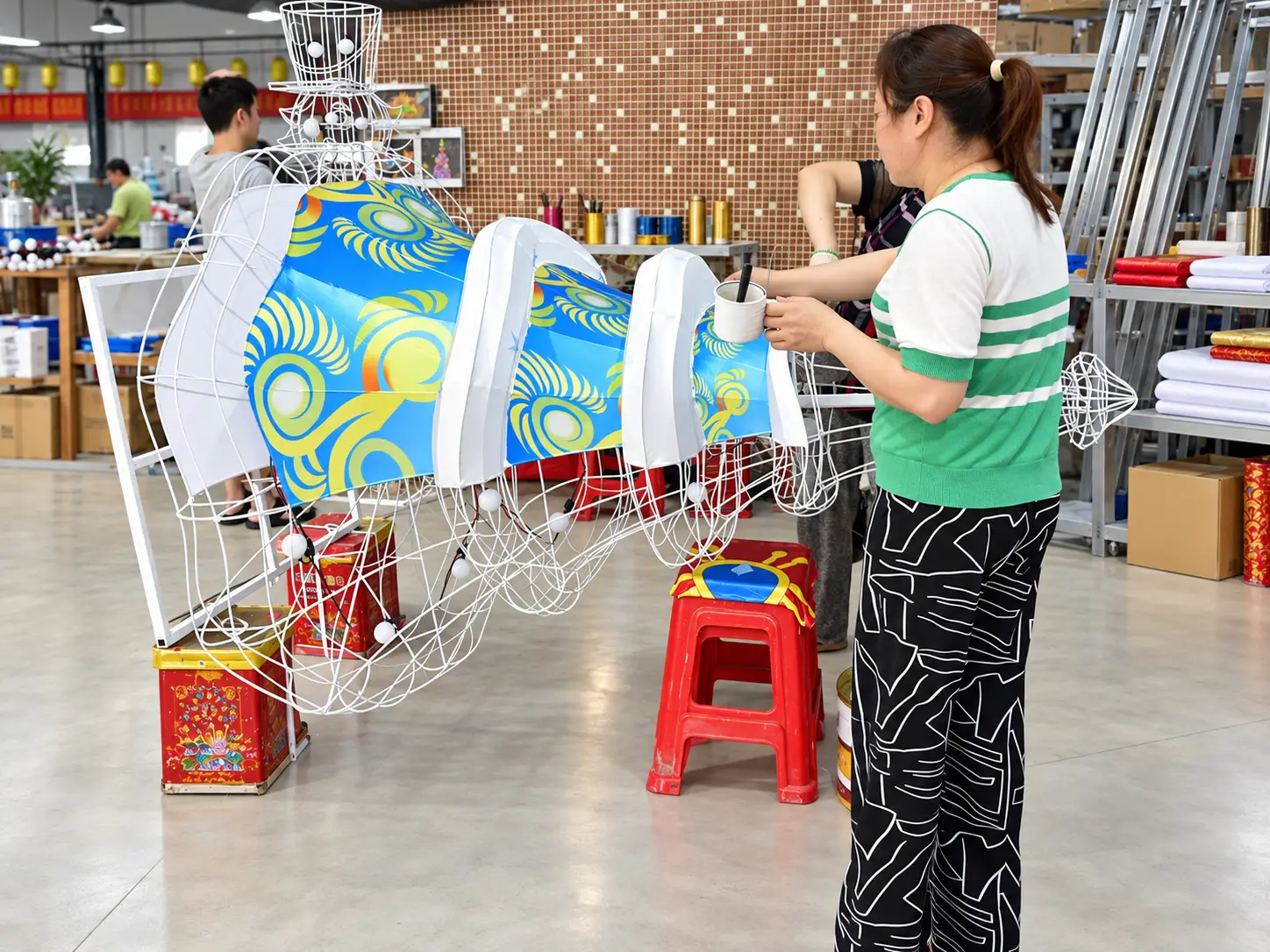
Workers cut steel tubes, bend the structure, and weld the frame according to the confirmed size. Santa Claus, snowmen, reindeer, teddy bears, gift boxes, Christmas houses, and arch displays all need different frame structures.
For 3D products, the frame includes the head, body, arms, legs, base, and support points. For arches and tunnels, the main work is the curved structure, side support, and connection position.
After welding, the factory checks the full shape before adding lights. The body should not lean. The base should stand firmly. The front view should match the design. The left and right sides should stay balanced.
A clean frame makes the next steps easier. The lights follow the shape better, the surface material fits more smoothly, and the finished decoration keeps a stronger outline.
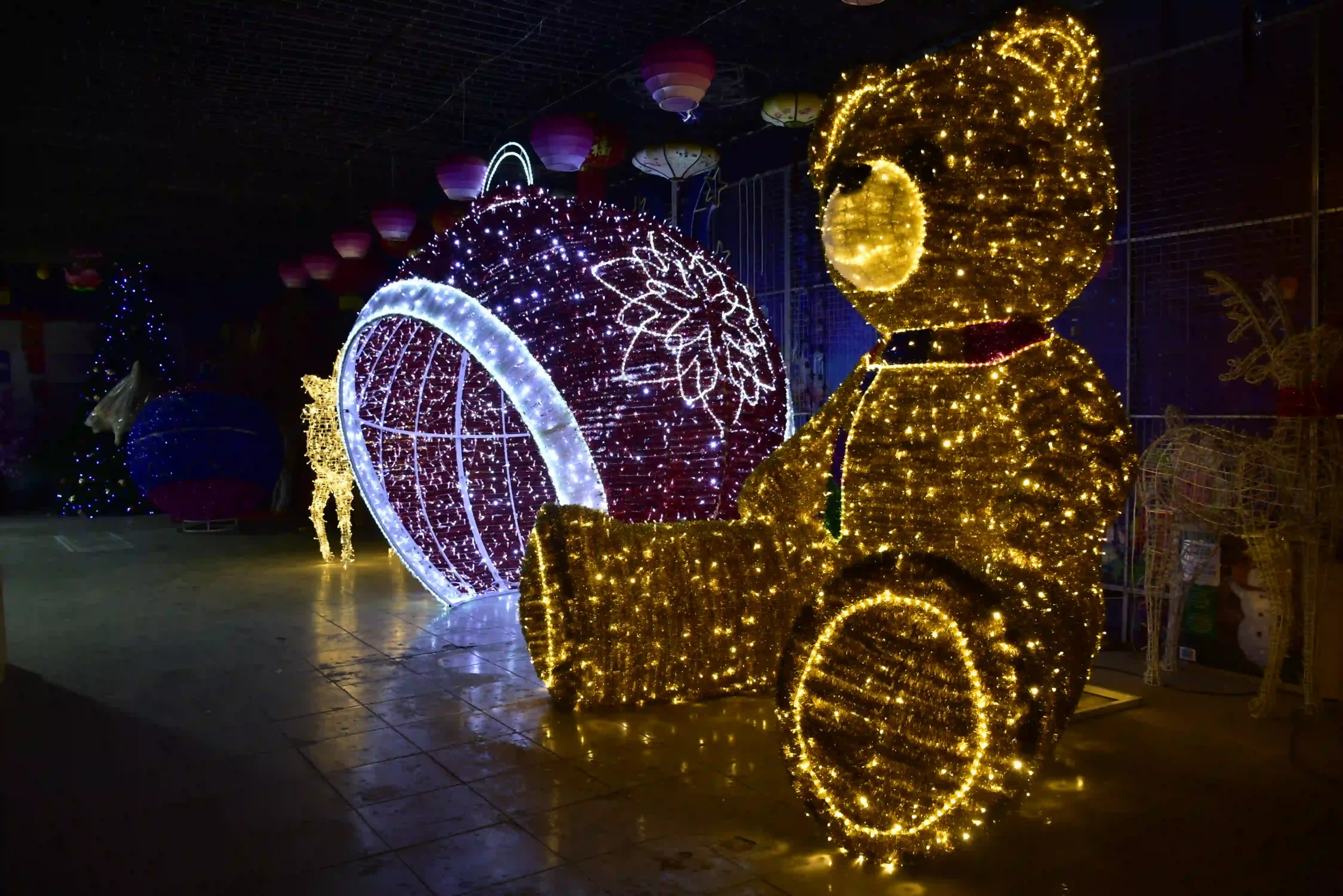
The custom teddy bear Christmas light display is a useful example. Its production started with a shaped metal frame before LED installation, surface finishing, factory testing, and protective packing.
LED String Installation
After the frame is finished, workers install LED string lights along the structure.
The lighting route follows the product shape. Animal and character sculptures need lights along the body lines. Christmas arches need brightness on the front and side. Christmas trees need lights distributed through the branches. Lantern products need internal lighting for surface glow.
During LED installation, the factory checks these points:
Light spacing
Dark areas
Wire direction
Connection position
Power cable location
Outdoor connector protection
Color consistency
Maintenance access
The product is powered on after the lights are installed. If there are dark sections, broken lights, loose wires, or color differences, the factory handles them before surface decoration.
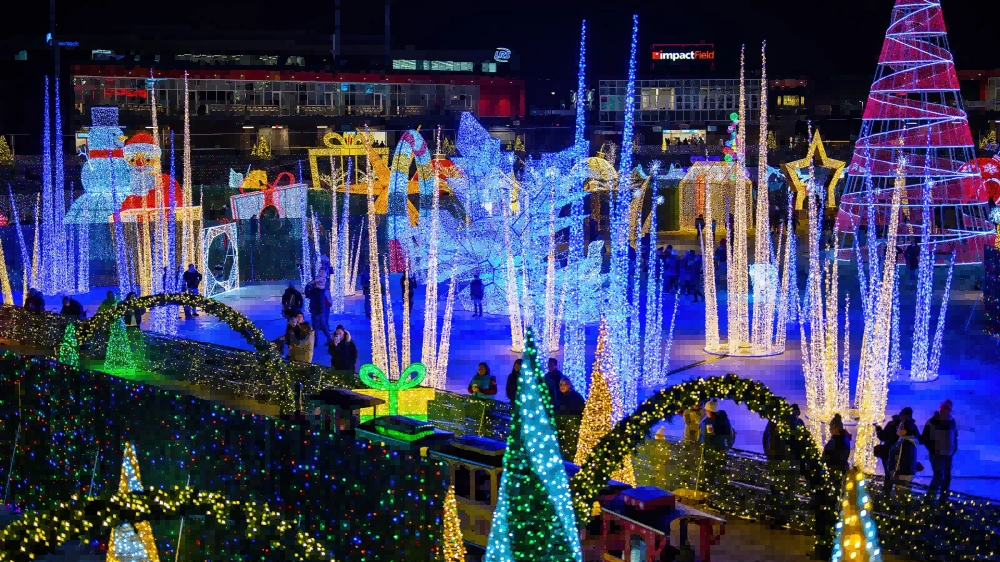
This step is also used for many outdoor Christmas lighting products, such as Christmas photo frames, candy cane lights, snowman decorations, holiday arches, and commercial Christmas scenes.
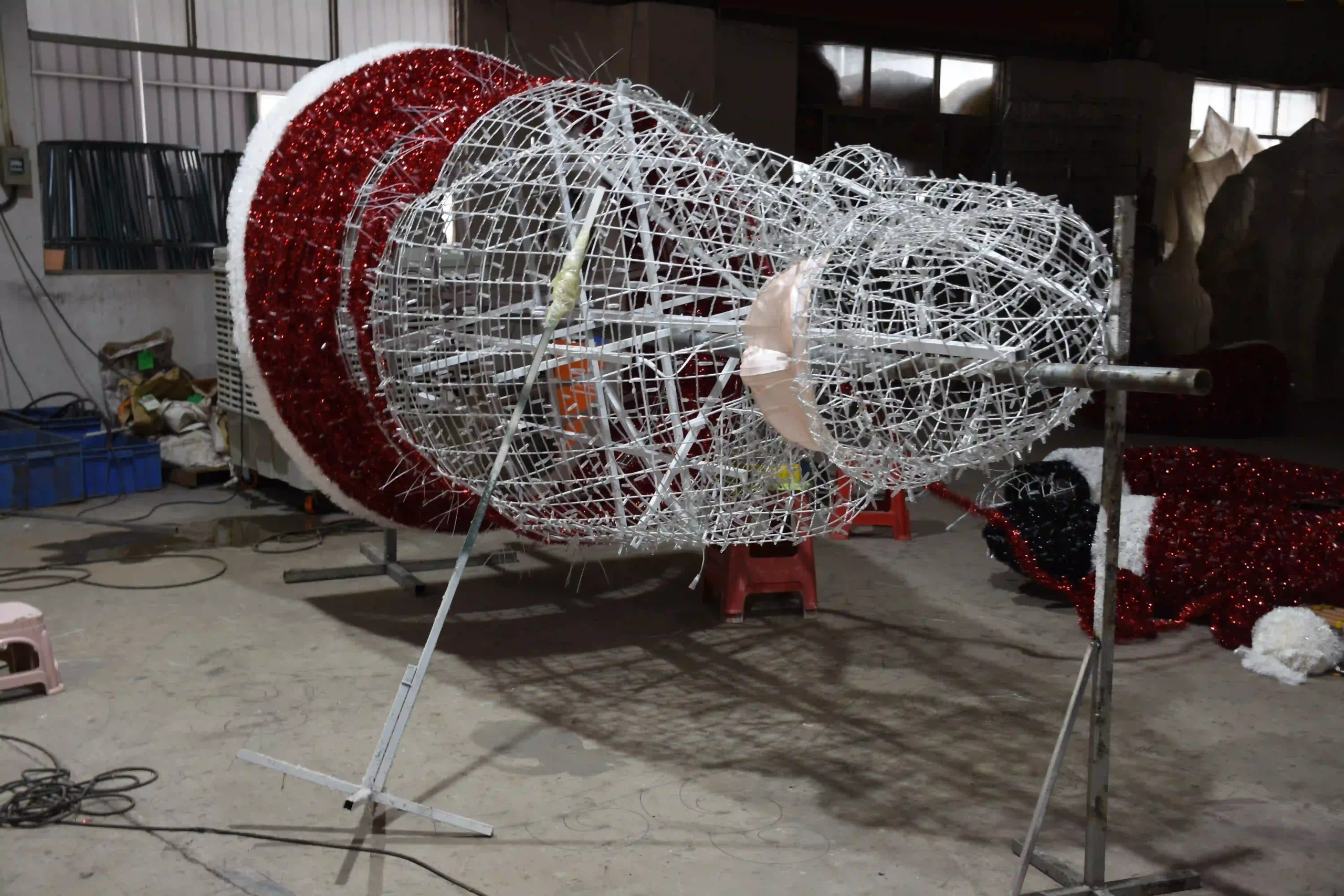
Surface Decoration Work
Surface decoration gives the product its daytime appearance and finished texture.
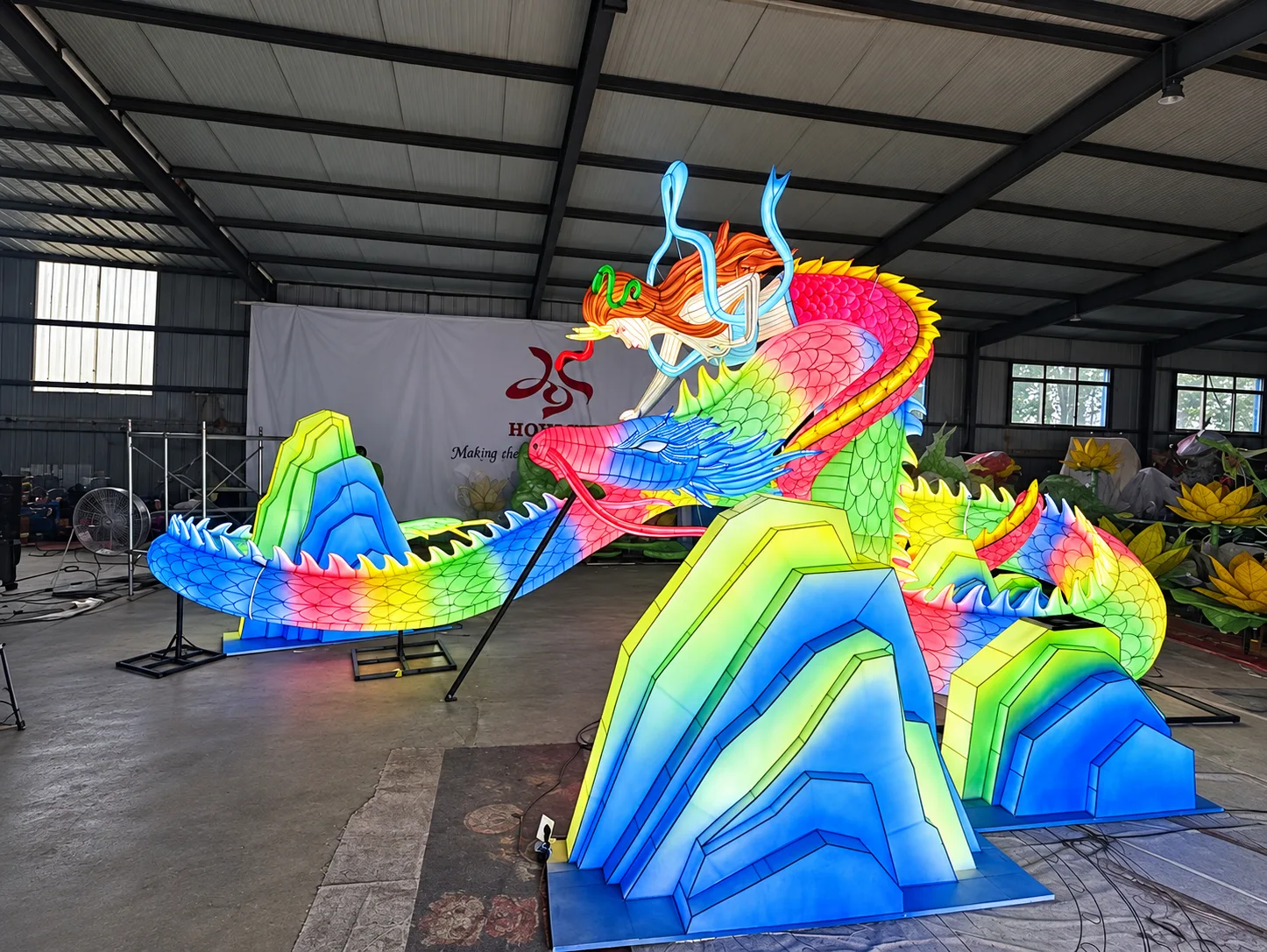
Different products use different materials. A Christmas tree uses PVC branches, LED lights, ornaments, stars, and ribbons. A Santa Claus or snowman sculpture may use tinsel, fabric, color panels, facial details, and painted parts. A gift box or candy cane needs bright surface material and clear edge lines. A lantern display uses fabric covering, painted patterns, and internal lighting.
The material has to follow the frame and lighting layout. If the surface is too thick, the light becomes weak. If the fixing is loose, the material may move during shipping. If the color blocks are unclear, the product loses shape after lighting.
For products like commercial Christmas wreaths, the decoration work includes PVC branches, ornaments, ribbons, bows, waterproof LED string lights, and a heavy-duty frame.
For larger scene products, such as a commercial Christmas decoration house light sculpture, the factory also needs to control structure, lighting, surface finish, and installation details together.
Full Lighting Test Before Packing
When the decoration is completed, the factory runs a full lighting test.
The test checks whether all lights work, whether the brightness is even, whether the color matches the order, and whether the wiring is secure. For products with control effects, the factory checks the lighting mode before packing.
The appearance is checked at the same time. Workers inspect the surface material, paint, ornaments, steel frame, base, connection points, and accessories.
For large custom projects, factory testing reduces problems after delivery. Many holiday displays are installed before a fixed opening date. The product should arrive ready for assembly, not ready for repair.
The Project Planning section already has shipment cases that show this type of production and checking process.
Modular Structure for Large Products
Oversized Christmas decorations are often produced in sections.
A giant Christmas tree can be divided into modular parts. The factory prepares the main frame, installs the branches, fixes ornaments, and loads the sections into the container. After arrival, the installation team assembles the parts on site.
A large Christmas arch can be divided into left support, right support, top curve, decorative parts, and lighting connection.
A 3D light sculpture can be divided into the base, body, head, arms, or external decorative parts according to size and shipping needs.
The connection points are planned during production. They should be strong, easy to assemble, and hidden as much as possible after installation. Each section can be marked for site assembly.
The large Christmas tree parts shipment case shows this method clearly. The tree parts were prepared as modular sections, decorated at the factory, loaded into a container, and assembled at the destination.
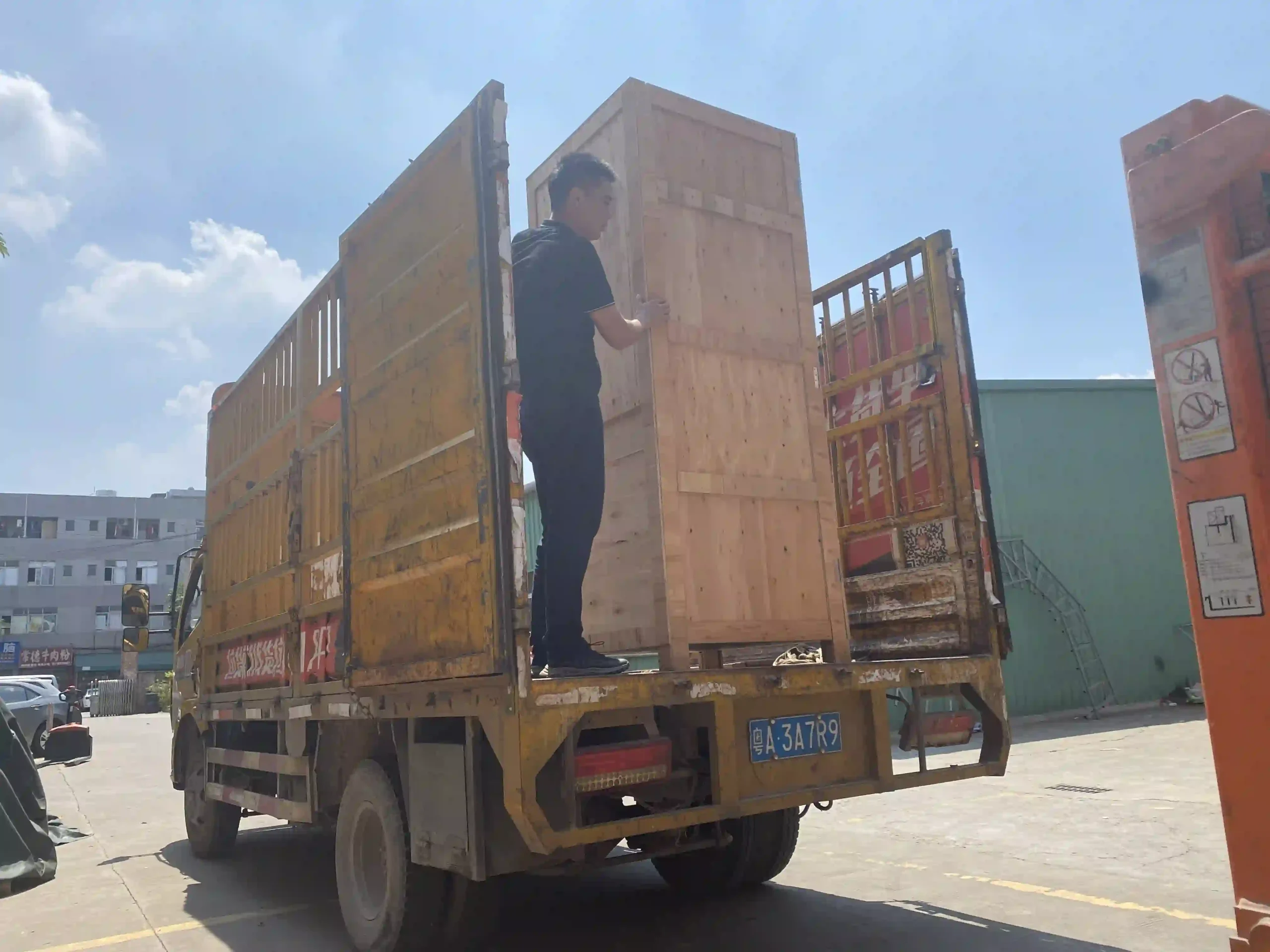
Protective Packing and Container Loading
Packing is part of the factory process for custom Christmas decorations.
LED lights, wires, painted surfaces, fabric material, ornaments, protruding parts, base joints, power supplies, and installation accessories all need protection. Small parts can be packed in cartons. Large or irregular structures may need bubble wrap, foam, wooden support, film wrapping, or custom protection.
The factory checks which parts are easy to press, scratch, bend, or loosen during shipping.
Container loading is planned by product shape. Large structures are loaded first. Small parts and accessories are placed where they are easy to find. Fragile decoration parts are not placed under heavy products. Power supplies, screws, connectors, and installation parts are kept together.
Many holiday decorations are bulky and irregular. Loading affects shipping safety, unloading, and site installation.
Installation Support After Delivery
After delivery, the buyer needs to unload, unpack, assemble, fix, connect, and test the products.
The factory can provide structure references, part marks, wiring positions, and installation order according to the project. A Christmas tree needs to be assembled section by section. A walk-through arch needs side support first. A 3D light sculpture needs the base fixed before the main body is connected.
For shopping malls, theme parks, commercial streets, hotels, resorts, and event companies, installation time is often limited. Clear product structure and marked parts help the site team work faster.
Holilite also provides custom design support for different project types, including Christmas arches, walk-through decorations, lantern displays, flower lights, soldier lanterns, and theme displays.
Custom Christmas Decoration Products
This factory process can be used for many commercial holiday products, including:
Giant Christmas trees
Christmas light sculptures
Santa Claus decorations
Reindeer sleigh displays
Christmas gift boxes
Walk-through Christmas arches
Christmas house decorations
Outdoor snowman lights
Commercial Christmas wreaths
Street pole motif lights
Theme park Christmas displays
Lantern festival decorations
Animal light sculptures
Holiday photo spot decorations
Fiberglass sculptures
For lantern projects, buyers can also check the Lanterns product category. For sculpture-style decorations, the Fiberglass Sculpture category can be used together with lighting and holiday scene design.
Factory Process for Custom Christmas Projects
Custom Christmas decorations need a connected production process.
Design confirmation controls the product direction. Metal frame work controls the structure. LED installation controls the night effect. Surface finishing controls the appearance. Testing controls shipment quality. Packing and container loading control delivery safety. Installation support helps the buyer complete the final setup.
For large Christmas trees, light sculptures, Christmas arches, lantern scenes, and commercial holiday displays, a clear factory process gives buyers more confidence before placing an order.