Lantern Festivals in Europe: Events & Custom Displays
Not every European light festival is a traditional lantern festival. Some focus on projection mapping and contemporary light art, while others use three-dimensional illuminated figures, themed scenes, arches, tunnels, animals, flowers, and large decorative structures.
For parks, zoos, botanical gardens, theme parks, municipalities, shopping destinations, and event organizers, these different formats provide useful ideas for creating seasonal attractions that fit a particular site and audience.
What Is a Lantern Festival in Europe?
The term “lantern festival” can describe several different types of nighttime events in Europe.
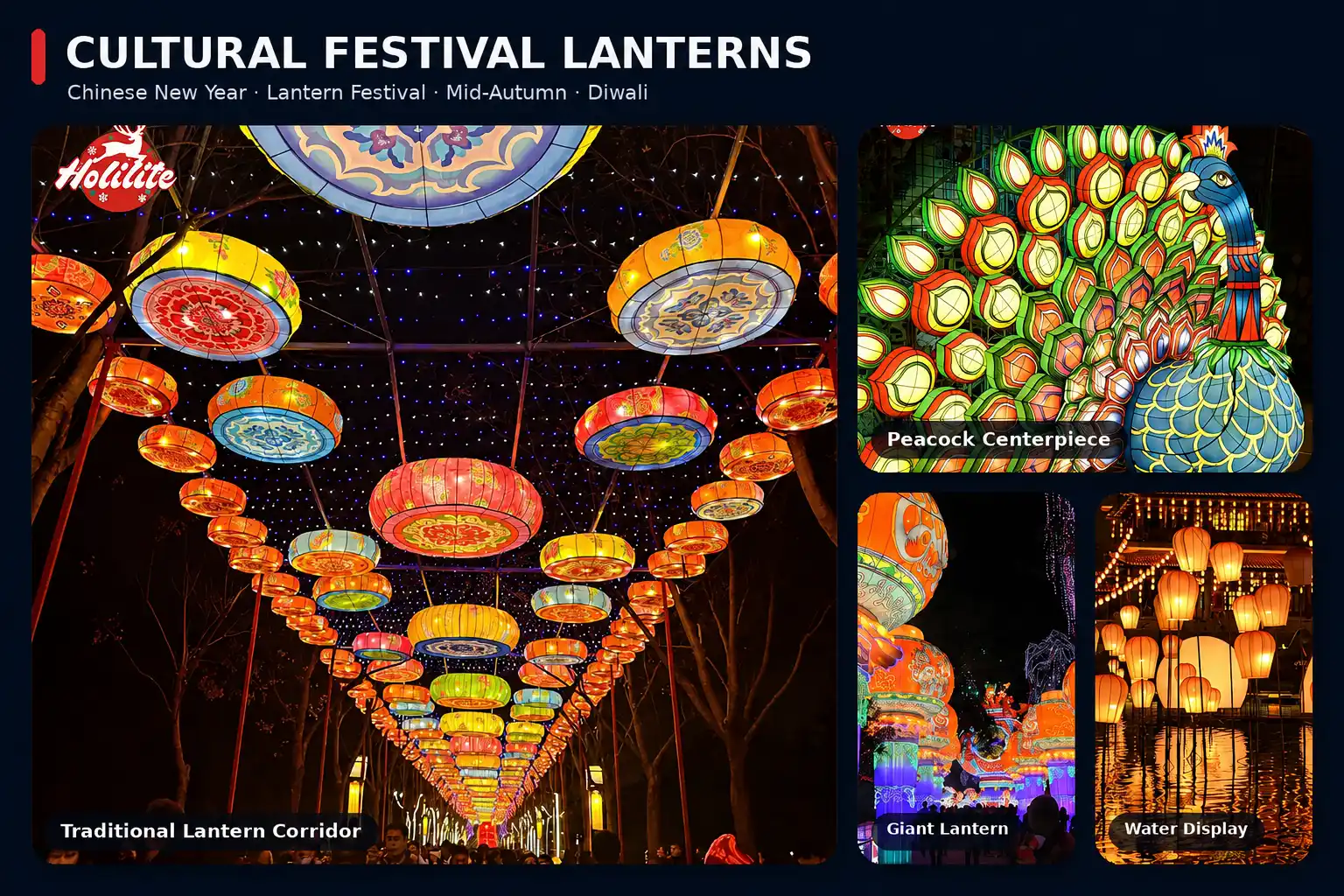
Traditional Chinese-style lantern festivals usually feature large three-dimensional sculptures built around structural frames and illuminated from within. Dragons, animals, flowers, cultural scenes, fantasy figures, tunnels, gates, and landmark installations are common.
European light festivals often use a broader combination of techniques. A single event may include illuminated sculptures, architectural lighting, projections, video mapping, sound, interactive installations, LED structures, and temporary artworks.
Light trails in zoos and botanical gardens are another important format. Instead of concentrating the installations in one square or exhibition area, visitors follow a planned route through different themed zones.
European Lantern and Light Festival Examples
Several established European events show how differently light can be used depending on the location, audience, and surrounding environment.
Berlin Festival of Lights
Berlin Festival of Lights transforms landmarks, buildings, city squares, and public spaces through projection, video mapping, light art, and music. Although it is not a traditional lantern festival, it demonstrates an important principle: the venue itself can become part of the illuminated attraction.
For municipalities, commercial districts, resorts, and large public venues, decorative lighting does not always need to stand independently from the surroundings. Building façades, existing architecture, trees, entrances, streets, and plazas can all become part of the overall design.
Amsterdam Light Festival
Amsterdam Light Festival uses a planned route through the city and presents light artworks created by international and local artists. Visitors can experience the installations from streets, canals, bridges, and other urban viewing points.
The festival is particularly useful as an example of route-based event planning.
Fête des Lumières
Lyon’s Fête des Lumières has developed from a historic local tradition into one of Europe’s best-known urban light events. Its programming includes mapping, outdoor installations, illuminated objects, interactive works, and immersive projects distributed throughout public spaces.
This illustrates another valuable approach for destination lighting: local identity can become part of the event theme.
Christmas at Kew
Christmas at Kew uses a long visitor route through the Royal Botanic Gardens, combining large-scale artworks, illuminated tunnels, sculptural installations, sound, projections, festive decorative elements, and lighting integrated into the garden landscape.
Trees, water, pathways, vegetation, glasshouses, and architecture all become part of the nighttime composition.
Zoo Lantern Events in Europe
European zoos increasingly use illuminated animals, plants, fantasy figures, and traditional lantern structures to create nighttime routes outside normal daytime visiting hours.
This format works particularly well because the visual theme already fits the venue. A zoo lantern project can use custom animal lanterns based on wildlife from different continents, endangered species, insects, marine animals, prehistoric creatures, or fantasy interpretations of nature.
Existing zoo areas can then provide the framework for different themed zones. Instead of treating illuminated figures simply as decoration, the venue can use them to reinforce the identity of the attraction.
Why Light Festivals Work Well for Parks and Attractions
Nighttime Experience
An illuminated event can create a separate nighttime experience without requiring an entirely new permanent attraction.
Existing Infrastructure
Many parks, zoos, botanical gardens, estates, and scenic destinations already have roads, pedestrian routes, landscaped areas, catering facilities, parking, entrances, and visitor infrastructure.
Seasonal Renewal
Large structural pieces, tunnels, arches, and selected themed displays may be reused while key scenes and visual landmarks are replaced or redesigned for a new season.
This is particularly useful during autumn and winter, when daylight hours are shorter and some outdoor attractions have lower daytime attendance.
From Individual Lanterns to a Complete Visitor Route
One of the most common mistakes when planning a large light display is starting with a catalogue of individual products.
A dragon may look impressive. A lantern tunnel can create an immersive section of the route. A large illuminated castle or animal group may form a strong central feature. But buying these items independently does not automatically create a coherent festival.
The project should normally begin with the site.
A venue plan can identify where visitors enter, how they move through the site, which areas are naturally suitable for large installations, where narrow paths require smaller displays, and where visitors are likely to stop.
This is why a custom lantern festival project is usually more than a collection of decorative lights. It is a spatial design project.
Popular Themes for European Lantern Projects
Theme selection should reflect both the venue and the expected visitors.
Animal and Wildlife Themes
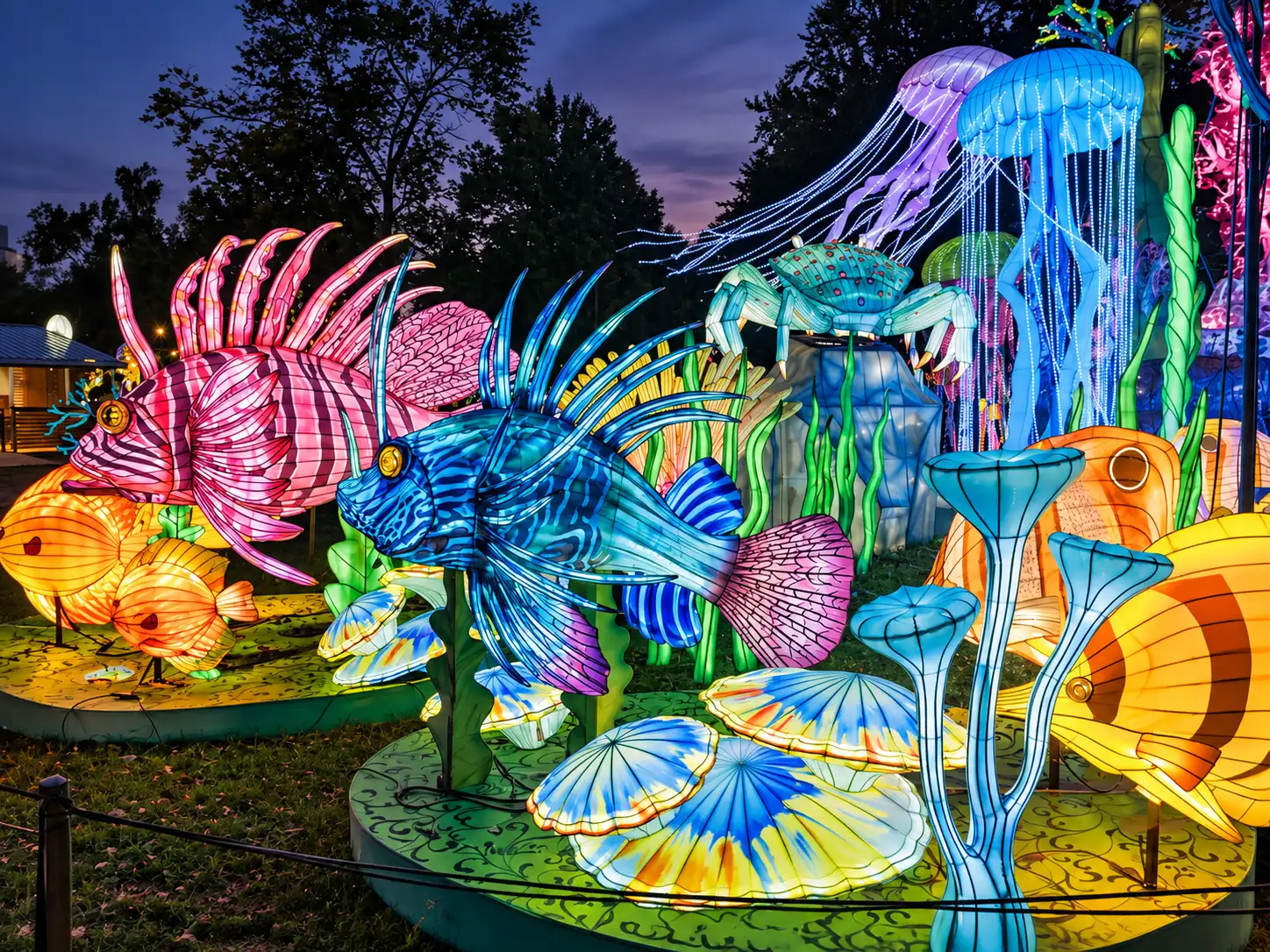
Zoos and wildlife parks naturally suit wildlife, jungle, ocean, insect, bird, dinosaur, and conservation themes. Large animal groups can be used as individual focal points or combined into complete illuminated environments.
Botanical and Garden Themes
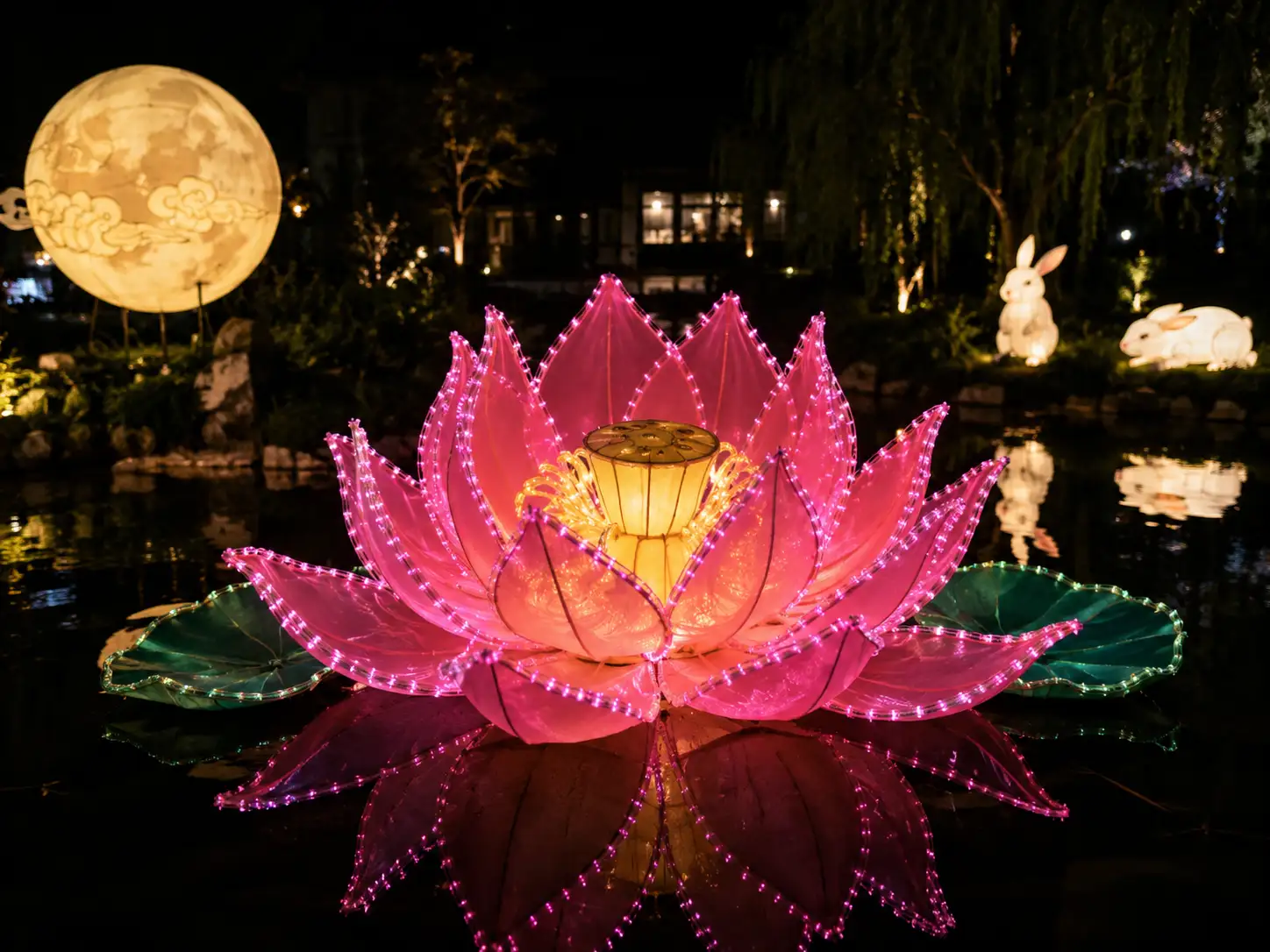
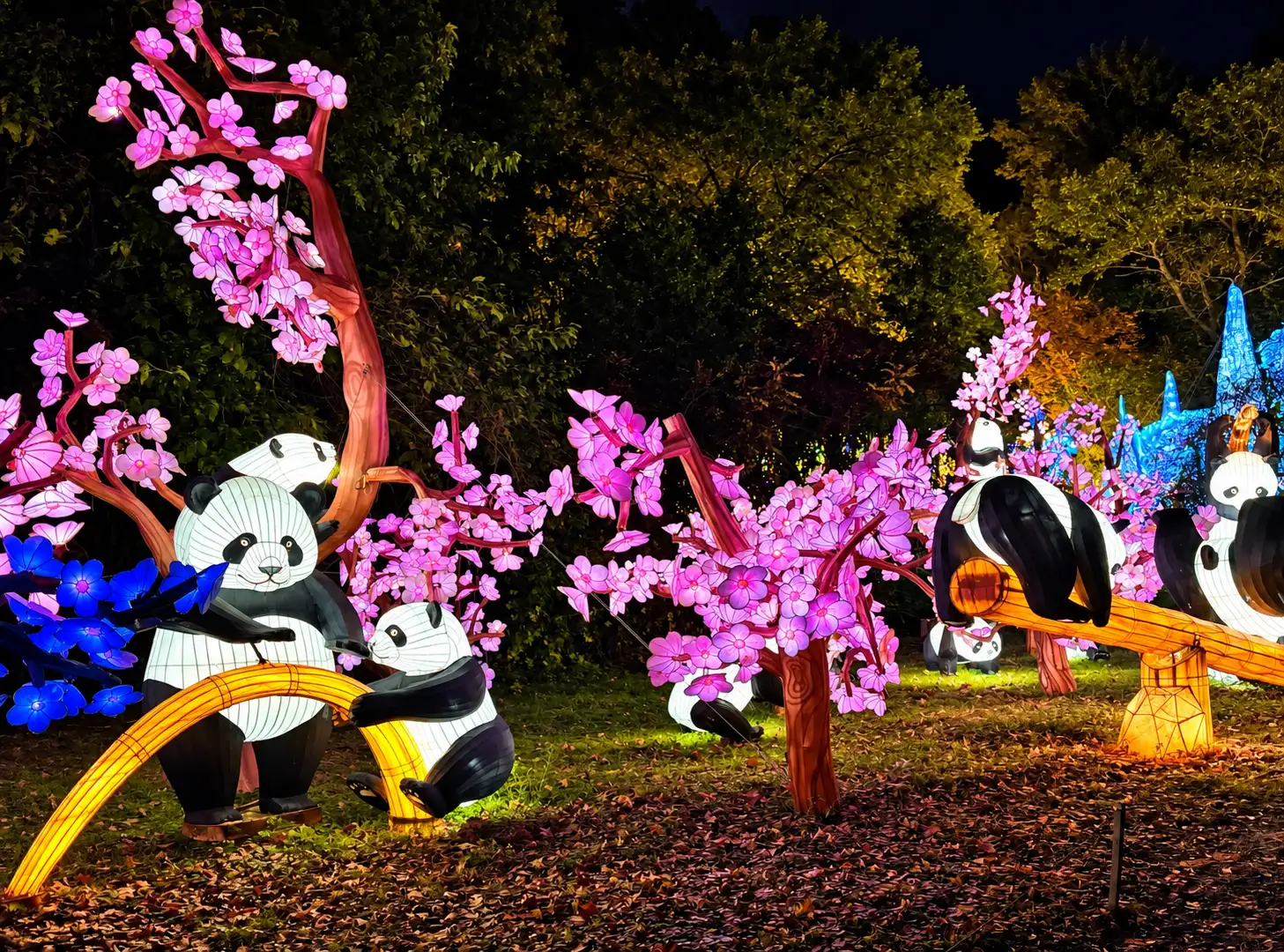
Botanical gardens can use illuminated flowers, trees, mushrooms, butterflies, birds, insects, and oversized interpretations of plants. These installations are particularly effective when existing plants and landscaping remain visible as part of the background.
Fantasy and Family Themes
Family parks often work well with fantasy scenes, castles, dinosaurs, fairy-tale characters, space themes, candy worlds, mythical creatures, and interactive installations.
Christmas and Winter Themes
Winter projects may incorporate large illuminated Christmas trees, LED gift boxes, reindeer, stars, snowflakes, bells, candy canes, ornaments, arches, and other seasonal scenes.
Large decorative elements such as a giant Christmas ball light can also be used as landmark installations in plazas, parks, commercial streets, and winter festival areas.
Local Cultural Themes
Municipal projects can use recognizable local landmarks, cultural symbols, historical references, local animals, regional stories, or designs developed specifically for a city festival.
A large event does not need to use only one visual style. Different themes can be arranged as separate zones as long as the transition between them is planned carefully.
Large Installations Need the Right Scale
Scale has a major effect on how a nighttime attraction feels.
Small illuminated objects can work along pathways or inside detailed scenes, but large open plazas and long sightlines normally need taller and wider installations.
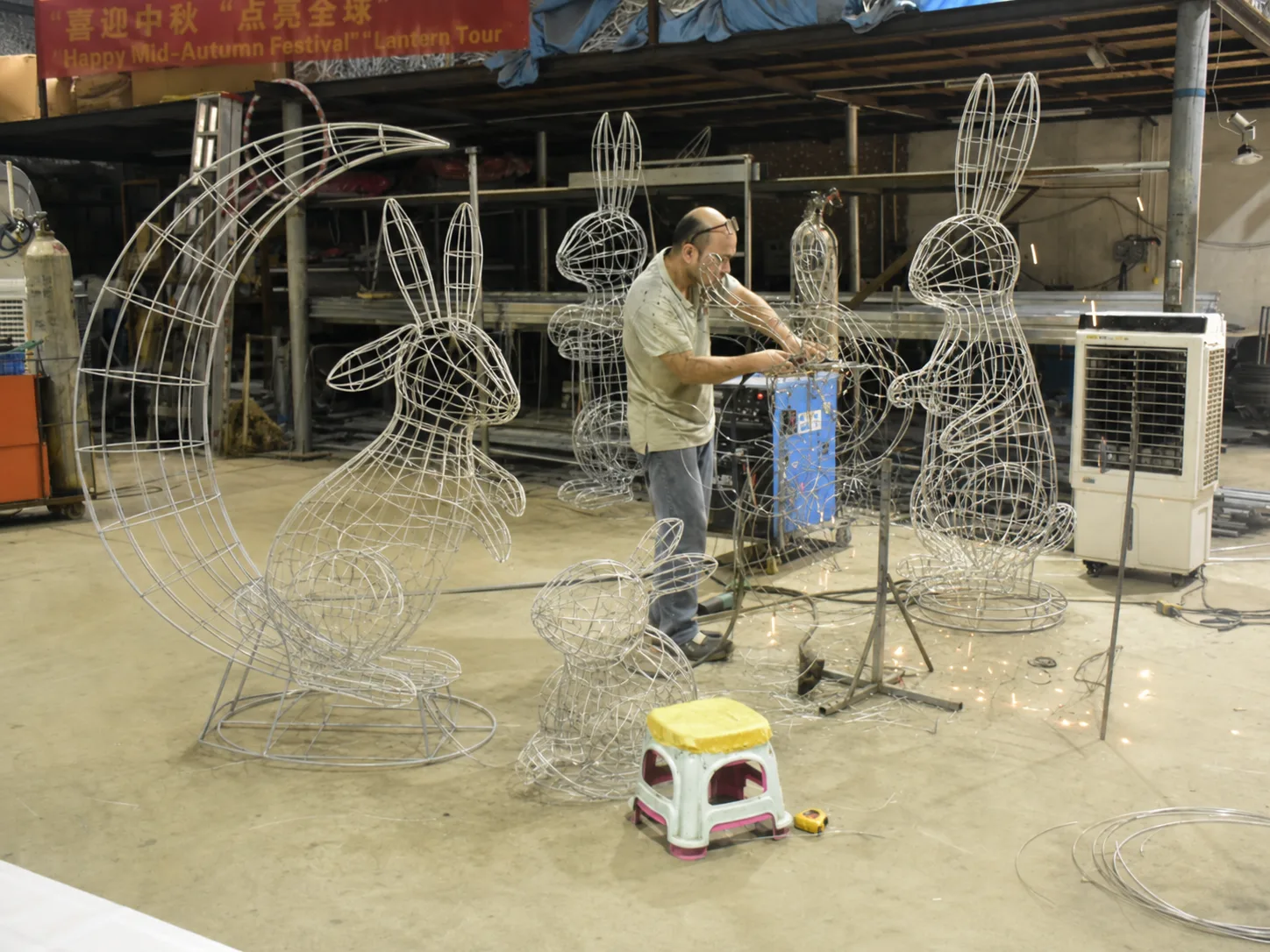
An entrance arch that looks impressive in a factory workshop may appear small once installed across a major event entrance. The same applies to Christmas trees, castles, animals, tunnels, decorative balls, and central sculptures.
For this reason, custom dimensions should be developed according to the installation area rather than selected only from a standard size list.
Important locations can first be measured and photographed. The designer can then evaluate viewing distance, surrounding buildings or trees, pedestrian movement, and the visual relationship between nearby installations.
Photo Points Should Be Designed Into the Event
Modern light events are naturally photographed, but a good photo point is more than an illuminated object.
Visitors need enough space to stand in front of the installation. The most recognizable part of the display should remain visible behind them, while nearby lighting should support rather than overwhelm the scene.
Walk-through hearts, tunnels, illuminated frames, giant flowers, arches, decorative gift boxes, fantasy vehicles, oversized ornaments, and themed letters work well because visitors can physically position themselves within or beside the installation.
A dedicated Christmas photo frame light can be positioned near an entrance, central square, themed zone, or other area where visitors naturally stop.
Planning a Custom Lantern Festival
A manufacturer needs more than a theme name such as “Christmas,” “animals,” or “fantasy” before meaningful project design can begin.
- Venue map or approximate installation area
- Available visitor route length
- Site photographs or videos
- Preferred event theme
- Expected event period
- Target audience
- Important entrance and landmark areas
- Available power locations
- Expected project scale
- Installation and dismantling requirements
The design team can then determine where different forms of illumination make sense.
For example, a zoo may need smaller animal groups around narrow visitor paths but a much larger landmark display in an open central area. A commercial plaza may have fewer available locations but require installations with strong long-distance visibility. A theme park may already have detailed architecture, requiring new displays to match rather than compete with the existing environment.
The design should therefore respond to the site rather than force the site to accommodate a fixed product package.
View Festival and Decorative Lighting Project Planning
Production, Shipping and Installation Need Early Planning
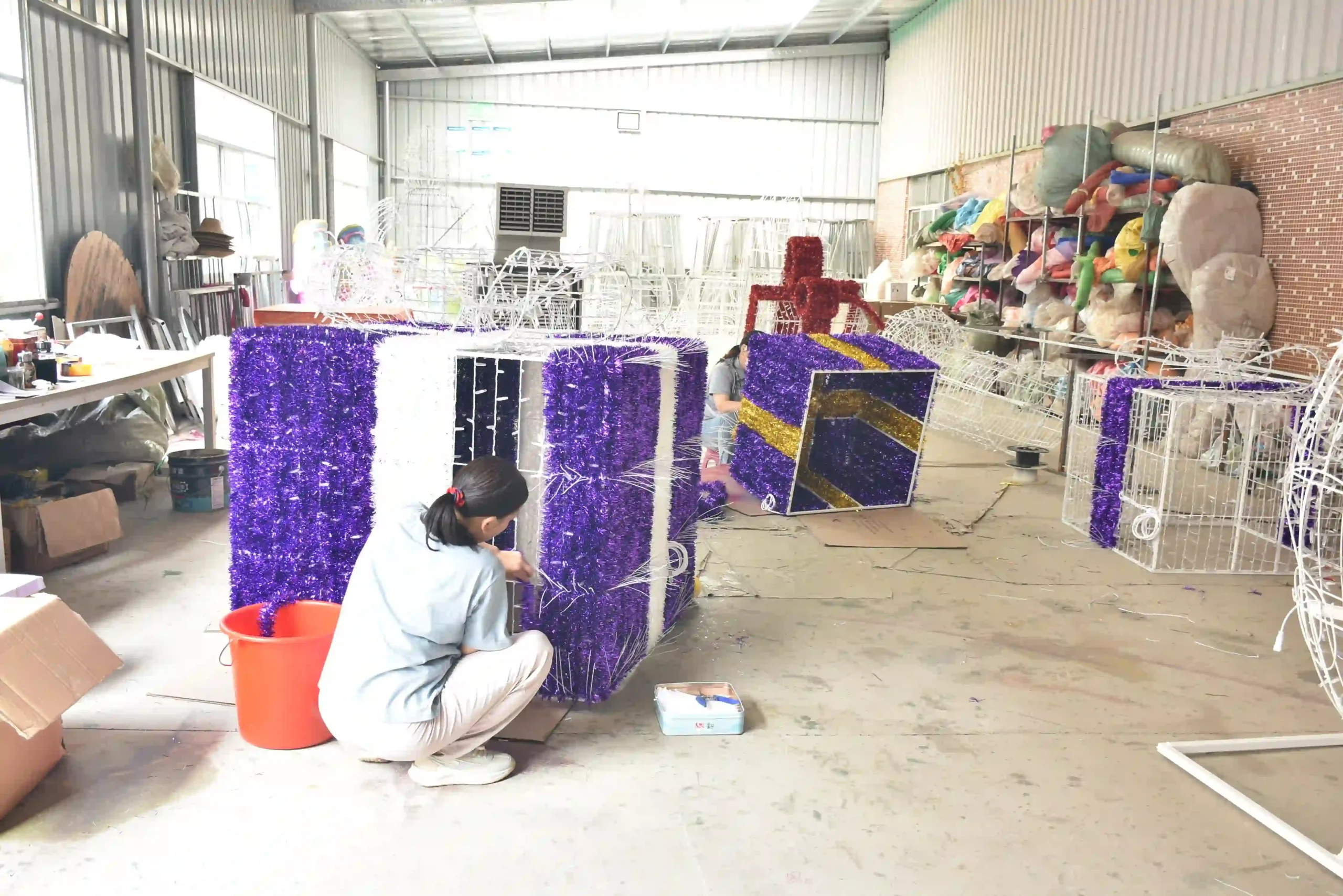
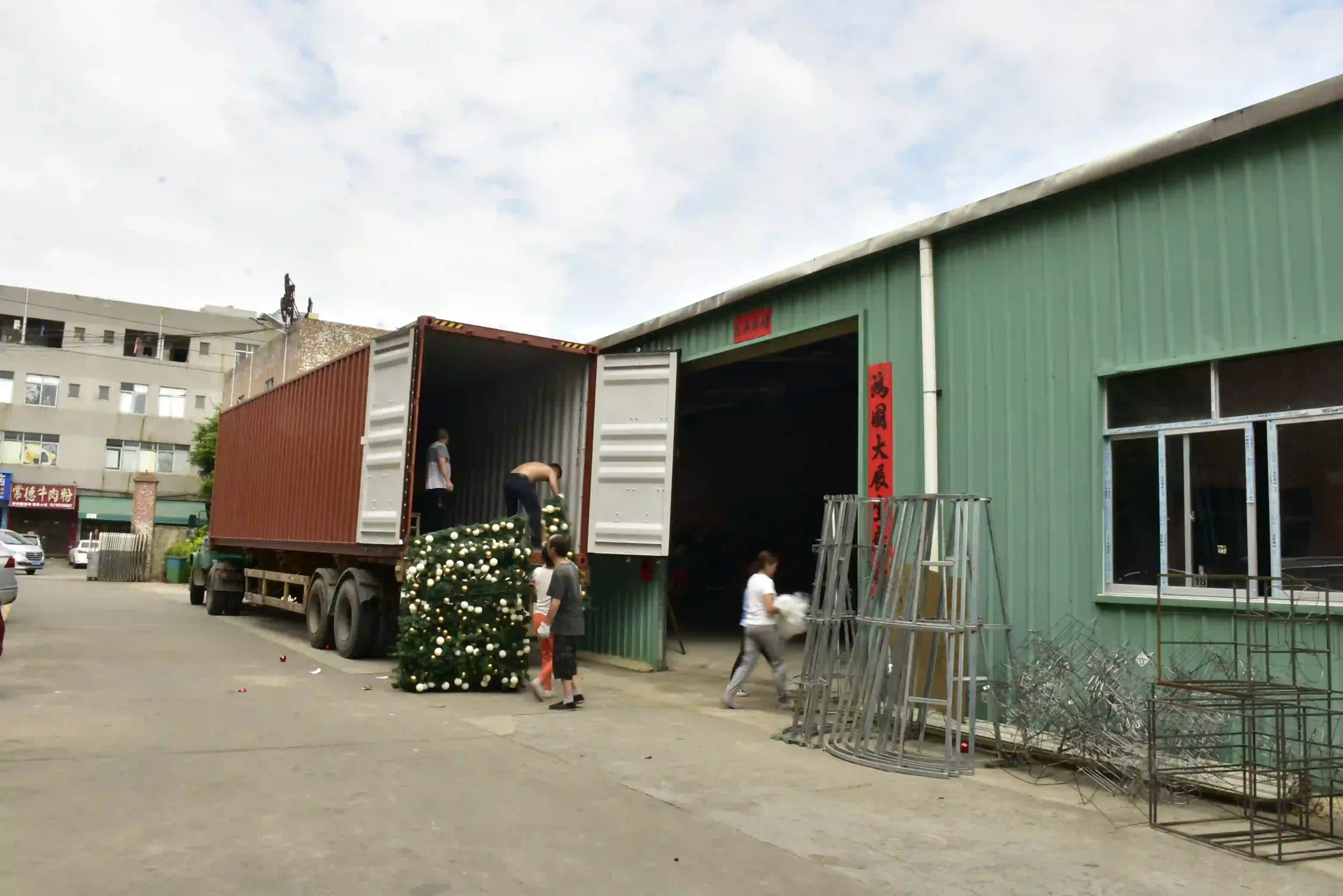
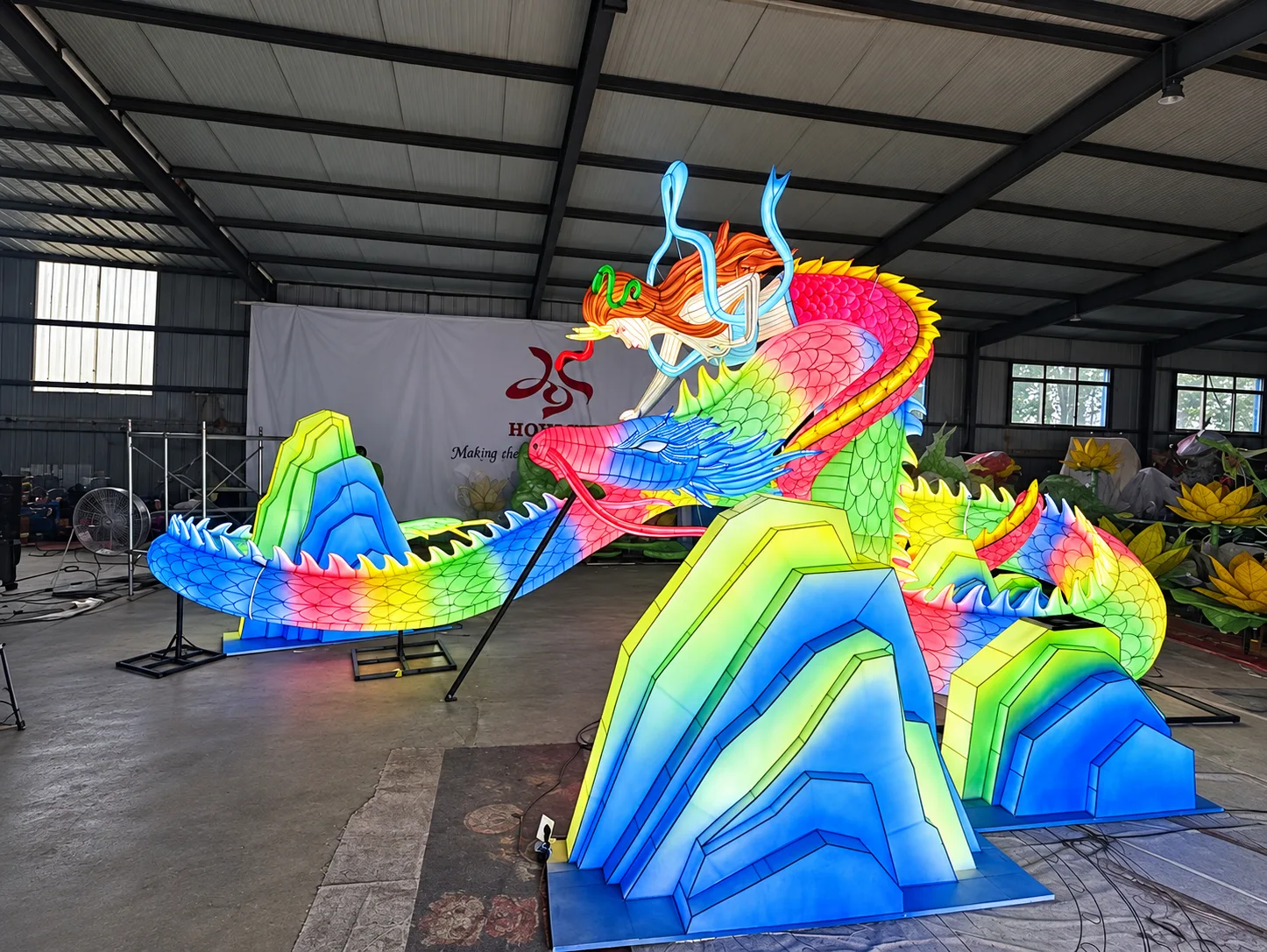
Large decorative displays have to be designed not only for appearance but also for production, transportation, installation, dismantling, and future storage.
Oversized structures may need to be divided into transportable modules. Connection points should allow sections to be assembled efficiently on site. Electrical layouts need to take the venue’s power arrangement into account. Outdoor installations also require suitable materials and construction methods for their intended environment.
Packing is part of the project design as well.
When dozens or hundreds of components are shipped internationally, clearly identified sections and organized packing can significantly simplify on-site installation. Installation drawings and assembly guidance become particularly important for venues using their own technical teams.
For projects that will return in future seasons, dismantling and storage should also be considered before production begins.
Combining Lanterns With Other Forms of Light
European light events show that there is no need to restrict a project to one lighting technique.
Traditional illuminated sculptures can be combined with light tunnels, string-light trees, projection, façade lighting, dynamic LED elements, sound, decorative street lighting, and interactive installations.
A large custom lantern scene may become the main attraction in one zone, while simpler decorative lighting connects it to the next. Existing trees can be illuminated instead of being hidden behind additional structures. Buildings can provide visual backdrops. Water can create reflections. Open lawns can hold large 3D installations that would be impractical on narrow routes.
Custom Lantern Displays for Parks, Zoos and Events
Custom production is especially useful when a venue needs something more specific than standard seasonal decorations.
A project can begin with a simple theme and site plan and then be developed into individual zones, entrance structures, landmark sculptures, animal groups, botanical scenes, light tunnels, photo installations, Christmas elements, or culturally themed displays.
Sizes, shapes, colors, lighting effects, structural divisions, and visual details can all be adjusted according to the final installation environment.
For projects requiring multiple themed areas, large festival lantern displays can be planned as a complete collection rather than purchasing unrelated pieces individually.
For large international projects, early communication between the venue operator, event designer, manufacturer, logistics team, and installers helps avoid problems later in the process.
The goal is not simply to fill an outdoor space with illuminated objects. It is to create a nighttime route in which each installation has a clear position and purpose.
Building a Lantern Festival Around Your Venue
European light festivals show how flexible illuminated attractions can be.
Large cities can integrate light with architecture and public spaces. Botanical gardens can use existing landscapes as natural backgrounds. Zoos can develop animal-based illuminated routes. Theme parks can combine lantern structures with existing rides and architecture. Shopping districts and resorts can concentrate larger installations around entrances, plazas, and visitor gathering areas.
Different venues require different solutions. A zoo does not need to imitate a city light festival, and a shopping plaza does not need the same project structure as a botanical garden.
A successful custom lantern festival starts by understanding the space, visitors, season, and event objectives first. The illuminated displays can then be designed around those conditions.
For parks, zoos, botanical gardens, resorts, theme parks, municipal festivals, and commercial destinations planning a new nighttime attraction, custom lantern displays provide a flexible way to build themed routes, large visual landmarks, immersive scenes, and repeatable seasonal events.