Is There a Difference Between Indoor and Outdoor Christmas Trees?
Yes, there is a difference between indoor and outdoor Christmas trees. The difference is not simply the shape or the size. The real difference is in the materials, lighting system, structure, waterproof protection, dust resistance, and installation method.
Indoor Christmas trees and outdoor Christmas trees are made for different display environments. An indoor tree is usually used in places such as hotel lobbies, shopping mall atriums, offices, restaurants, retail stores, and indoor event spaces. It focuses more on decorative appearance, branch fullness, lighting color, ornaments, and easy setup.
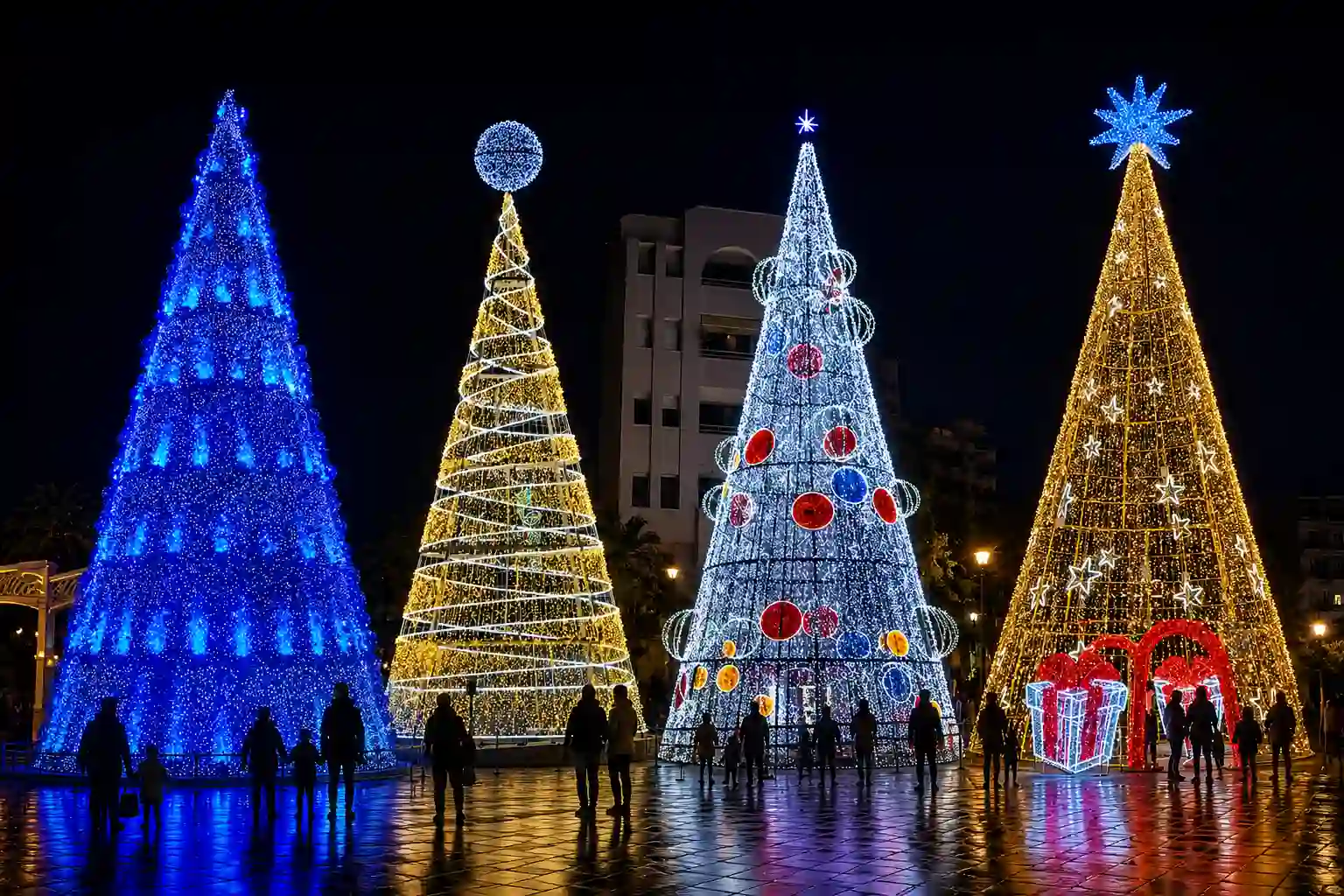
An outdoor Christmas tree is designed for open-air spaces such as city plazas, hotel entrances, parks, commercial streets, Christmas markets, scenic areas, and public holiday displays. It needs stronger materials, waterproof lights, weather-resistant branches, and a stable fixing structure.
For project buyers, the question is not which one is better. The right choice depends on where the Christmas tree will be installed and how long it needs to stay on display.
Indoor Christmas Trees Focus on Decoration and Atmosphere
Indoor Christmas trees are usually placed in protected spaces. They do not need to face rain, snow, strong wind, road dust, or long-term sunlight. Because the environment is more stable, the structure can be lighter and the installation can be simpler.
For indoor projects, buyers usually care more about the visual effect. Branch density, tree shape, ornament style, lighting color, and tree height are important. A Christmas tree used in a hotel lobby or shopping mall atrium needs to look full, elegant, and suitable for the surrounding decoration style.
Indoor Christmas trees can also be customized. The height, color theme, ornaments, tree topper, lighting style, and base decoration can all be adjusted according to the project. For example, a hotel may prefer warm white lights and gold ornaments, while a shopping mall may choose red, silver, or branded colors.
Outdoor Christmas Trees Need Stronger Materials
Outdoor Christmas trees are used in more demanding environments. They may be exposed to rain, dust, wind, sunlight, snow, temperature changes, and frequent visitor contact. Because of this, the material requirements are higher than indoor trees.
Weather-resistant PVC or PE branches are commonly used for outdoor Christmas trees. These materials are more suitable for long outdoor display because they can better handle moisture, dust, sunlight, and temperature changes.
For parks, plazas, streets, and outdoor event spaces, the tree may need to stay outside for several weeks or even months. If the branch material is not suitable, it may fade, deform, collect dust quickly, or look old before the event ends.
This is why outdoor Christmas trees need materials that are not only decorative, but also durable and easy to maintain.
Waterproof Lighting Is a Key Difference
Lighting is one of the most important differences between indoor and outdoor Christmas trees.
Indoor Christmas trees can use regular decorative lights because they are placed in dry spaces. Outdoor Christmas trees need waterproof LED lights, outdoor-rated wires, protected connectors, and safer power systems.
Rain and moisture can affect the lighting system if the lights are not designed for outdoor use. Poor waterproof protection may cause unstable lighting, damaged wires, short circuits, or extra maintenance during the holiday season.
A suitable outdoor Christmas tree should use waterproof light strings and protected electrical connections. The power box, controller, wire joints, and connectors should also be designed for outdoor conditions. This helps the tree keep a stable lighting effect during rain, snow, and humid weather.
Dust Resistance Matters in Outdoor Spaces
Indoor Christmas trees are usually placed in clean environments. Normal indoor dust is easy to control. Outdoor Christmas trees are different.
Outdoor trees may face road dust, leaves, rainwater marks, mud, sand, air pollution, and dust from visitor areas. If the surface material is not easy to clean, the tree can quickly lose its bright and festive appearance.
Dust-resistant and easy-clean materials are useful for outdoor Christmas trees, especially in public spaces. City streets, parks, plazas, scenic areas, and shopping mall entrances all need decorations that can stay clean and attractive during the whole display period.
For project owners, this also affects reuse. A Christmas tree made with better outdoor materials is easier to clean, store, and install again in future seasons.
Structure Is Different Between Indoor and Outdoor Trees
Indoor Christmas trees usually use a simple stand or light frame. This is enough for flat indoor floors and stable environments.
Outdoor Christmas trees, especially large trees, need a stronger structure. A tall outdoor Christmas tree may require a steel frame, modular rings, inner support poles, reinforced base, and stronger connection parts.
The frame supports the tree body, lights, ornaments, and tree topper. It also helps the tree handle outdoor wind pressure. For a large outdoor Christmas tree, the internal structure is just as important as the visible decoration.
A modular steel frame is also practical for transportation and installation. Large outdoor trees can be divided into sections, shipped more easily, assembled on site, dismantled after the event, and reused for future projects.
Outdoor Fixing Is More Important Than Indoor Setup
Indoor trees are usually placed on a flat floor. A simple base is often enough.
Outdoor Christmas trees need a different fixing method. The fixing system depends on the tree height, ground condition, local wind level, installation period, and site requirements.
Common fixing methods include reinforced bases, steel plates, ground anchors, expansion bolts, counterweights, and support cables. A small outdoor tree may only need a weighted base, while a giant tree in a public plaza may need ground anchoring and a reinforced steel structure.
For outdoor projects, the fixing method should be planned before production. The supplier needs to understand the installation site, tree height, ground type, and display period. This makes the final tree safer and easier to install.
Indoor Christmas Tree vs Outdoor Christmas Tree
| Feature | Indoor Christmas Tree | Outdoor Christmas Tree |
|---|---|---|
| Main Use | Hotel lobby, mall atrium, office, retail store | Plaza, park, street, hotel entrance, event venue |
| Branch Material | Decorative PVC or PE branches | Weather-resistant PVC or PE branches |
| Lighting | Indoor decorative lights | Waterproof outdoor LED lights |
| Structure | Simple stand or light frame | Steel frame or modular structure |
| Fixing Method | Floor base | Reinforced base, bolts, anchors, counterweights, or cables |
| Protection | Basic indoor use | Waterproof, dust-resistant, and wind-resistant |
| Installation | Easier setup | Site-based installation and fixing |
| Reuse | Indoor seasonal reuse | Repeated outdoor project use |
| Customization | Height, ornaments, lights, color theme | Height, frame, lights, ornaments, fixing method, weather protection |
Indoor and Outdoor Christmas Trees Can Both Be Customized
Indoor and outdoor Christmas trees are made for different spaces, and both can be customized according to project needs.
An indoor Christmas tree is a good choice for hotel lobbies, shopping mall atriums, offices, retail stores, restaurants, and indoor event spaces. It can be customized in height, branch density, ornament color, lighting effect, tree topper, and decorative base.
An outdoor Christmas tree is more suitable for city plazas, parks, scenic areas, commercial streets, hotel entrances, Christmas markets, and public holiday displays. It can be customized with waterproof LED lights, weather-resistant branches, dust-resistant materials, steel frame structure, reinforced base, and outdoor fixing system.
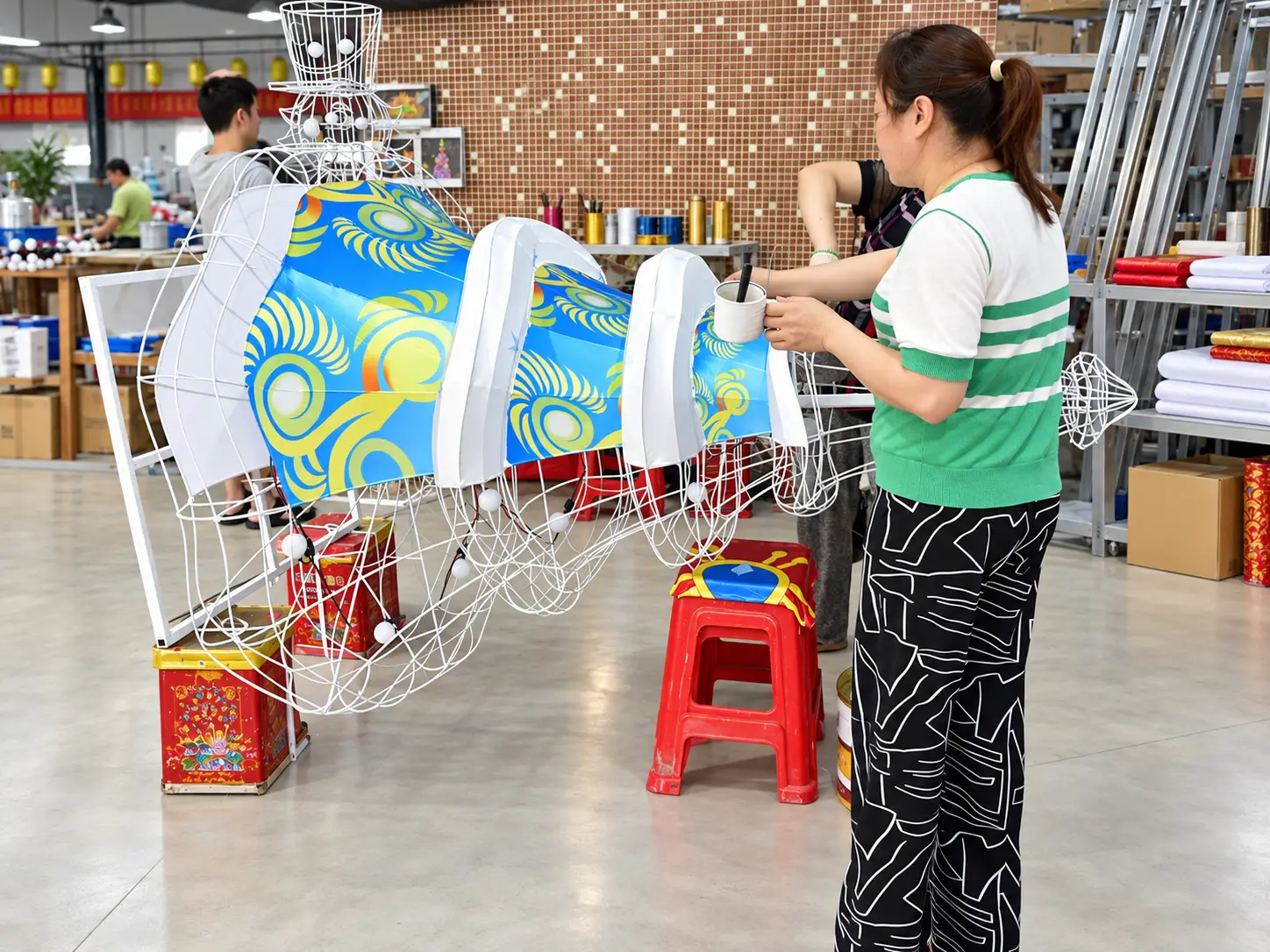
Our factory can produce both indoor and outdoor Christmas trees. The design can be adjusted according to the venue size, installation environment, display theme, lighting color, and project requirements. This allows each project to choose the right tree instead of using one standard design for every space.
How to Choose the Right Christmas Tree
The easiest way to choose is to look at the installation location.
If the tree will be used indoors, buyers can focus more on decorative appearance, branch fullness, ornament style, lighting color, and easy installation.
If the tree will be used outdoors, buyers should pay more attention to waterproof lighting, weather-resistant materials, dust resistance, frame strength, base structure, and fixing method.
For a small indoor display, a lightweight decorative tree may be enough. For a large outdoor display, a custom outdoor Christmas tree with a steel frame and stable fixing system is usually a better choice.
Before purchasing, it is useful to confirm the tree height, bottom diameter, branch material, light type, voltage, control method, ornament style, installation space, ground condition, and whether the tree needs to be reused every year.
Where Indoor Christmas Trees Are Used
Indoor Christmas trees are often used in hotel lobbies, shopping mall atriums, office buildings, restaurants, retail stores, exhibition halls, and indoor event venues.
These spaces usually need a tree that looks elegant and matches the interior design. Warm white lights, gold ornaments, red balls, silver decorations, ribbons, snowflakes, and custom toppers are commonly used for indoor Christmas displays.
Indoor trees can also be designed for brand events or seasonal retail displays. The color theme and ornaments can match the brand image or holiday decoration plan.
Where Outdoor Christmas Trees Are Used
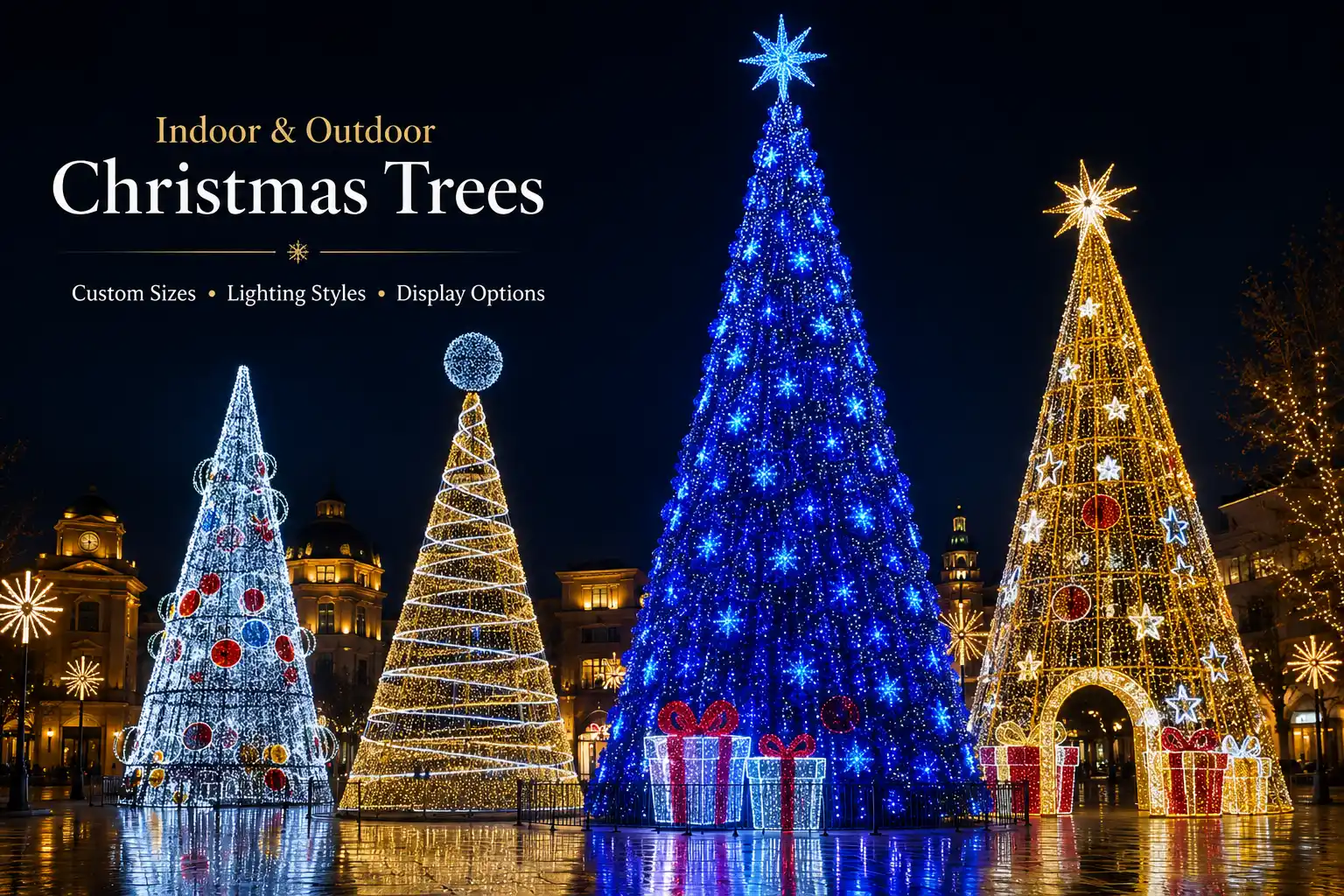
Outdoor Christmas trees are widely used in city plazas, shopping mall entrances, hotel outdoor areas, theme parks, commercial streets, Christmas markets, public gardens, scenic areas, and winter light festivals.
In these spaces, the tree is often the main visual center of the holiday display. It needs to be bright enough to attract visitors from a distance and strong enough to remain stable during the display period.
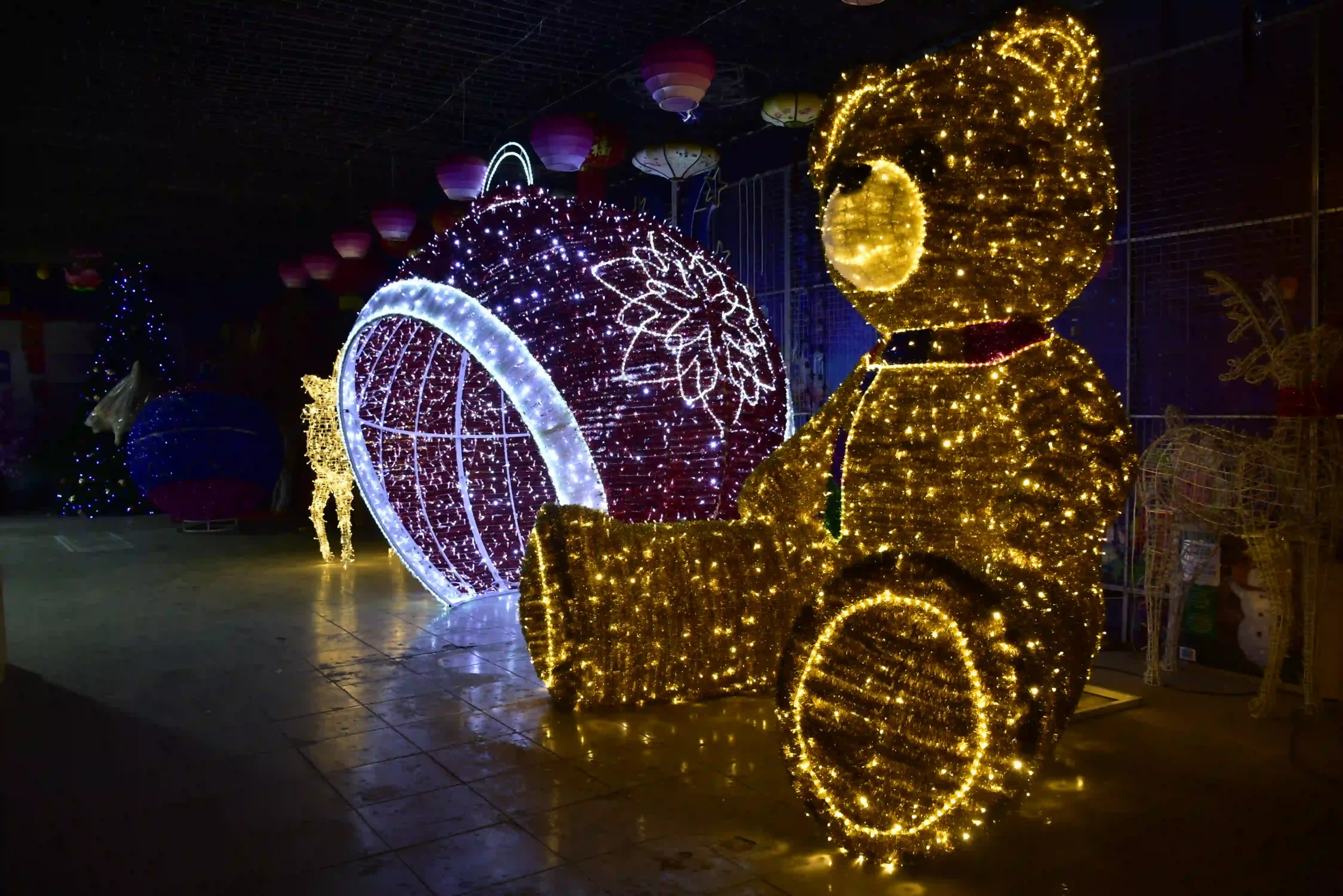
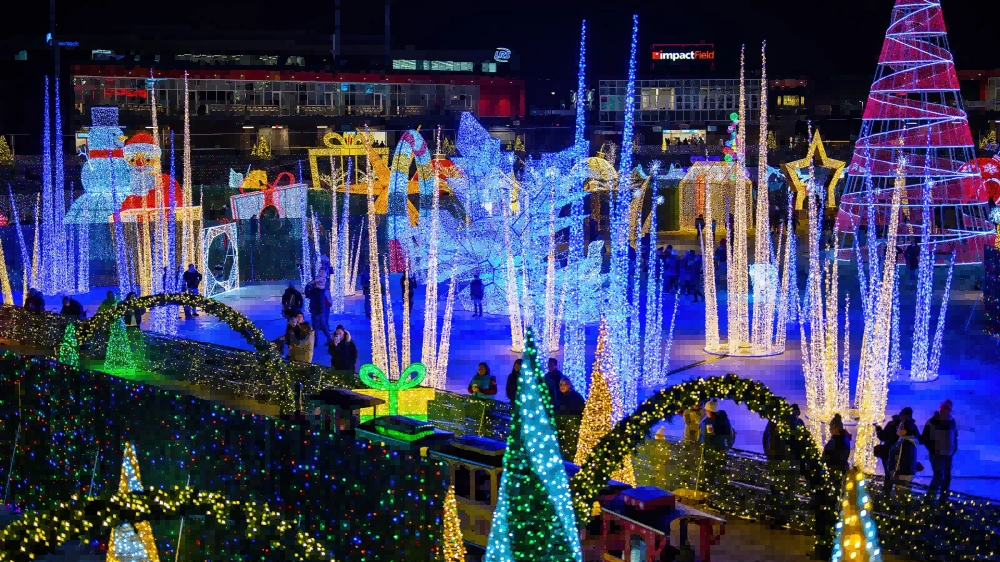
Outdoor Christmas trees can also be combined with light arches, gift boxes, snowflake lights, reindeer displays, Santa figures, and Christmas tunnels. This helps create a complete holiday scene for visitors to walk through, view, and photograph.