What Are the Seven Types of Dinosaurs?
When people ask what are the seven types of dinosaurs, they usually want a simple way to understand the main dinosaur groups rather than a complicated scientific classification.
For museums, theme parks, lantern festivals, zoos, botanical gardens, and family attractions, broad categories based on body shape, movement, and visual character are also useful for planning exhibits and large dinosaur lantern displays.
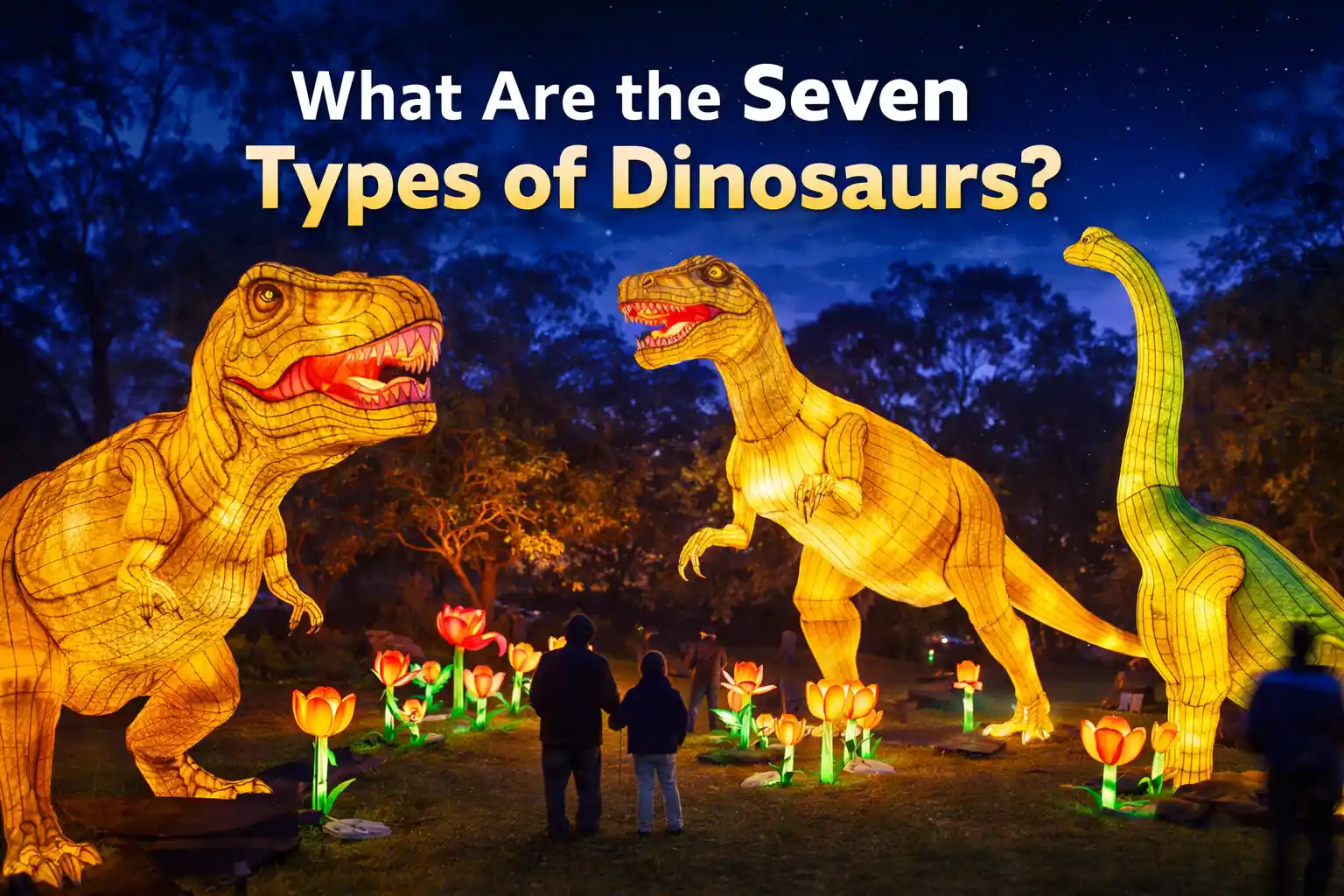
In this practical guide, the seven groups are tyrannosaurs, large bipedal theropods, sauropods, horned dinosaurs, stegosaurs, armored dinosaurs, and duck-billed dinosaurs. These categories are easy for visitors to recognize and can also be translated into giant illuminated dinosaur lanterns for nighttime attractions.
Seven Popular Dinosaur Types
Tyrannosaur Dinosaurs
The tyrannosaur group, represented by Tyrannosaurus rex, is one of the most recognizable dinosaur types. Massive heads, strong jaws, visible teeth, and powerful hind legs give these dinosaurs a dominant predator appearance.
In lantern displays, a large T. rex-style dinosaur lantern can create an immediate focal point. Open jaws, teeth, and a strong silhouette work especially well at entrances, central scenes, nighttime exhibitions, and photo areas.
Large Bipedal Theropods
Large bipedal theropods are carnivorous dinosaurs with two-legged movement, long tails, muscular bodies, and dramatic head shapes. Even visitors who do not know the scientific group name can recognize the classic running-predator silhouette.
Their upright posture gives lantern structures extra height and movement. Raised claws, extended necks, and dynamic poses make this type suitable for immersive dinosaur trails and high-impact attraction zones.
Sauropods
Sauropods are the long-necked, long-tailed giant dinosaurs associated with enormous prehistoric landscapes. Their visual character comes mainly from scale, height, and elongated body proportions.
Sauropod lanterns are particularly effective in large parks and open spaces. Their tall necks remain visible from a distance and create a strong sense of scale without the aggressive appearance of large predators.
Triceratops and Other Horned Dinosaurs
Horned dinosaurs, especially Triceratops, are identified by facial horns, shield-like frills, and strong body structures. Their head shape makes them easy for visitors to recognize.
In illuminated displays, horns, frills, and body contours provide useful areas for internal lighting, color detailing, and surface texture. They also add a very different silhouette to a mixed dinosaur lineup.
Stegosaur Dinosaurs
Stegosaurs are known for the large plates along their backs and their spiked tails. These features make the body shape immediately distinguishable even from a distance.
For lantern manufacturing, the back plates provide natural areas for layered illumination, color transitions, and contrasting materials. Stegosaur lanterns work well along themed trails and within larger dinosaur park layouts.
Armored Dinosaurs
Armored dinosaurs such as Ankylosaurus have low, heavy bodies, armor-like surfaces, and in many cases club-shaped tails.
Their textured body surfaces offer plenty of space for detailed lantern craftsmanship and pattern design. They are also useful for balancing a dinosaur display that would otherwise contain mostly tall or aggressive species.
Duck-Billed Dinosaurs
Duck-billed dinosaurs such as hadrosaurs generally have long bodies, strong rear legs, and a softer appearance than large predators. Some species also feature distinctive head crests.
These dinosaurs help create a more balanced and family-friendly exhibition. They are useful in public gardens, family parks, educational displays, and children’s event areas where not every dinosaur needs to appear fierce.
A Simple List of the Seven Dinosaur Types
For a quick and visitor-friendly answer, the seven types can be summarized as:
- Tyrannosaurs
- Large bipedal theropods
- Sauropods
- Horned dinosaurs
- Stegosaurs
- Armored dinosaurs
- Duck-billed dinosaurs
This is not a strict scientific taxonomy. It is a practical classification for education, exhibitions, visitor communication, and dinosaur lantern product planning.
Why These Dinosaur Types Matter for Lantern Displays
For event organizers, parks, and lantern festival planners, different dinosaur types help create different visual rhythms across the site.
- Tyrannosaurs and theropods create excitement and dramatic impact.
- Sauropods add scale, height, and long-distance visibility.
- Horned and armored dinosaurs introduce different shapes and surface textures.
- Stegosaurs add distinctive decorative back structures.
- Duck-billed dinosaurs create a softer and more family-friendly balance.
This is why buyers of large dinosaur lanterns often combine several species instead of repeating only one model.
Outdoor Dinosaur Lantern Display Gallery


Dinosaur Lantern Ideas Based on Popular Types
Predator-Focused Display
A T. rex-style lantern, a large theropod, and a dramatic entrance scene create a stronger visual direction for high-impact attractions and nighttime shows.
Family-Friendly Display
A sauropod, horned dinosaur, and duck-billed dinosaur create a softer combination suited to gardens, parks, educational areas, and family attractions.
Mixed Large-Scale Dinosaur Park
Tyrannosaurs, sauropods, stegosaurs, and armored dinosaurs create greater variation in height, body structure, and visual rhythm along a larger visitor route.
How Large Dinosaur Lanterns Become Night Attractions
Large dinosaur lanterns extend dinosaur attractions beyond daytime viewing by using internal lighting to define the entire form after dark.
- Lantern festivals
- Theme parks
- Botanical gardens
- Zoos
- Seasonal attractions
- Cultural tourism events
- Shopping mall outdoor promotions
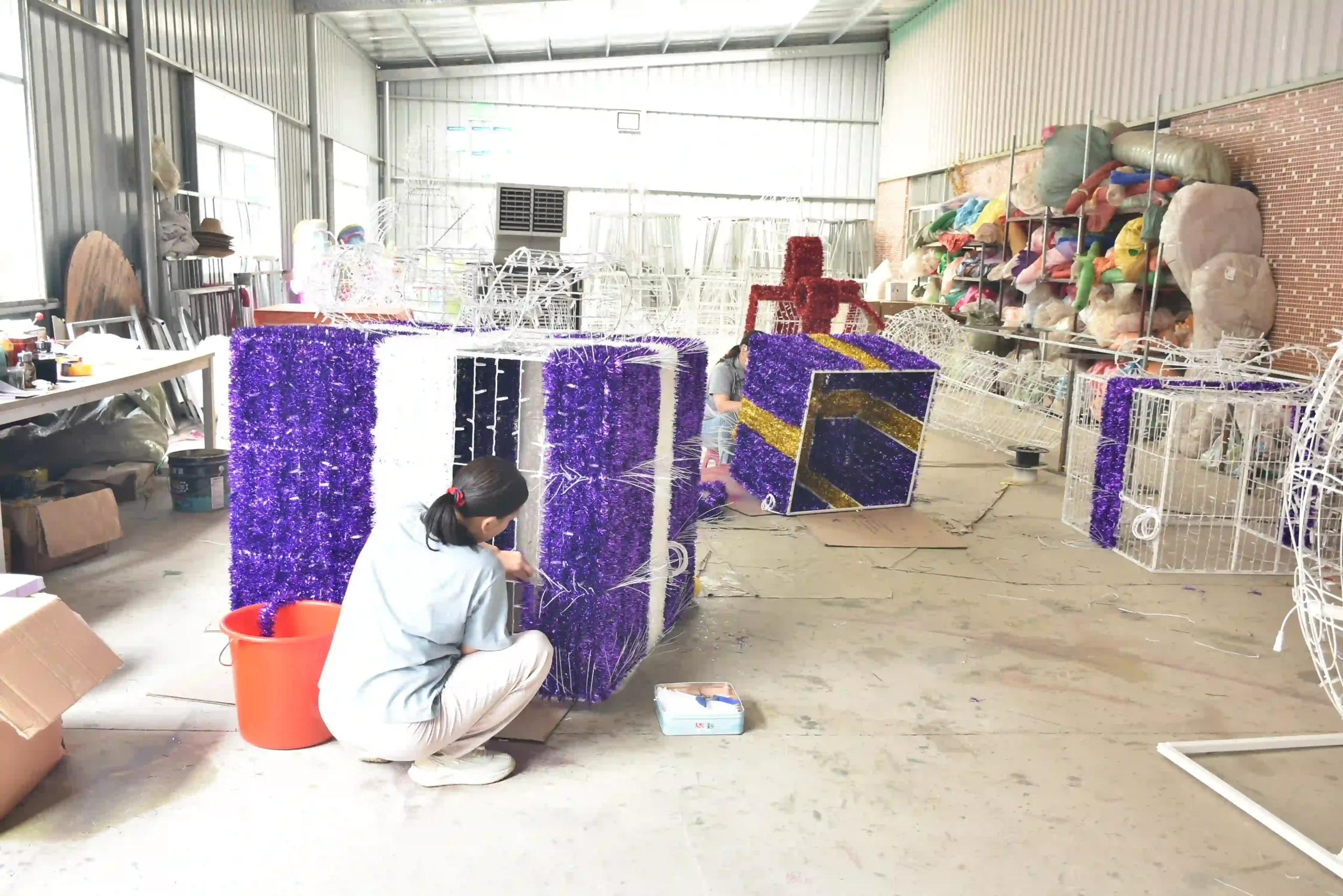
A custom dinosaur lantern can combine a steel frame, internal LED lighting, fabric finishing, painted details, and surrounding landscape elements.
Different dinosaur structures also support different lighting treatments. A T. rex can emphasize the jaw and teeth, a sauropod can focus on height and silhouette, a stegosaur can use its back plates as decorative lighting features, and a horned dinosaur can highlight the head and frill.
Choosing Dinosaur Types for a Commercial Lantern Project
Visitor Recognition
T. rex, long-neck dinosaurs, and Triceratops-style designs are among the easiest shapes for visitors to recognize and photograph.
Visual Variety
A stronger display combines different heights, silhouettes, body proportions, and visual moods rather than repeating similar dinosaurs.
Site Layout
Tall sauropods work well in large open spaces, while medium-sized horned, stegosaur, or armored dinosaurs can be distributed along pathways and garden areas.
Seven Dinosaur Types for Exhibition and Lantern Planning
In a simple practical classification, the seven dinosaur types are tyrannosaurs, large bipedal theropods, sauropods, horned dinosaurs, stegosaurs, armored dinosaurs, and duck-billed dinosaurs.
For parks, festivals, gardens, theme attractions, and public events, combining several of these groups creates stronger variety in scale, silhouette, mood, and visitor experience.
Buyers planning custom large dinosaur lanterns can use these seven categories as a practical starting point when selecting models and organizing the overall exhibition route.