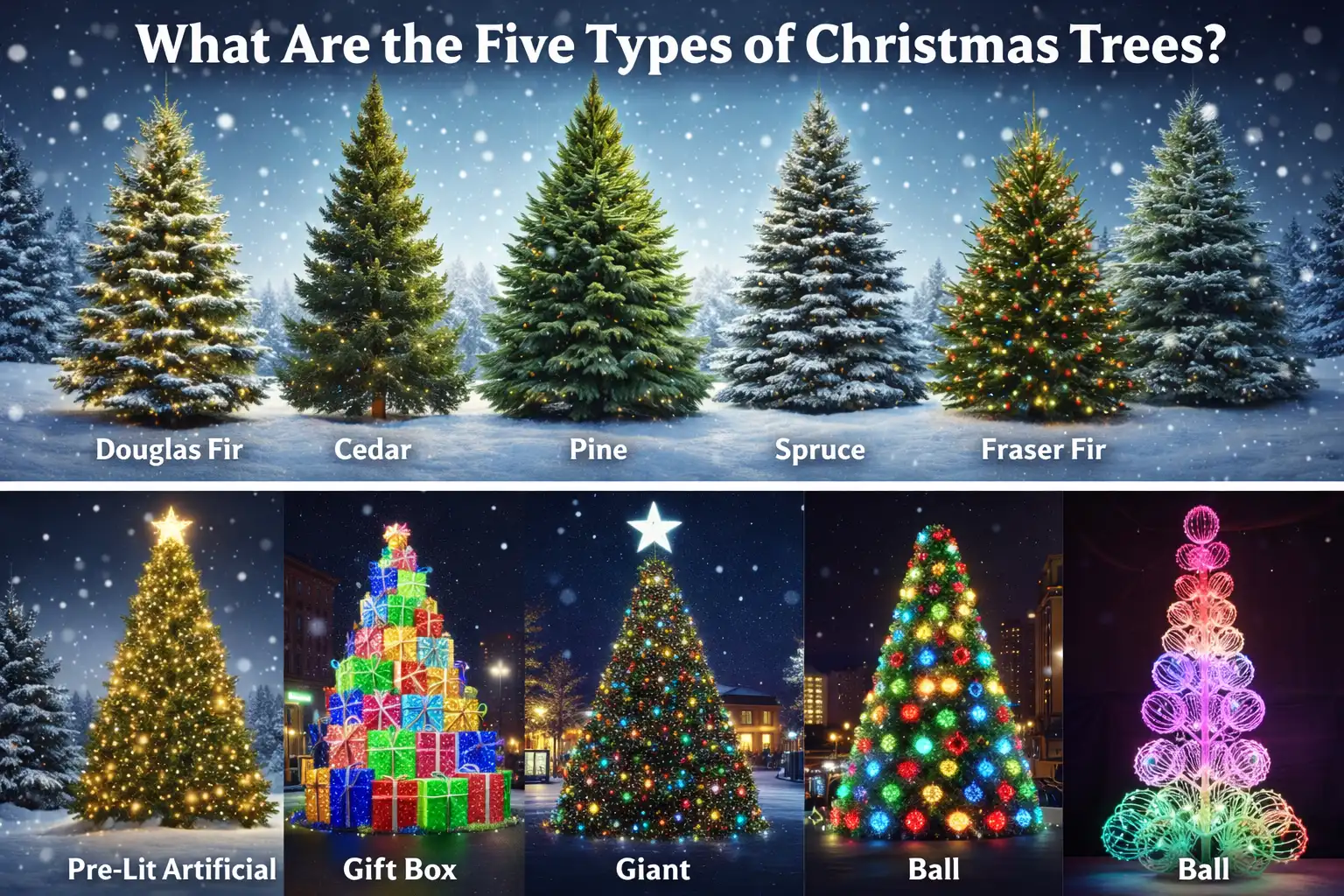
What Are the Five Types of Christmas Trees? Real and Modern Styles
When people ask what are the five types of Christmas trees, they may be referring to two different things. Some mean the traditional real evergreen species used for Christmas for generations. Others are thinking about the modern Christmas tree styles now seen in shopping centers, hotels, public squares, parks, and seasonal events.
The clearest way to answer the question is to start with the traditional real tree categories and then look at how Christmas tree design has expanded into modern decorative structures.
The Traditional Meaning of Christmas Trees: Five Real Tree Types
Before artificial trees and large decorative display trees became common, a Christmas tree generally meant a real evergreen. These trees stay green through winter and became closely associated with Christmas and seasonal decoration.
Fir Trees
Fir trees are among the most familiar traditional Christmas trees. They are known for soft needles, a full shape, and branches that can support ornaments well.
Common varieties include Fraser fir, Balsam fir, and Noble fir. Their balanced form and evergreen fragrance have made them long-standing choices for traditional Christmas decoration.
Spruce Trees
Spruce trees usually have a dense, pointed shape that closely matches the classic Christmas tree silhouette. Depending on the species, their foliage can range from deep green to blue-green.
One well-known example is the Blue Spruce, recognizable for its slightly bluish needles and strong texture. Spruce trees can create a particularly full appearance in traditional holiday settings.
Pine Trees
Pine trees are also widely used for Christmas. Compared with many fir and spruce varieties, pine trees often have longer and softer needles, creating a looser and more natural outline.
Popular examples include Scots Pine and White Pine. Their woodland appearance suits more natural and traditional Christmas decoration styles.
Cedar or Cypress Trees
In some regions, cedar or cypress trees are also used during the Christmas season. They may be less common in some markets but remain part of the broader tradition of using evergreen trees for festive decoration.
Their branch patterns and texture differ from fir and pine. In warmer climates, these trees may also be more familiar and easier to source, giving Christmas decoration a stronger regional character.
Douglas Fir
Douglas fir is often discussed separately in practical Christmas tree lists since it has become one of the most recognizable choices in its own right. It has soft needles, a full triangular shape, and a classic evergreen appearance.
For many people, the Douglas fir closely matches the traditional image of a real Christmas tree, which is why it is frequently included as a separate category.
Why Real Tree Types Matter
The traditional answer to what are the five types of Christmas trees is usually based on real evergreen trees. These species helped establish the original visual form that later artificial and commercial Christmas trees continued to follow.
Different real trees offered different silhouettes, foliage textures, fragrances, and branch structures. Those differences influenced how trees were decorated and helped shape the familiar Christmas tree image still used today.
The Meaning of Christmas Trees Has Expanded
Today, types of Christmas trees can refer to much more than natural tree species. Modern holiday decoration also includes a wide range of artificial and custom Christmas tree designs.
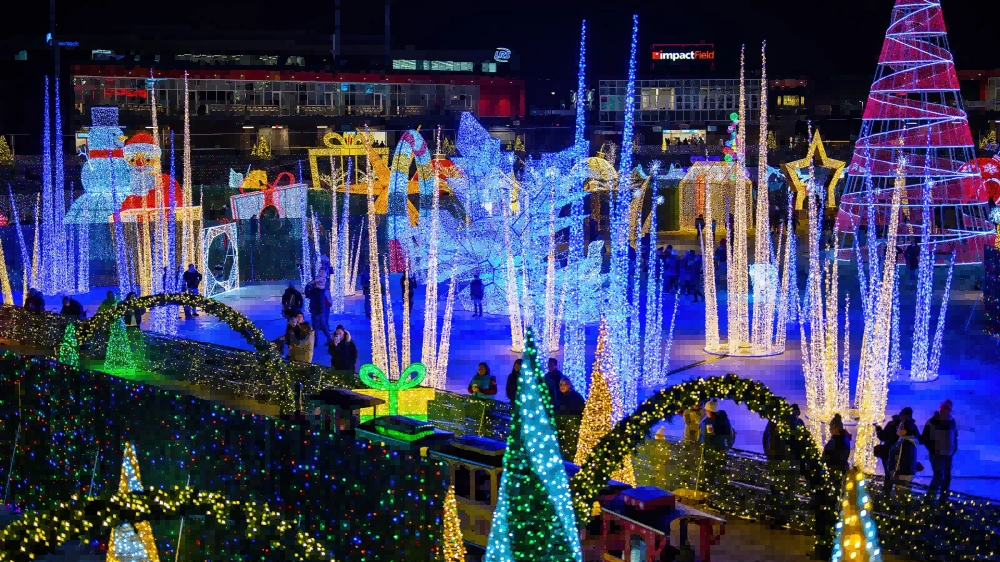
This is especially visible in shopping malls, hotels, city squares, parks, commercial streets, tourist attractions, and themed holiday events. In these settings, a Christmas tree can become a large decorative structure built with metal frames, lighting systems, ornaments, and custom visual themes.
Modern Christmas Tree Types You See Today
Pre-Lit Artificial Christmas Tree
A pre-lit artificial Christmas tree combines the familiar tree shape with integrated lighting. The built-in lighting simplifies installation and creates a more consistent finished appearance.
These trees are widely used in hotels, retail spaces, commercial interiors, event venues, and temporary seasonal installations where fast setup is important.
Ball Christmas Tree
A ball Christmas tree uses Christmas ornaments or decorative spheres to create the overall tree form instead of relying on traditional branches.
The result is more sculptural and contemporary, making this style suitable for shopping centers, event spaces, commercial plazas, and photo-oriented Christmas installations.
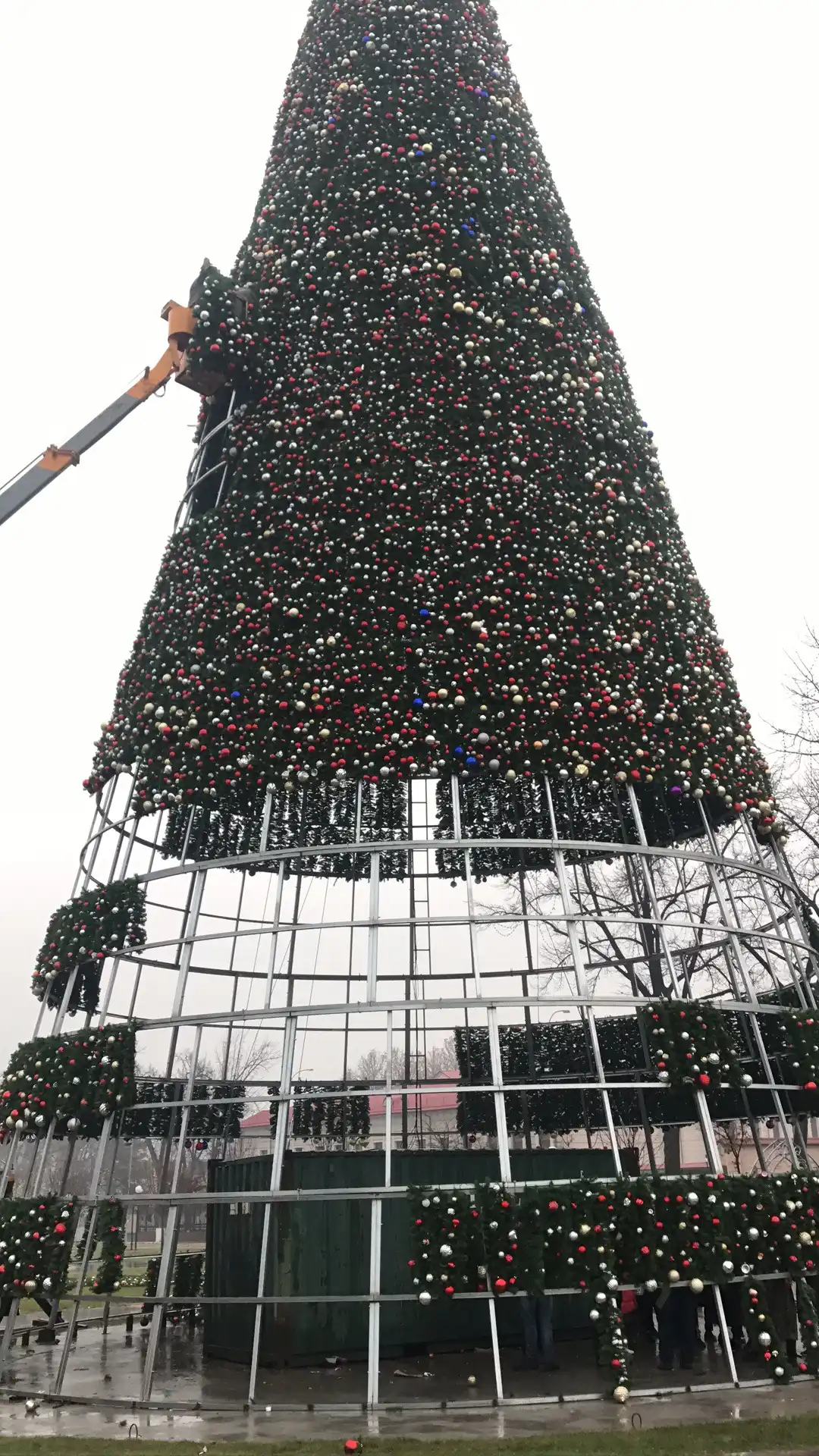
Giant Christmas Tree
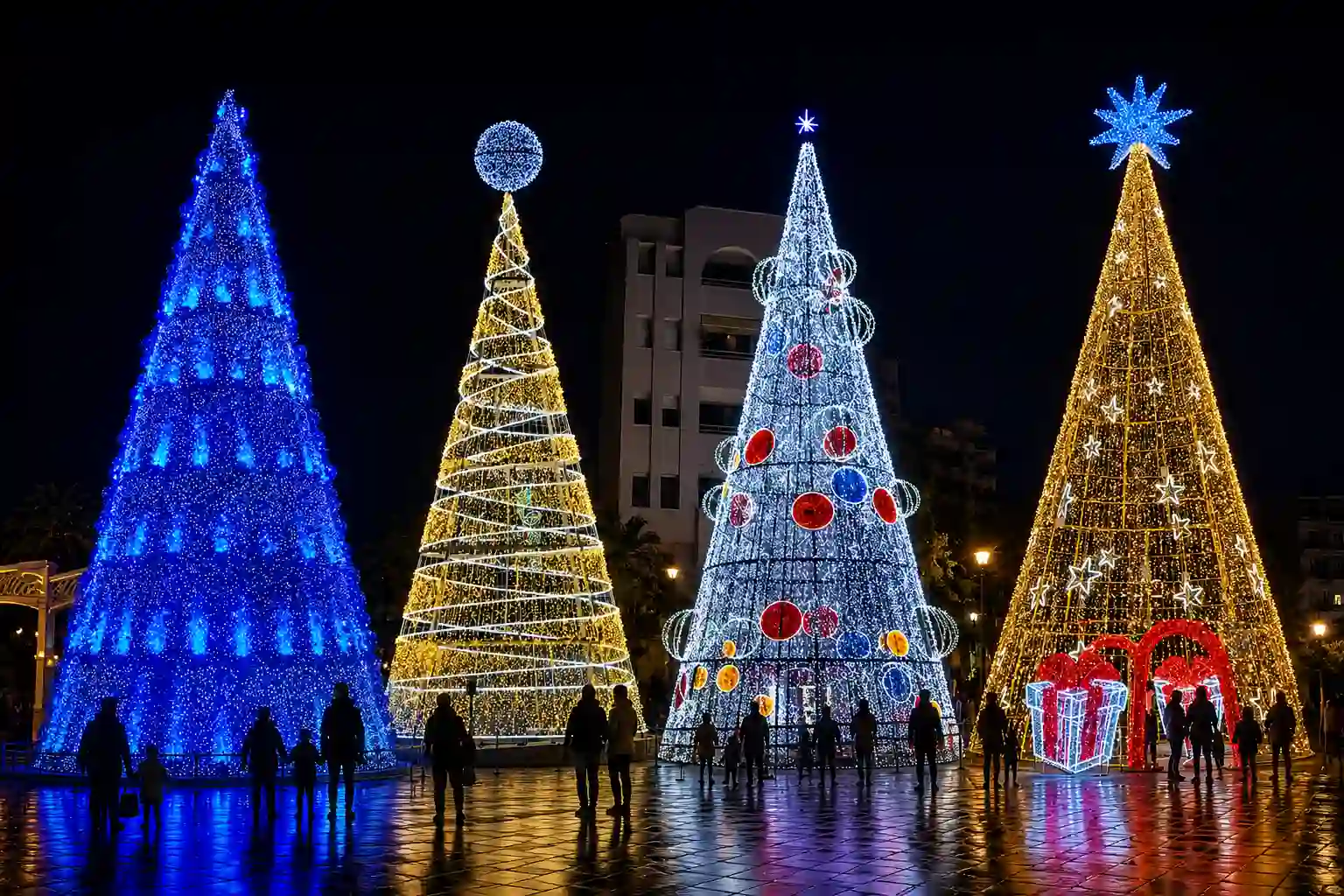
A giant Christmas tree is designed for large commercial or outdoor spaces. These structures can use metal frames, lighting systems, ornaments, foliage, and themed decorative elements at a scale far beyond a conventional tree.
Giant trees are common in city squares, malls, hotels, parks, and public Christmas attractions where the tree acts as one of the main visual landmarks of the project.
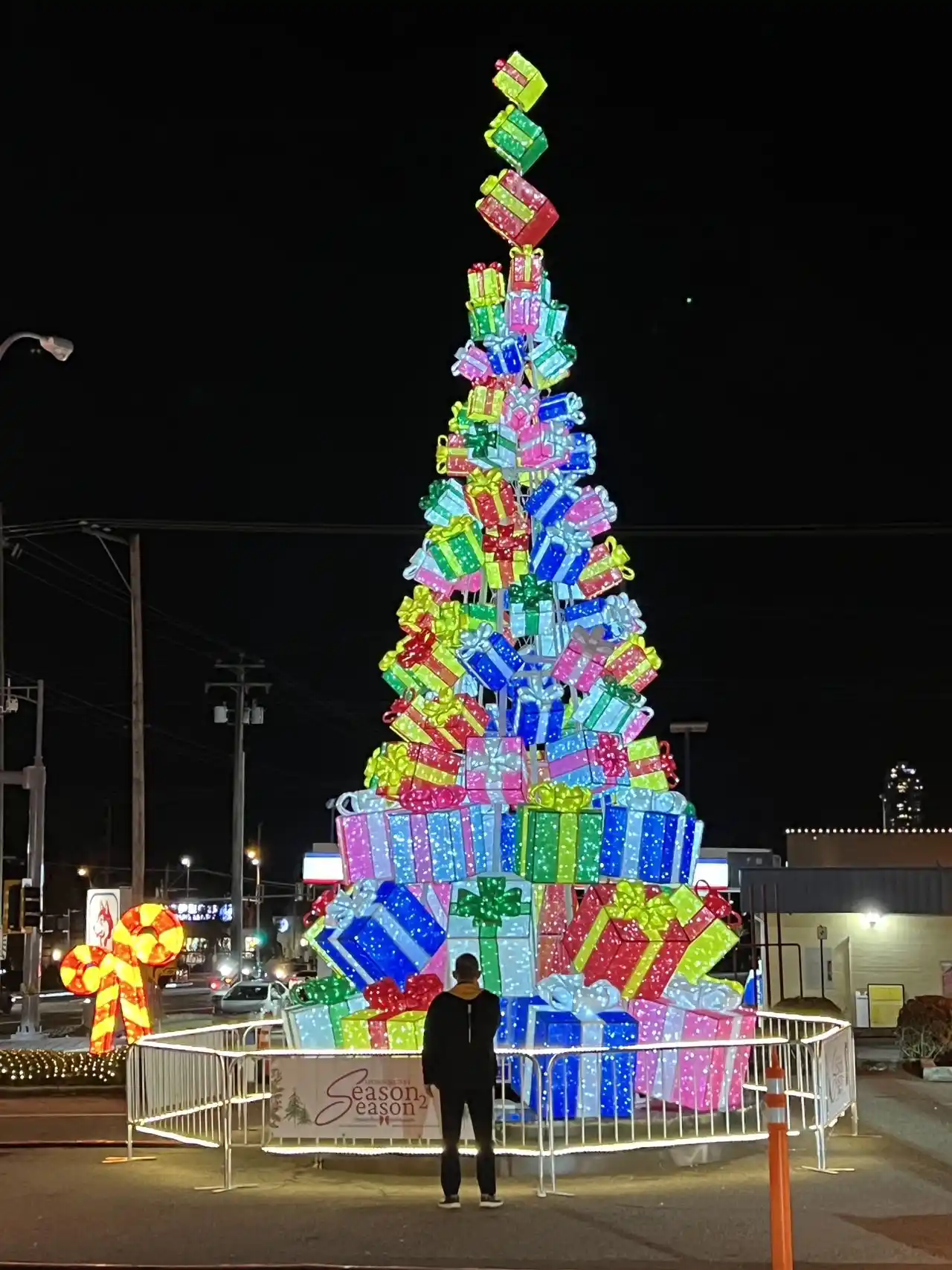
Gift Box Christmas Tree
A gift box Christmas tree uses stacked present-shaped elements to create a recognizable tree silhouette. In some designs, the gift boxes form the complete structure; in others, they are combined with lighting and supporting frames.
This design works particularly well in retail environments since the visual concept naturally connects Christmas decoration with gifting and seasonal merchandising.
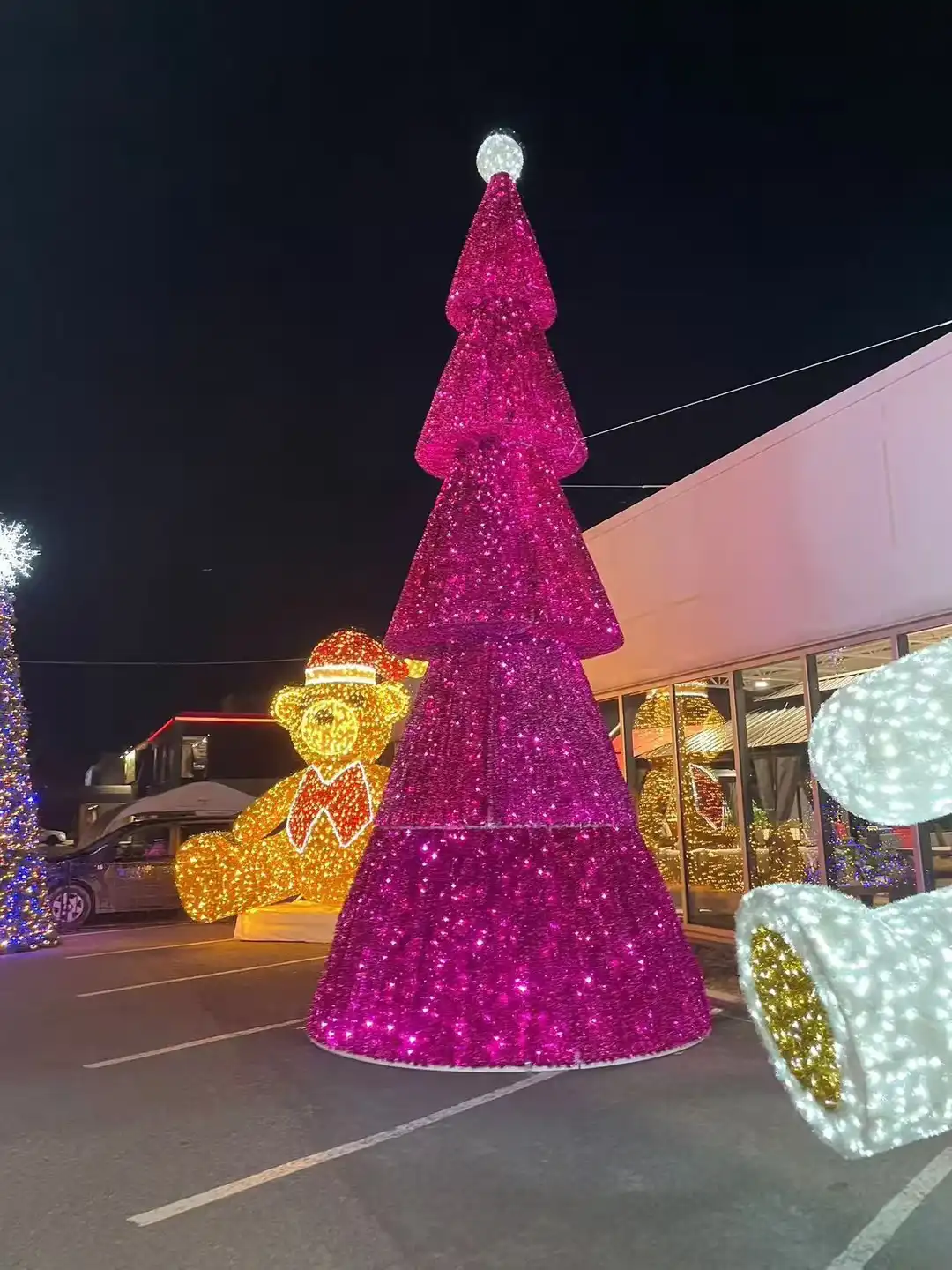
Decorative Lighted Theme Tree
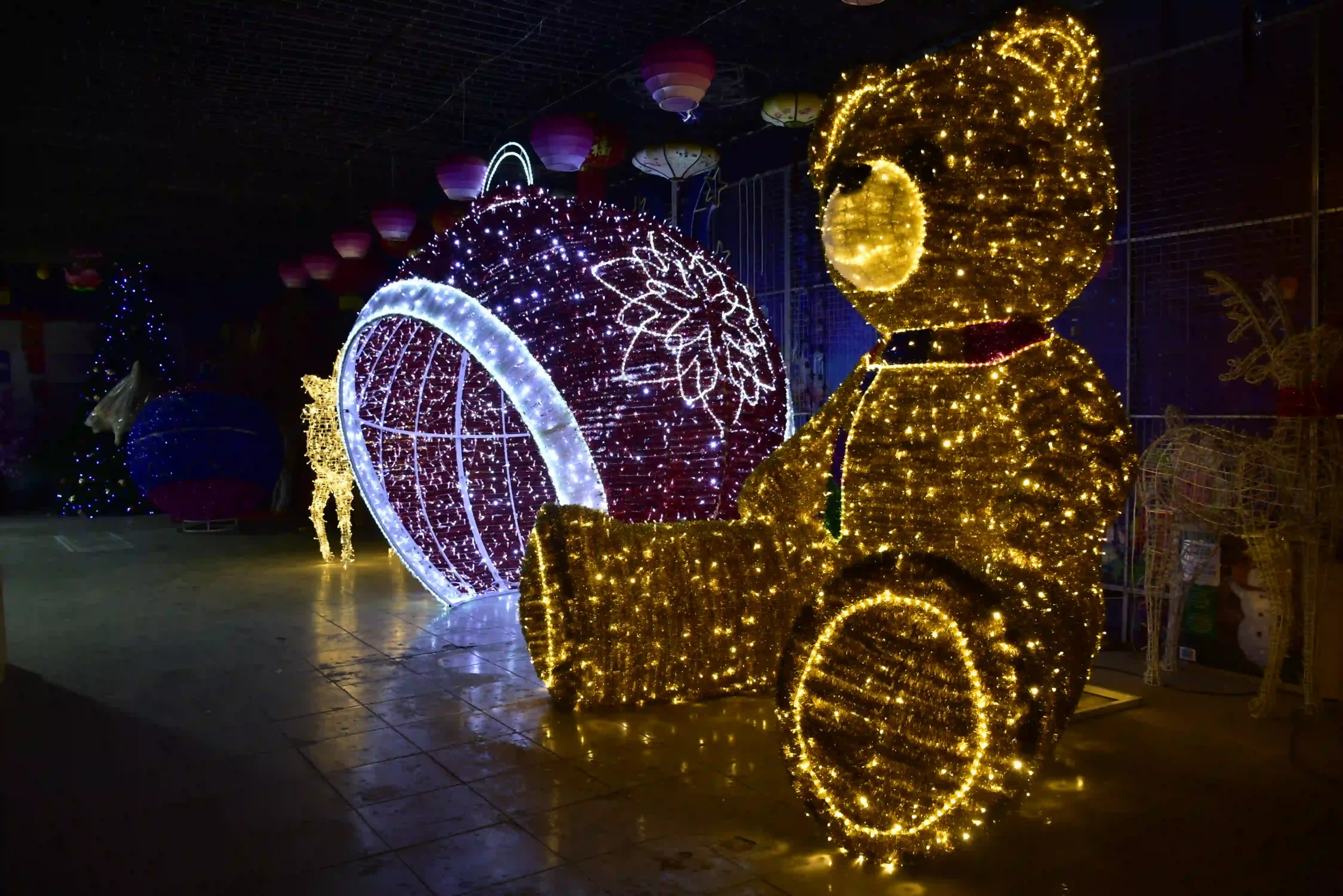
A lighted theme Christmas tree can be developed around stars, snowflakes, ribbons, flowers, lanterns, branded elements, or a specific event theme.
These trees are frequently used in commercial and public decoration projects where the tree needs to become part of a broader visual concept rather than simply reproduce the appearance of a natural evergreen.
Modern Christmas Tree Styles


So, What Are the Five Types of Christmas Trees?
Traditionally, the five main types are fir trees, spruce trees, pine trees, cedar or cypress trees, and Douglas fir. These are the real evergreen categories commonly associated with traditional Christmas tree decoration.
In modern holiday displays, the idea has expanded to include pre-lit artificial trees, ball Christmas trees, giant Christmas trees, gift box Christmas trees, and decorative lighted theme trees. These styles are widely used in commercial interiors, public spaces, shopping centers, hotels, parks, and outdoor seasonal projects.