Why Do Chameleons Change Color?
How We Use This Feature in Chameleon Lantern Design
Among animal-themed designs, the chameleon stands out for one of its most recognizable features: its ability to change color.
The structure of a chameleon’s skin allows it to change the way light is reflected. As a result, the same chameleon can display different colors under different conditions. It may appear green, yellow, or shift to darker or brighter tones.
This color-changing ability is an important part of how people recognize a chameleon, making it especially suitable for creative lantern design.
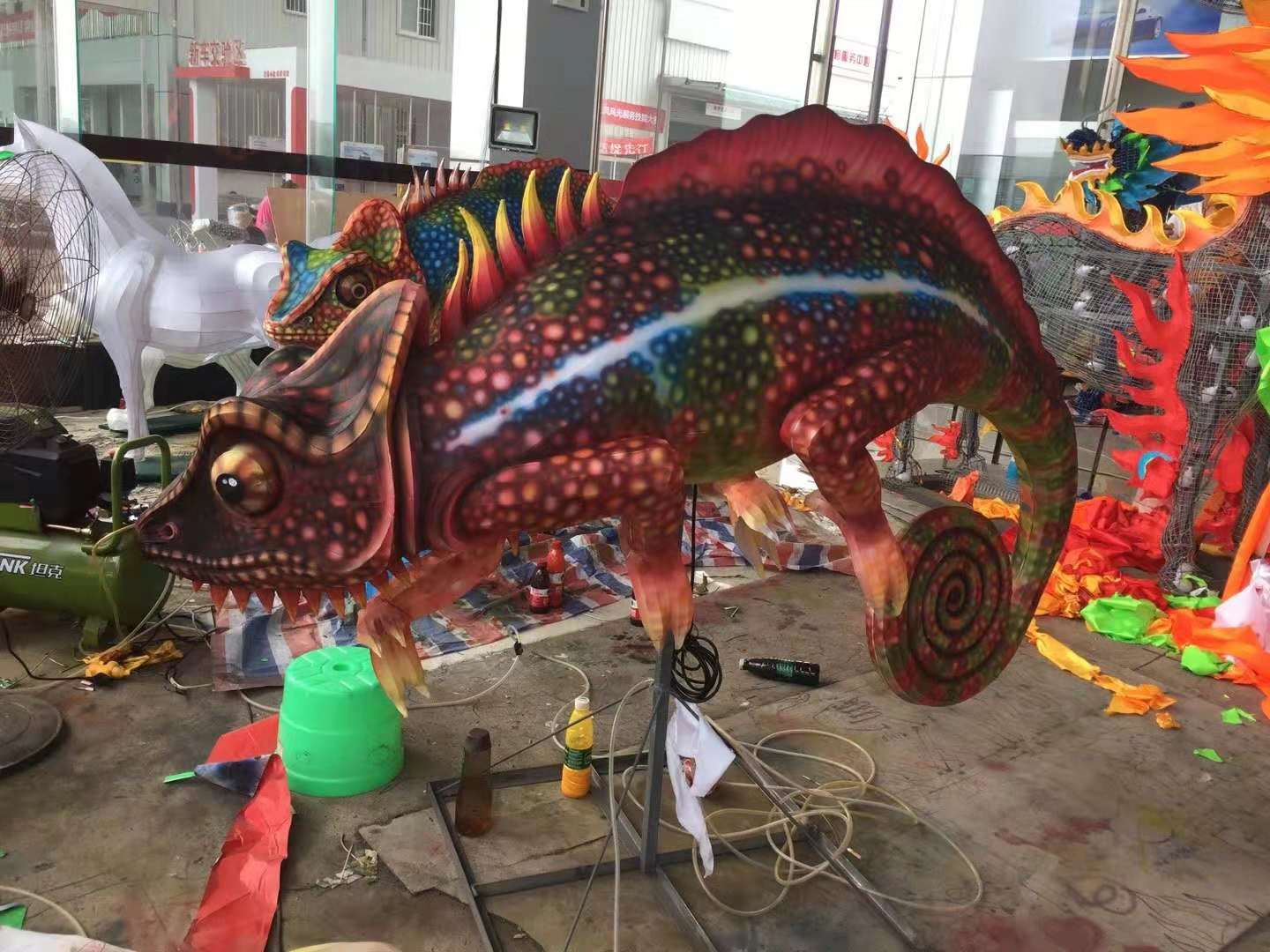
How We Create the Color-Changing Effect in a Chameleon Lantern
From our experience manufacturing animal lanterns, each animal requires a different design focus.
For some animals, the main focus is the silhouette or overall size. For the chameleon, one of the most important features is its changing color.
When developing a chameleon lantern, we therefore work on both the shape of the animal and the way the color-changing effect is presented.
The lighting system is installed inside the chameleon structure. By controlling the colors of the internal lights, the light passes through the outer material and allows the entire chameleon lantern to change color continuously.
This creates a visible full-body color transition rather than a series of isolated lighting points.
The structure is also designed to make the effect more visible:
- The curved back helps create smooth color transitions
- The curled tail adds depth and layered lighting effects
- The surface patterns enhance reflection and color variation
Together, these elements allow the color-changing characteristic of the chameleon to be clearly expressed through the lantern.
Where Chameleon Lanterns Can Be Used
With their dynamic color-changing effect, chameleon lanterns work particularly well in areas where a strong visual attraction is needed.
Lantern Festivals
They can be used as featured installations within animal-themed sections and illuminated displays.
Night Zoos & Ecological Parks
They provide a more visible and engaging way to present the chameleon, especially during nighttime visits.
Museums & Science Exhibitions
They can be incorporated into displays that demonstrate the color-changing characteristics of chameleons.
Night Tourism Projects
They are suitable for open spaces, themed areas, and key viewing points along visitor routes.
Our Design Approach
When producing a chameleon lantern, our goal is to represent one of the animal’s most recognizable characteristics through lighting.
By combining internal lighting control with the structure of the chameleon, its natural color-changing characteristic becomes a continuous visual effect that can be clearly seen in nighttime environments.