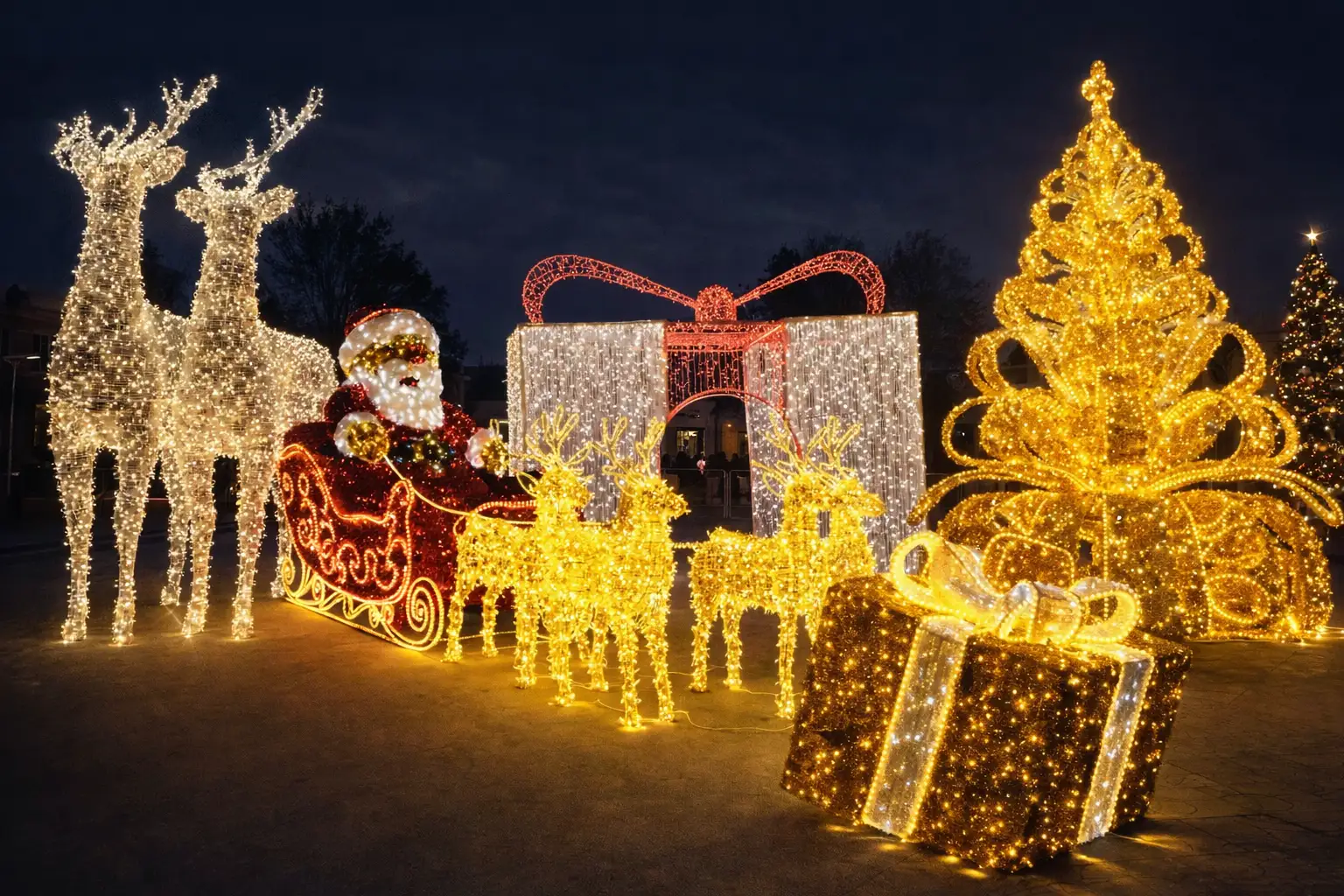
A star-pattern giant Christmas ball is not only a lighting decoration. In large-scale displays, it is often used as a visual center, combining structure, light density, and pattern design in one installation.
A Closer Look at Star-Themed Giant Christmas Ball Decorations
In large Christmas lighting displays, not all ornament balls are designed in the same way. Some use simple warm white lighting, while others include additional patterns to create more visual depth.
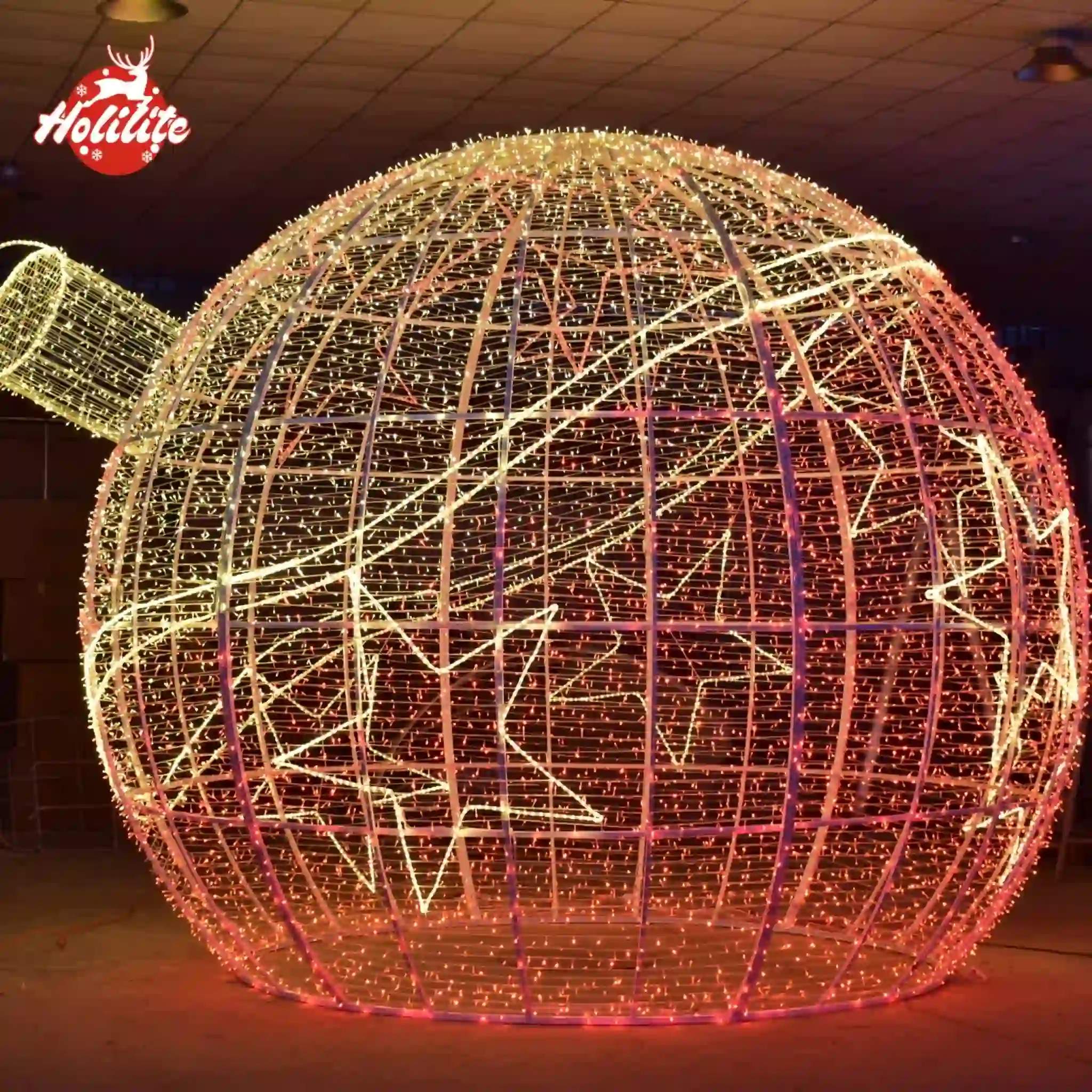
The structure in this type of decoration combines a spherical frame with layered lighting. On top of the base light coverage, star-shaped light patterns are integrated across the surface. These patterns are not random. They are arranged to break the uniformity of the light grid and make the structure more dynamic when viewed from different angles.
Compared with plain designs, this approach creates a clearer visual focus, especially in darker outdoor environments.
Light Density and Visual Effect
One detail that stands out in this type of ornament is the density of the LED lights.
Instead of using wide spacing, the lights are installed closely across the entire frame. This creates a surface that looks almost continuous when illuminated. The result is not a point-by-point light effect, but more like a glowing volume.
At the same time, the star outlines are usually made with brighter or slightly thicker light lines. This contrast allows the patterns to remain visible even when the background lighting is strong.
In real installations, this combination helps the decoration remain clear both from a distance and at close range.
Color Transition Instead of Single Tone Lighting
Another characteristic is the use of gradual color transition.
Rather than using only warm white or a single color, the lighting shifts across the structure. In many cases, the upper part remains closer to warm white or golden tones, while the lower part moves into red or warmer colors.
This kind of gradient effect adds depth to the sphere. It also makes the structure look less flat when viewed at night. The color variation becomes more noticeable when people walk around the installation.
In commercial displays, this helps maintain visual interest without requiring moving lights or complex programming.
Frame Structure Behind the Lighting
Although the lighting is the most visible part, the frame determines the final shape.
This type of giant ornament is usually built using curved metal sections that form a spherical cage. Vertical and horizontal ribs intersect to keep the structure stable. The lighting is then fixed onto this framework.
For larger sizes, the structure is often divided into multiple segments. Each segment can be transported separately and assembled on site. This is especially important for ornaments above 4 meters in diameter.
The spacing between the frame ribs also affects how the lights are installed. A tighter frame allows more even light distribution, while a wider structure requires more adjustment during installation.
Pattern Integration Instead of Surface Decoration
The star shapes on this type of ornament are not added as separate decorations. They are integrated into the lighting layout itself.
This means the pattern is part of the structure rather than something attached afterward. The light lines forming the stars are fixed along the frame, following the curvature of the sphere.
Because of this, the pattern remains consistent even when viewed from different angles. It does not look flat or disconnected from the main structure.
This approach is commonly used in large commercial decorations where visual consistency matters more than simple ornament detail.
Use in Indoor and Outdoor Installations
This type of decoration works in both indoor and outdoor environments, but the visual effect changes depending on the space.
Indoors, reflections from the floor and surrounding surfaces make the lighting look stronger and more concentrated. Outdoors, especially in open spaces, the full shape becomes more important than brightness alone.
For plazas and entrances, the size and lighting density help the ornament remain visible from a distance. In enclosed spaces like malls, the same structure creates a more immersive effect when people walk close to it.