Christmas Light Show Chicago: How Winter Lighting Shapes Urban Culture
Chicago is a city that has never allowed winter to silence it.
When icy winds sweep across Lake Michigan and darkness settles earlier each afternoon, the city responds not with retreat, but with illumination. Streets glow against the cold skyline, public plazas regain warmth through color, and commercial corridors pulse with renewed energy.
Here, light is more than decoration.
It is part of the city’s cultural infrastructure — a seasonal transformation that reshapes how people move, gather, and experience urban space.
And nowhere is this more evident than during the Christmas season, when Chicago evolves into one of North America’s most atmospheric winter destinations.
Urban Culture First: Why Chicago Invests in Public Experience
To understand the scale of Chicago’s Christmas light shows, you first have to understand the city itself.
Chicago has long prioritized public life. Its architecture invites observation, its waterfront encourages movement, and its plazas are designed for gathering rather than passing through.
This philosophy naturally extends into winter.
Instead of allowing cold weather to empty the streets, the city activates them — turning parks into illuminated landscapes and shopping avenues into seasonal destinations.
Because great cities are not remembered only for buildings.
They are remembered for how they feel.
Holiday lighting helps create that emotional layer when the natural environment turns stark and monochrome.
Christmas as an Urban Atmosphere
In northern cities, winter presents both a challenge and an opportunity.
Short days reduce activity.
Low temperatures discourage exploration.
Early darkness threatens commercial momentum.
Strategic Christmas lighting reverses this pattern.
Illuminated environments introduce psychological warmth, signaling safety and vitality even in freezing conditions. Visitors stay outside longer. Restaurants remain busy. Retail districts benefit from steady pedestrian flow.
Darkness, when designed correctly, becomes an asset.
This is why Chicago approaches holiday lighting at scale — not as scattered décor, but as a coordinated spatial experience.
The objective is not simply to decorate the city.
It is to keep the city alive.
The Lighting Icons That Shape Chicago’s Holiday Landscape
What distinguishes Chicago is not just the presence of lights, but the sculptural language used to deliver them. Small decorations disappear against tall buildings and expansive civic spaces, so successful winter environments rely on installations capable of holding visual weight.
Over time, several product categories have emerged as defining elements of large-scale Christmas light shows.
Giant Illuminated Sculptures
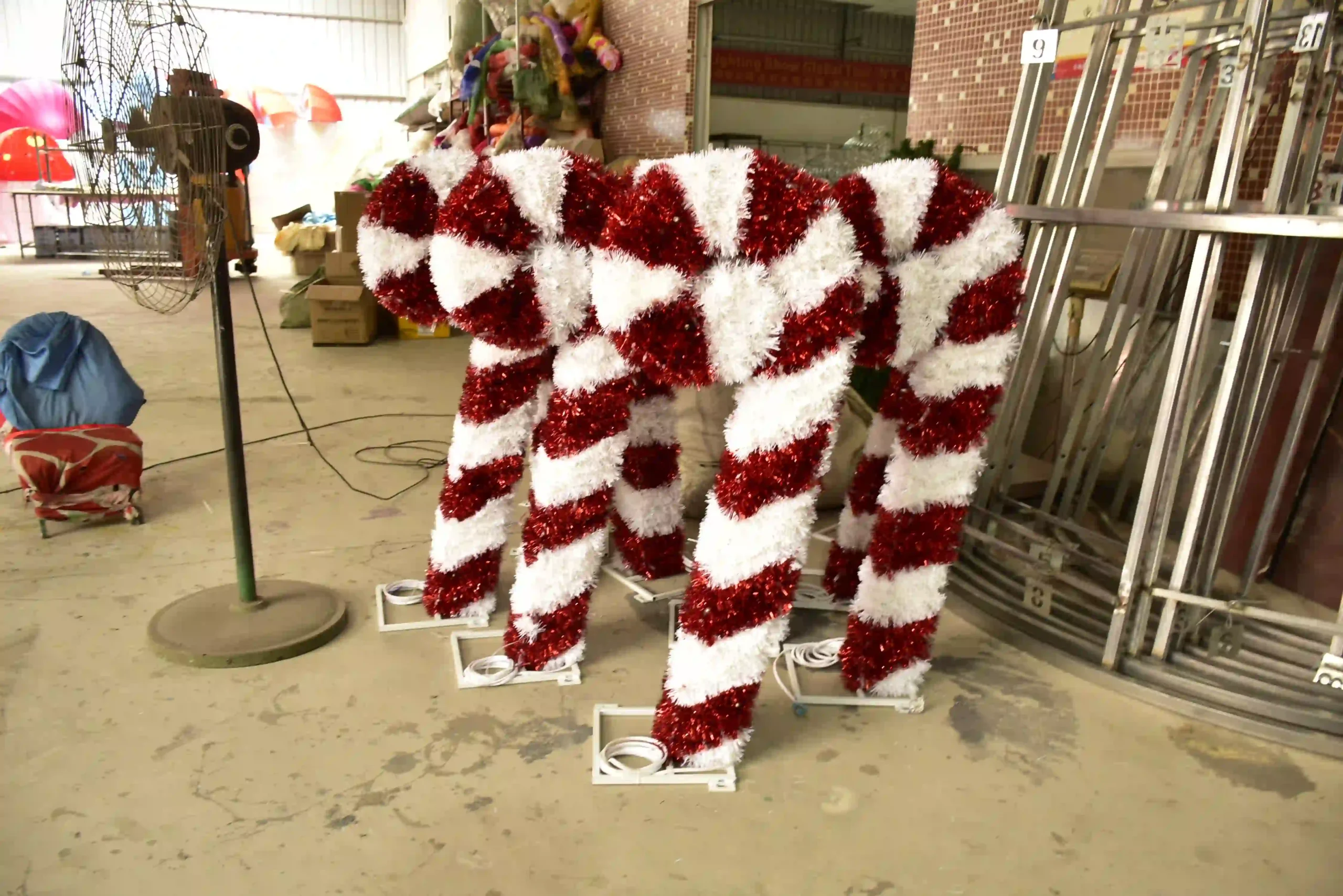
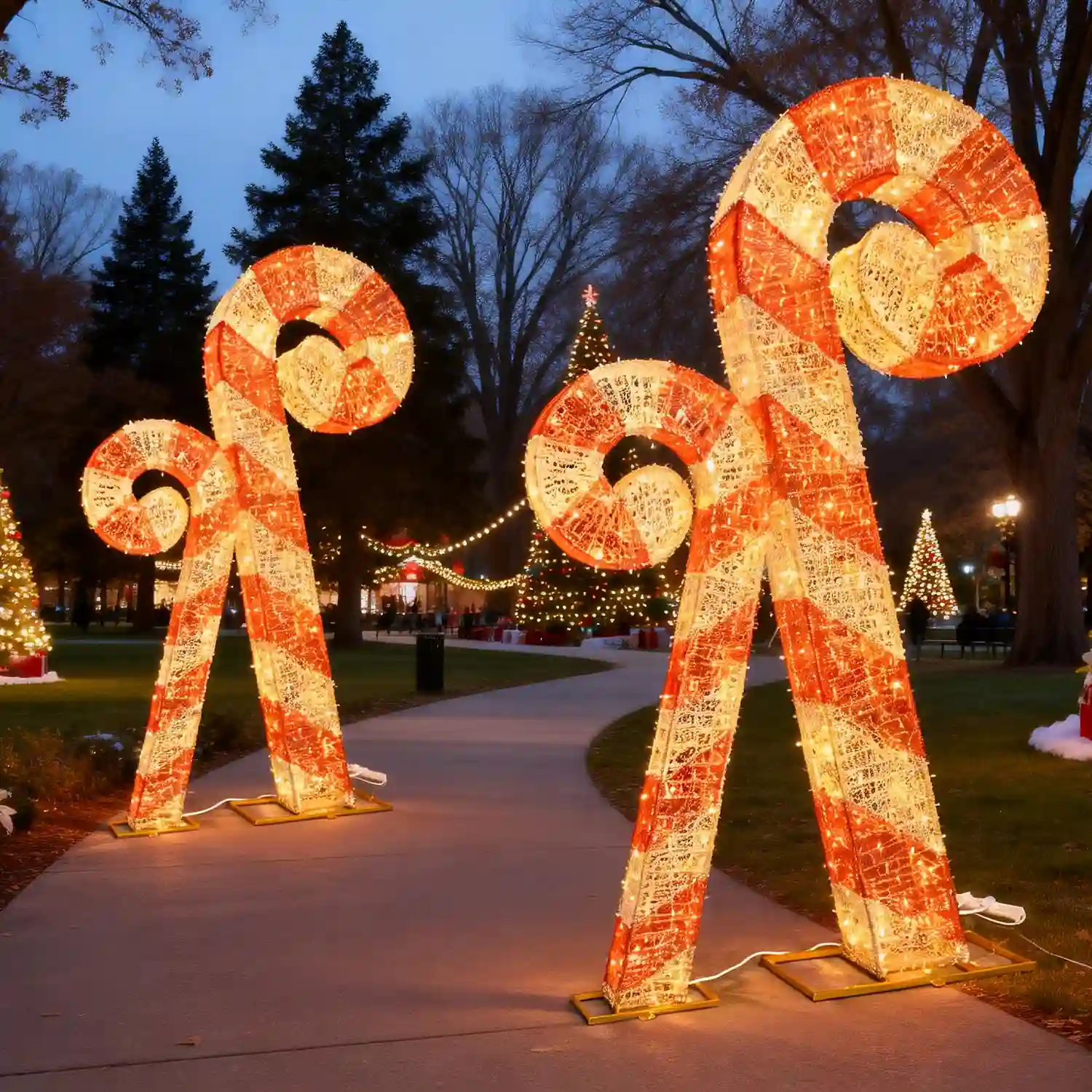
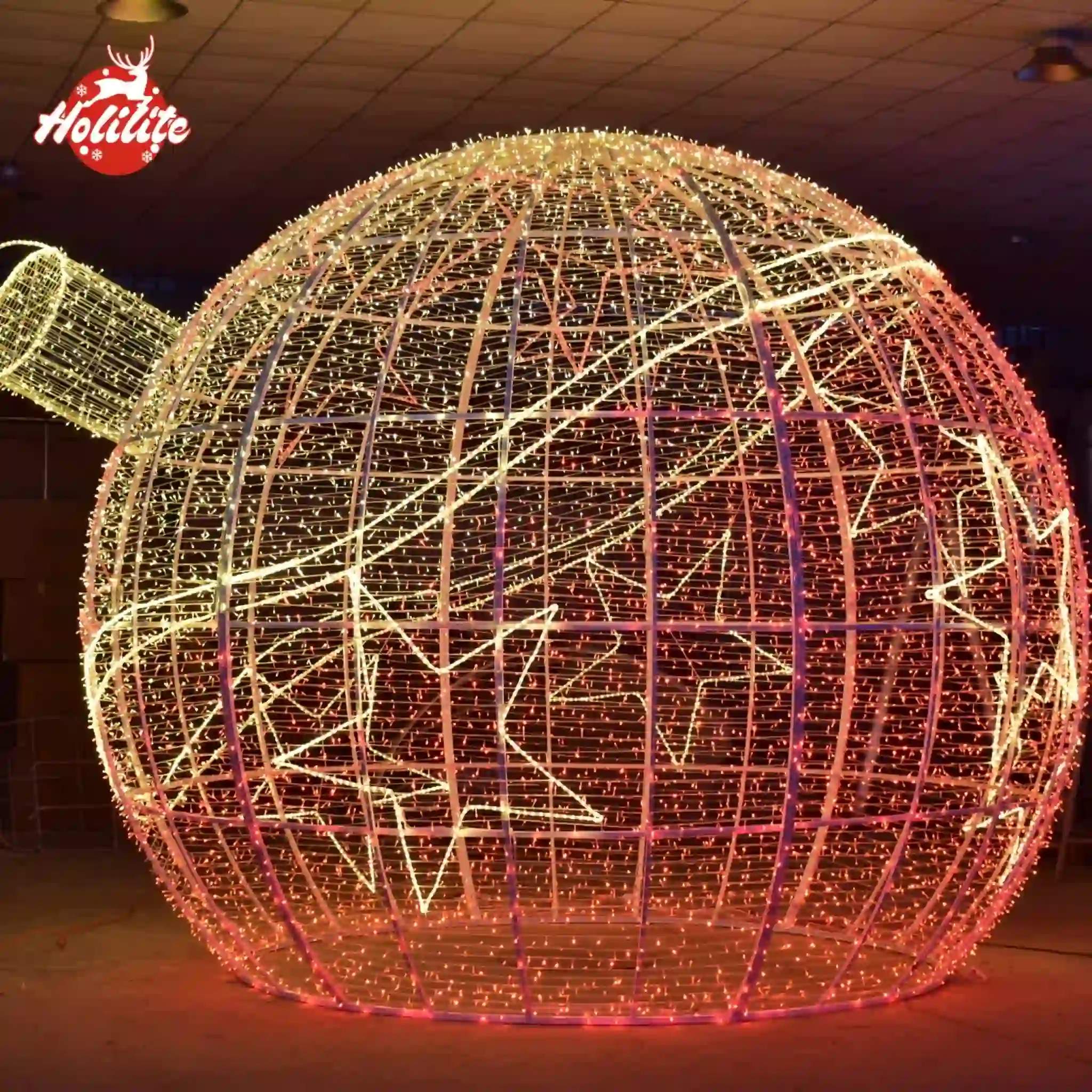
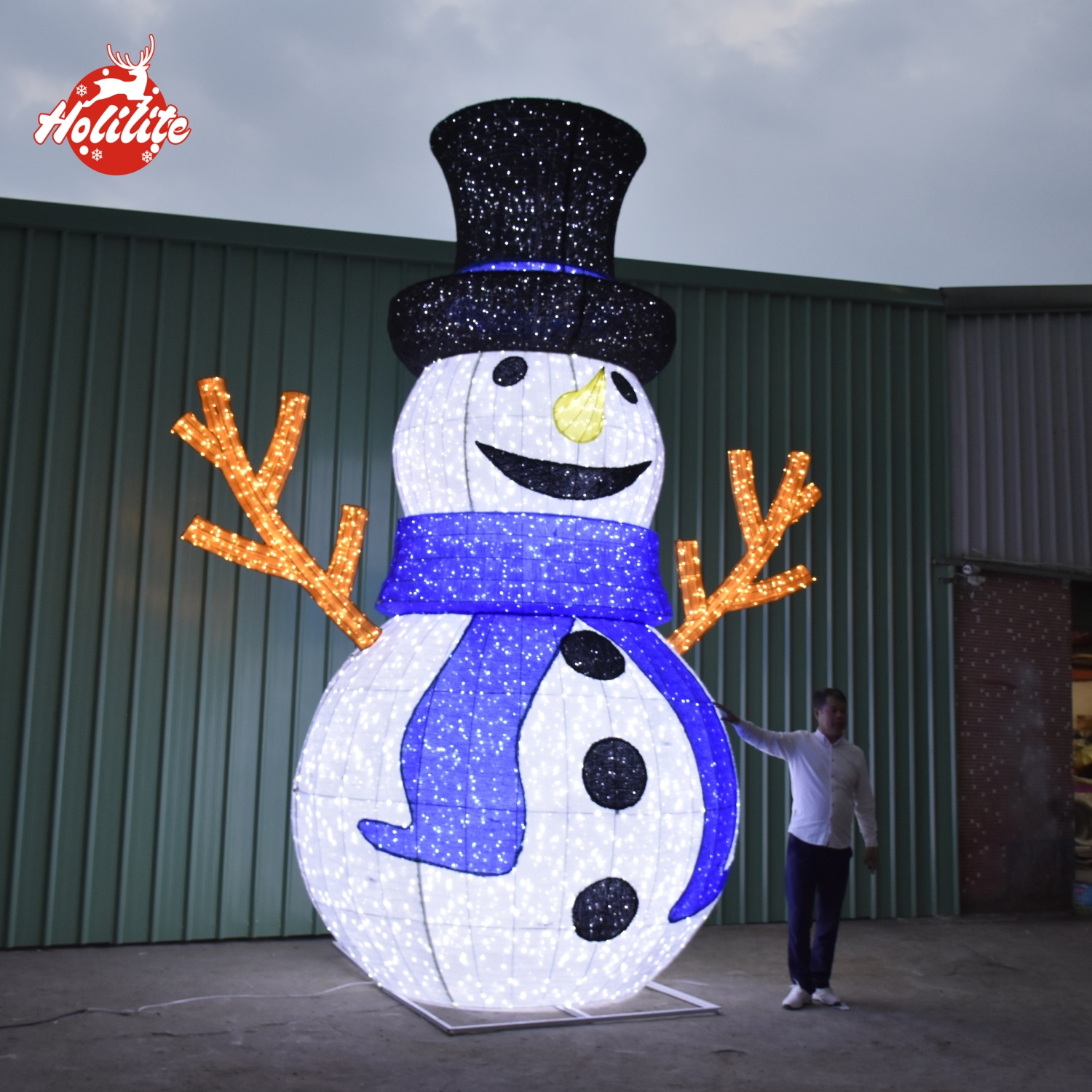
Oversized ornaments, snowflakes, stars, and festive figures now function as architectural companions within public space. These giant outdoor Christmas decorations act as visual anchors — helping visitors orient themselves while simultaneously creating natural gathering points.
Their scale is intentional. In large plazas, only monumental pieces can establish presence without being overwhelmed by surrounding structures.
Just as importantly, these sculptures have become powerful photographic backdrops, extending the reach of a display far beyond its physical location through social sharing.
LED Motif Lights That Unify Entire Districts
While sculptures create focal points, commercial LED motif lights provide continuity.
Mounted along streets, bridges, and building facades, these custom-designed lighting elements tie entire neighborhoods together under a single seasonal identity. From glowing snowflakes suspended above avenues to rhythmic patterns stretching across retail corridors, motif lighting transforms ordinary infrastructure into festive architecture.
For urban planners, this cohesion matters.
When lighting feels unified rather than fragmented, a district stops being a transit route and becomes a destination.
People don’t simply walk through —
they arrive.
Walk-Through Light Tunnels and Immersive Pathways
Few installations change pedestrian behavior as effectively as walk-through Christmas light tunnels.
By wrapping structural frames in dense, programmable LEDs, designers convert simple pathways into experiential corridors. Visitors slow naturally, drawn into the geometry of light, often pausing without realizing it.
From a commercial perspective, this increased dwell time is invaluable.
The longer people remain in an activated space, the more likely they are to explore nearby businesses, extend their visit, and return again later in the season.
Immersion, not ornamentation, is what defines modern holiday design.
Illuminated Reindeer and Festive Landmark Figures
Another recurring feature in major winter cities is the use of large illuminated reindeer decorations and character-based sculptures.
Positioned in plazas or retail zones, these pieces serve dual purposes:
emotional storytelling
spatial orientation
Families gravitate toward them. Children interact with them. Photographs circulate widely.
Over time, such installations often evolve into seasonal landmarks — meeting points people reference year after year.
Tradition is rarely accidental.
It is designed.
Engineered Christmas Trees Built for Urban Scale
The Christmas tree remains a universal symbol, yet many large cities now favor giant LED Christmas trees constructed from engineered steel frameworks rather than natural evergreens.
These structures offer several advantages:
exceptional height
structural stability
programmable lighting effects
multi-season durability
More importantly, they allow designers to reinterpret tradition without abandoning it — blending familiarity with spectacle.
Because in contemporary urban design, heritage and innovation are no longer opposites.
They are partners.
From Decoration to Spatial Engineering
What becomes clear across Chicago is that holiday lighting has entered a new phase.
It is no longer applied to space.
It is integrated into it.
Successful large-scale environments typically combine:
overhead illumination
sculptural focal points
guided pedestrian routes
layered brightness
synchronized visual rhythm
The result is an environment people inhabit rather than observe.
And places people inhabit are places they remember.
Why Cities Worldwide Are Following This Model
Chicago reflects a broader global shift toward experiential winter urbanism.
City leaders increasingly recognize that activated public spaces generate movement — and movement supports economic vitality.
Lighting now functions as infrastructure for attention.
Activated streets attract visitors.
Visitors support commerce.
Commerce sustains nightlife.
In this context, holiday illumination is no longer a seasonal expense.
It is an investment in urban energy.
The cities that understand this are often the ones that remain vibrant regardless of temperature.
Engineering the Spectacle Behind the Magic
Creating environments at this scale requires more than creative vision. It demands technical precision.
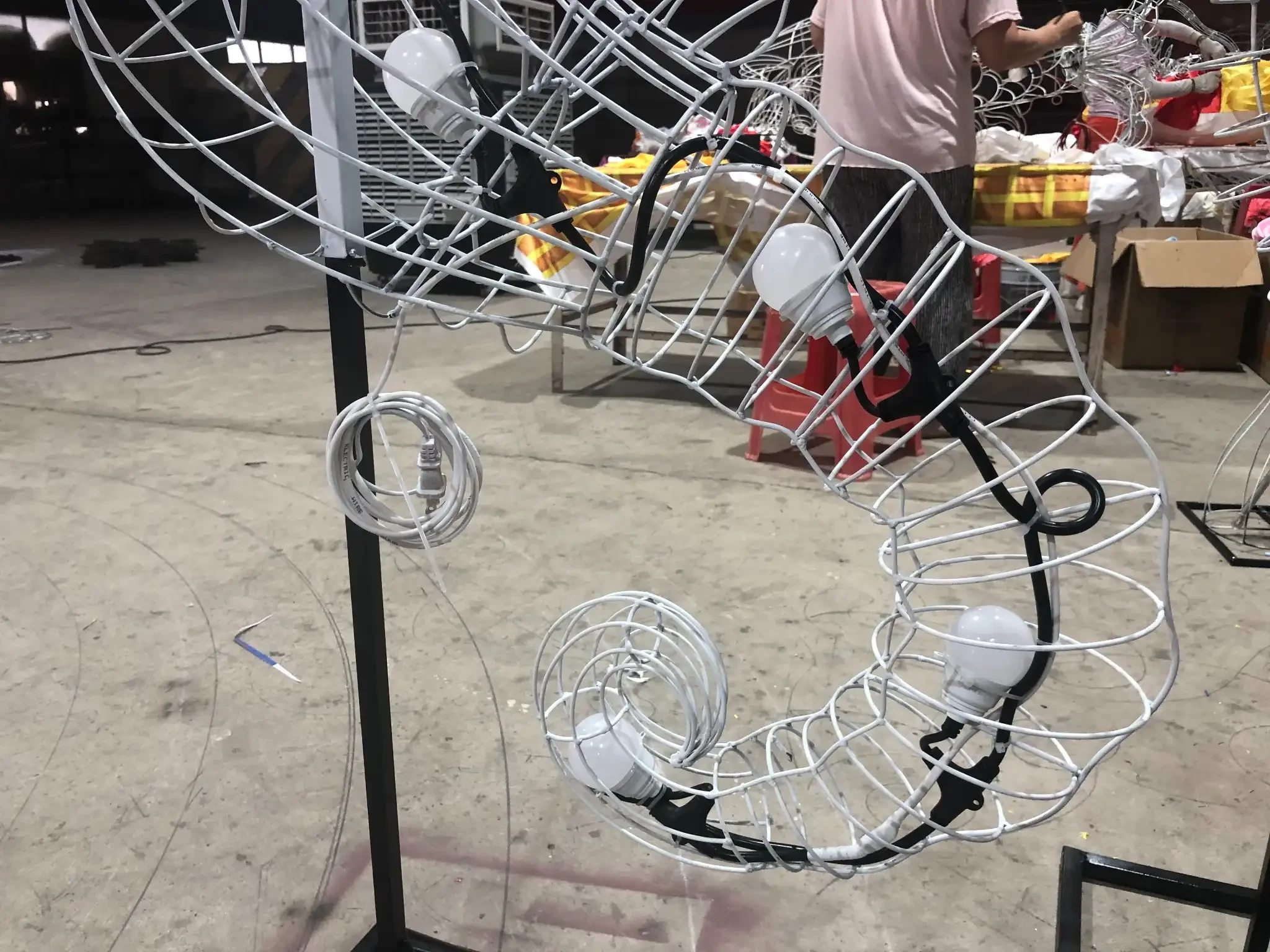
Large commercial Christmas installations must withstand wind loads, snow accumulation, moisture exposure, and continuous operation throughout long winter nights.
This is where holiday lighting transitions from decoration into engineered construction.
Structural integrity, weather-resistant materials, certified electrical systems, and efficient installation planning all become critical.
Because when installations reach architectural scale, they are not assembled.
They are built.
Manufacturing the Next Generation of Christmas Landmarks
As expectations continue rising, municipalities, developers, and commercial districts are shifting away from disposable décor toward permanent or repeatable installations.
The demand is moving toward large-scale commercial Christmas decorations capable of defining space rather than merely filling it.
From custom LED motif lighting to monumental sculptures and immersive tunnel structures, today’s projects prioritize durability, visual impact, and adaptability for future seasons.
Selecting the right fabrication partner often determines whether a display feels temporary — or becomes part of a city’s identity.
When manufacturing precision aligns with design ambition, installations begin to feel native to their surroundings, returning each winter as anticipated landmarks rather than seasonal novelties.
Chicago demonstrates that culture is not confined to museums or theaters.
Sometimes it unfolds quietly in illuminated streets, shared plazas, and winter nights warmed by color.
Through sculptural lighting, immersive pathways, and engineered installations, the city transforms its coldest season into one of its most inviting.
Looking ahead, one principle is becoming increasingly clear:
The cities that invest in atmosphere are the ones people remember — and the ones people return to.
In modern urban life, that kind of memory is not accidental.
It is designed, engineered, and brought to light.