What Does the Christmas Tree Symbolize?
Every December, millions of homes around the world light up with glittering Christmas trees — but few stop to wonder where this beloved tradition comes from, or what it truly symbolizes. Beyond its sparkling lights and ornaments, the Christmas tree carries centuries of history, culture, and spiritual meaning.

Ancient Origins: Evergreen as a Sign of Life
Long before Christianity, ancient civilizations such as the Egyptians, Romans, and Celts used evergreen plants during winter solstice celebrations. These evergreens — which stayed lush and green while other trees lost their leaves — symbolized eternal life, hope, and renewal.
This lasting evergreen appearance is still reflected in modern artificial Christmas trees with lights, which recreate the familiar shape and greenery of traditional fir trees for seasonal displays.
Christian Symbolism: Faith and Everlasting Life
By the 16th century, decorated fir trees had become part of Christmas celebrations in German-speaking regions. Within Christian tradition, the evergreen tree came to represent everlasting life — remaining green even through the darkest part of winter. Its upward-pointing shape was also associated with heaven and faith.
Modern Meanings: Hope, Family, and Celebration
Today, the Christmas tree extends beyond religious symbolism and is widely associated with family, togetherness, and seasonal celebration. Decorating the tree has become a familiar holiday ritual, bringing generations together as they hang ornaments, lights, and a shining star on top.
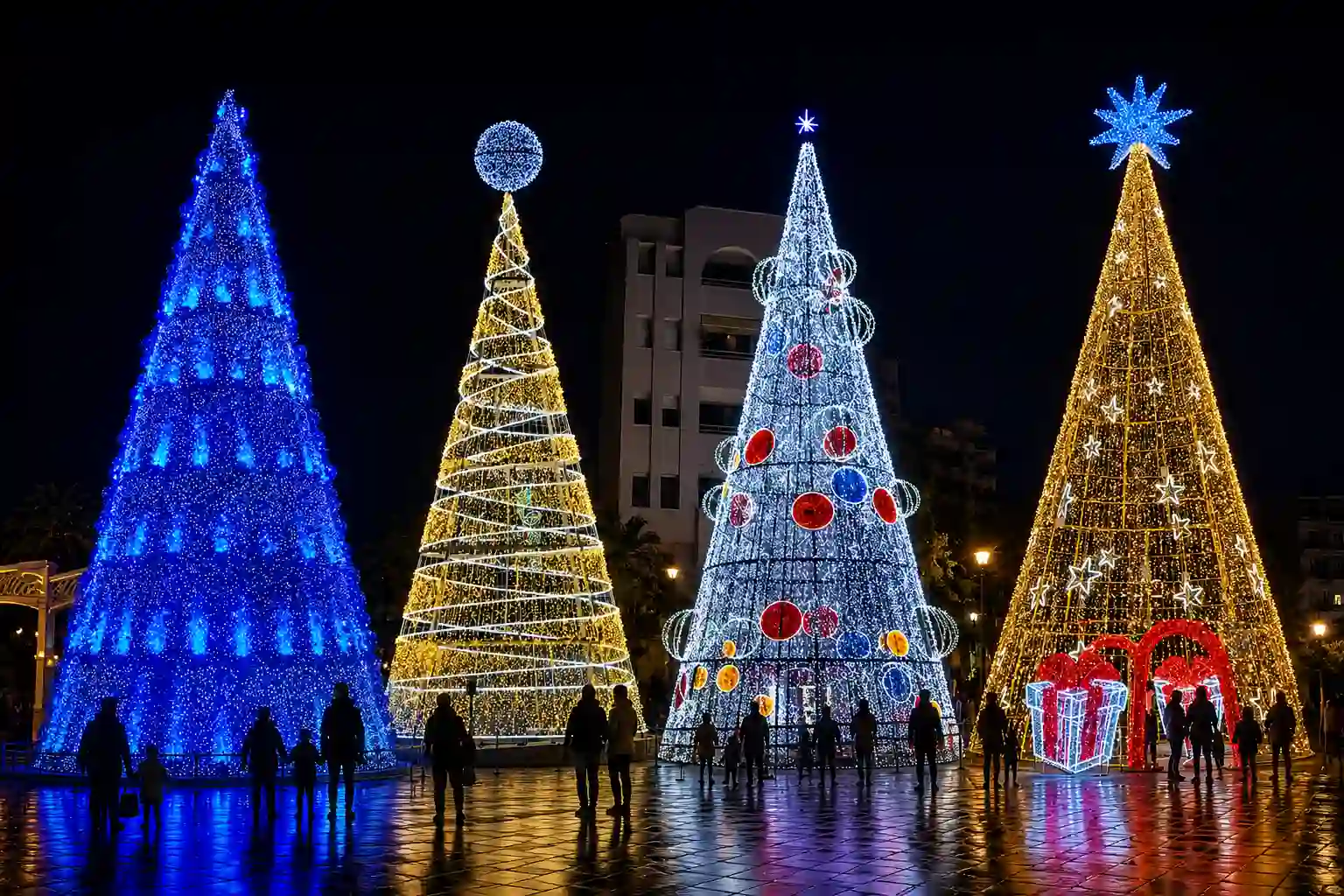
The same symbolism now extends beyond homes. A large outdoor RGB Christmas tree can become the central gathering point in a plaza, shopping center, park, or winter festival, bringing people together through color, light, and shared celebration.
The Star and the Lights
The star placed atop the Christmas tree is traditionally associated with the Star of Bethlehem, which guided the Wise Men to the birthplace of Jesus. Christmas lights have also come to represent warmth, hope, kindness, and light during the darkest time of the year.
Modern lighting designs continue this visual tradition through illuminated trees and interactive structures such as the giant sculptural LED Christmas tree frame, where the familiar tree outline is formed almost entirely through light.
From Christmas Symbol to Public Landmark
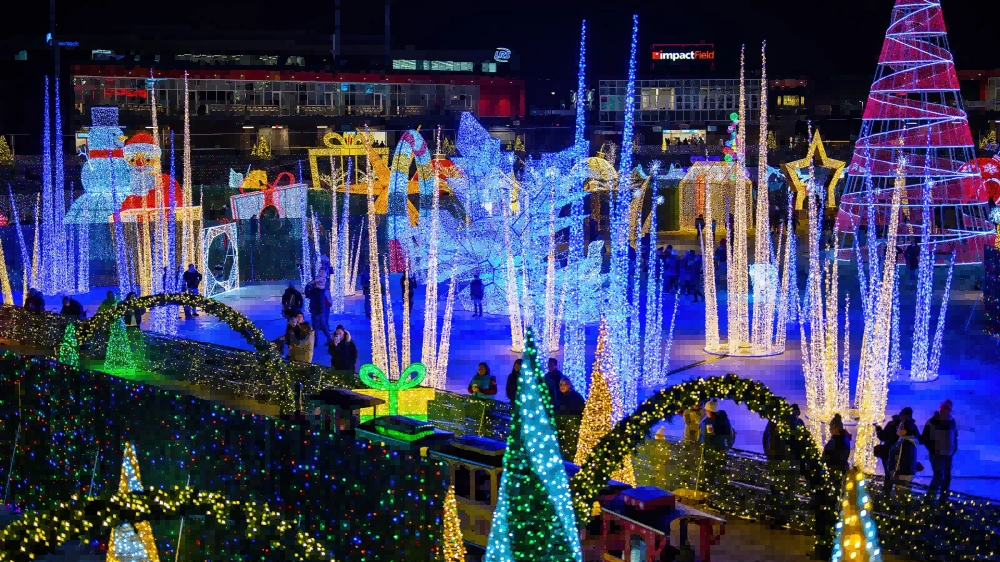
In large public celebrations, the Christmas tree often becomes more than a seasonal decoration. It can serve as a meeting point, city landmark, photo location, and visual center for the entire event.
The Uzbekistan giant Christmas tree project shows how the traditional tree shape can be developed into a monumental urban installation. Its height, lighting, ornaments, and central placement helped turn a familiar Christmas symbol into a major seasonal attraction.
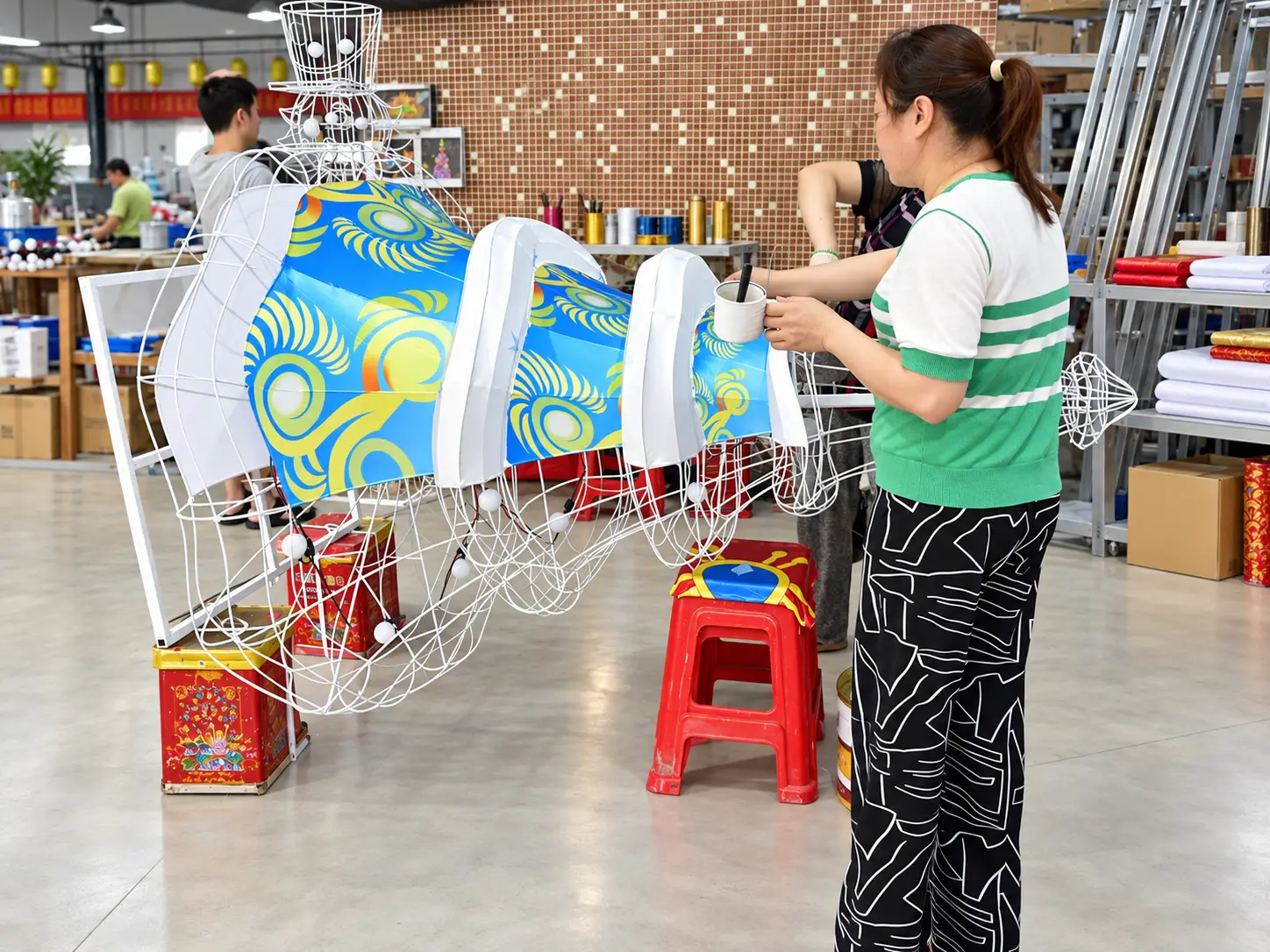
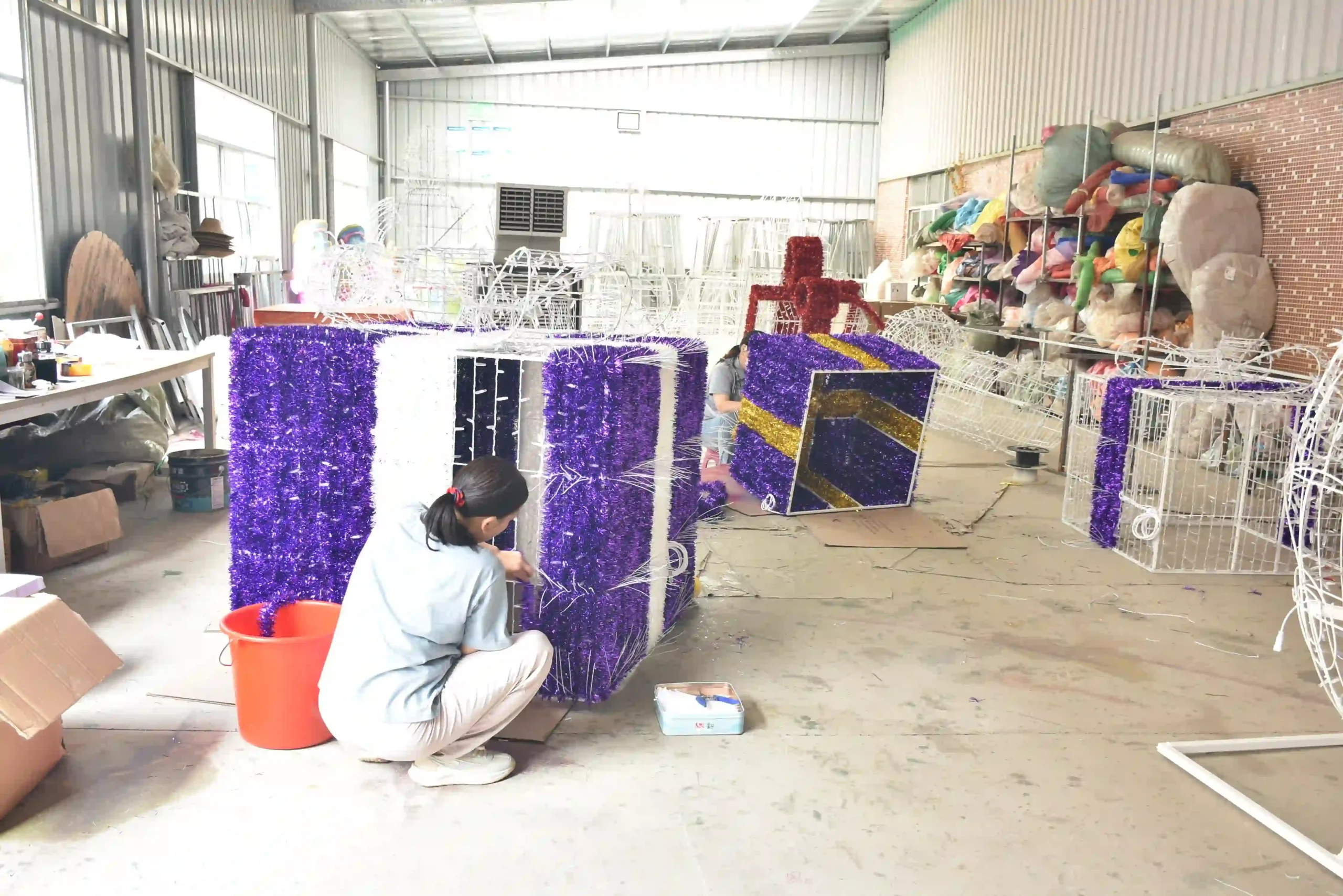
Other projects reinterpret the tree through different materials and structures. The gift box Christmas tree display uses stacked illuminated presents to create a colorful tree-shaped centerpiece, while the large Christmas tree shipment case demonstrates how modular tree sections can be produced, decorated, packed, and assembled for an overseas project.
Meeting Point
Large Christmas trees often become natural gathering places in shopping malls, plazas, parks, and seasonal events.
Photo Landmark
A well-positioned tree creates a recognizable seasonal backdrop for visitors and public photography.
Visual Centerpiece
Lighting, ornaments, scale, and placement can make the tree the main focal point of an entire festive installation.
A Tree of Life and Hope
Whether real or artificial, religious or cultural, the Christmas tree remains strongly associated with life, hope, warmth, and connection. Its evergreen form and seasonal illumination continue to carry meaning across different types of Christmas celebrations.
In Short
For Holilite, the Christmas tree represents more than decoration. It connects long-standing traditions of evergreen symbolism, faith, light, family, and renewal with the way Christmas is celebrated today — from homes and hotels to shopping malls, city squares, parks, and large public festive installations.