When people ask, “What are the seven types of dinosaurs?”, they usually want a simple way to understand the main dinosaur groups instead of reading a complicated scientific classification. For museums, theme parks, light festivals, zoos, and family attractions, these broad dinosaur types are also the most useful categories for display planning.
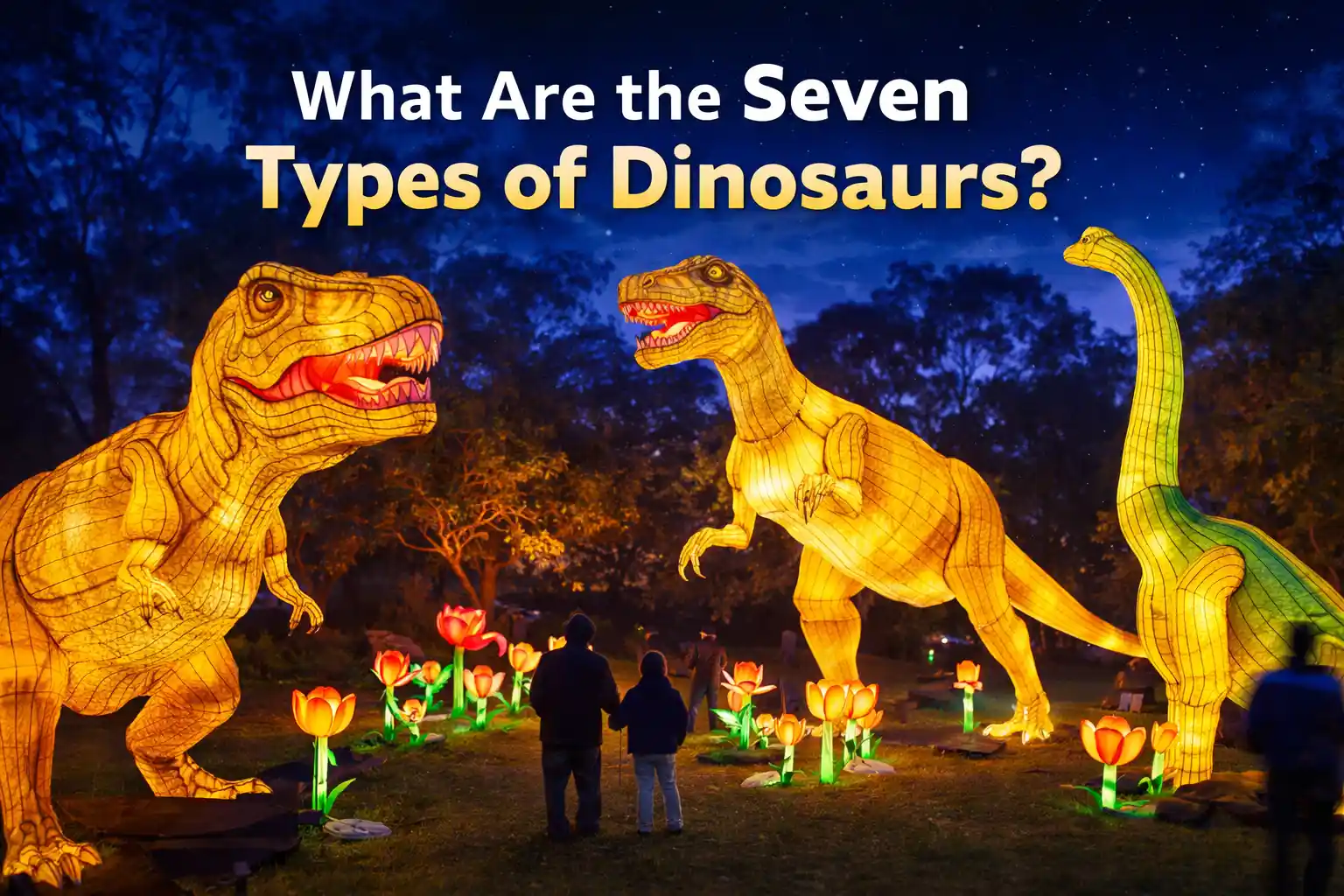
In practical terms, dinosaur-themed events and exhibitions often group dinosaurs by their body shape, movement style, and visual appeal. This approach makes it easier for visitors to recognize different dinosaurs and helps event planners choose the right models for educational displays, outdoor attractions, and large dinosaur lantern installations.
In this guide, we will explain seven popular dinosaur types in a clear and easy way. We will also show how these dinosaur categories can be transformed into giant illuminated dinosaur lanterns for night festivals, park events, and commercial displays.
1. Tyrannosaur Dinosaurs
One of the most famous dinosaur types is the tyrannosaur group, represented by Tyrannosaurus rex. These dinosaurs are known for their massive heads, strong jaws, sharp teeth, and powerful hind legs. They are usually shown as dominant predators and are among the most recognizable dinosaur shapes in the world.
For dinosaur lantern displays, tyrannosaur designs are highly popular because they create an immediate visual impact. A large T. rex-style dinosaur lantern with an open mouth, visible teeth, and strong body outline works especially well as a centerpiece for nighttime exhibitions, lantern festivals, and family photo areas.
2. Large Bipedal Theropods
Another major dinosaur type is the large bipedal theropod. This group includes carnivorous dinosaurs that walked on two legs and had long tails, muscular bodies, and dramatic head shapes. Many visitors may not know the scientific group name, but they instantly recognize this classic “running predator” dinosaur look.
This type is very effective in outdoor light shows because the upright body posture gives the structure height and movement. A large theropod lantern can be designed with raised claws, a stretched neck, and an aggressive pose, making it ideal for immersive dinosaur-themed attractions.
3. Sauropods
Sauropods are the long-necked, long-tailed giant dinosaurs that people often associate with enormous prehistoric landscapes. They were herbivores and are remembered for their size more than speed or aggression. Their tall necks and large bodies make them one of the best dinosaur types for impressive visual displays.
In lantern festivals, sauropod dinosaur lanterns are excellent for building a sense of scale. Their height naturally attracts attention from a distance, and their elegant shape works well in parks, gardens, and large open-air event spaces. Long-neck dinosaur lanterns are also family-friendly because they look grand without appearing too frightening.
4. Triceratops and Other Horned Dinosaurs
Horned dinosaurs, especially Triceratops, are another classic dinosaur type. These dinosaurs are known for their facial horns, shield-like frills, and strong body structure. Because of their unique head shape, they are easy for children and adults to recognize.
For illuminated displays, horned dinosaurs provide strong decorative value. The frill, horns, and body contours can be highlighted with internal lighting, fabric texture, and color detailing. A horned dinosaur lantern is a good option for educational displays because it balances visual interest and species variety.
5. Stegosaur Dinosaurs
The stegosaur type is known for the large plates along the back and the spiked tail. This body structure makes stegosaurs one of the most visually distinctive dinosaur categories. Even people who are not familiar with dinosaur names can usually identify this type immediately.
From a lantern manufacturing perspective, stegosaurs are ideal for creative lighting effects. The back plates can be emphasized with layered illumination, color transitions, or contrasting materials. This makes stegosaur lanterns a strong choice for themed trails, illuminated dinosaur parks, and seasonal event displays.
6. Armored Dinosaurs
Armored dinosaurs, such as Ankylosaurus, are famous for their low, heavy bodies and protective armor-like skin. Many also had club-like tails, giving them a very different look compared with faster carnivorous dinosaurs.
These dinosaurs work well in lantern exhibitions because their body surface offers room for strong pattern design. The armor texture can be translated into detailed lantern craftsmanship, creating a rich visual effect under lighting. Armored dinosaur lanterns are especially useful when organizers want a display lineup with different body styles and not only tall or aggressive-looking dinosaurs.
7. Duck-Billed Dinosaurs
The final group often included in simple dinosaur classifications is the duck-billed dinosaur type, such as hadrosaurs. These dinosaurs usually had long bodies, strong rear legs, and a softer, more approachable appearance than predators. Some species also had decorative head crests, which add visual interest.
For commercial lantern events, duck-billed dinosaur lanterns are a practical option because they help create a more balanced exhibition. Not every dinosaur display needs to look fierce. Some organizers want a mix of dramatic predators and gentle herbivores, especially for public gardens, family parks, and children’s events.