History of Christmas Lights: From Simple Candles to Festive Displays
Christmas lights are now one of the most recognizable symbols of the holiday season. Streets glow at night, public squares shine with festive scenes, and familiar shapes instantly signal that Christmas has arrived. However, Christmas lights did not always look the way they do today. Their history reflects changes in tradition, technology, and the way people celebrate together.
Understanding the history of Christmas lights helps explain why illuminated decorations play such an important role in modern Christmas celebrations.
Early Christmas Lighting: The Use of Candles
Before electric lighting existed, the earliest form of Christmas lighting was candles. In parts of Europe, people placed small candles on Christmas trees to represent light, hope, and life during the darkest time of the year.
These candles were symbolic, but they were also dangerous. Fire risks were common, and trees could easily catch flame. Even so, the idea of light as a central part of Christmas had already taken root. Light was not just practical—it carried meaning.
The Introduction of Electric Christmas Lights
The invention of electric lighting changed Christmas decorations forever. In the late 19th century, electric lights were first used as an alternative to candles on Christmas trees. At the time, this was considered a novelty and was mostly seen in wealthy homes or public exhibitions.
Electric Christmas lights were safer and could be used for longer periods. Over time, they became more accessible, allowing more households to decorate their trees with light. This marked the beginning of Christmas lighting as a widespread tradition.
Christmas Lights Move Into Public Spaces
As cities grew and public celebrations became more common, Christmas lights moved beyond private homes. Streets, shop windows, and public squares began using illuminated decorations to create a festive atmosphere for everyone to enjoy.
During this period, Christmas lighting became less about lighting a single tree and more about communicating celebration. Light was used to catch attention, guide people through spaces, and signal that a shared holiday experience was taking place.
When Christmas Lights Became Symbols
As Christmas lighting developed, it began forming recognizable symbols rather than simply glowing shapes. Words, letters, and simple icons became part of holiday displays.
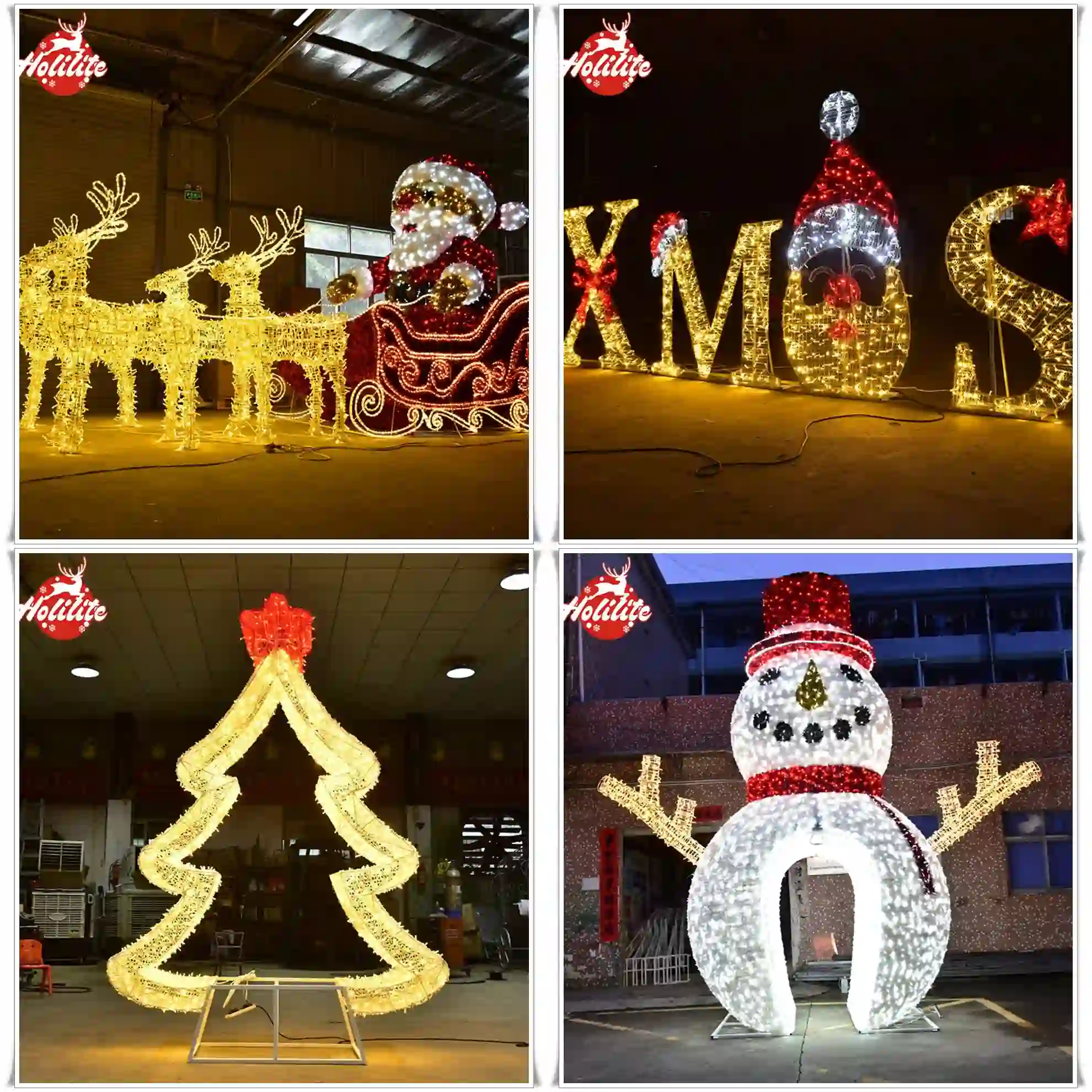
Illuminated letter decorations such as “XMAS” made it possible to express a clear message from a distance. Even without context, people could instantly recognize the meaning. This shift turned Christmas lights into a form of visual language, especially effective in large public areas.
The Christmas Tree as a Lighted Shape
Another important stage in the history of Christmas lights was the transformation of the Christmas tree itself. Instead of decorating natural trees, people began using light to outline the familiar triangular shape of a Christmas tree.
These tree-shaped outlines made the symbol visible at night and suitable for open spaces where real trees were impractical. The Christmas tree became less about natural materials and more about its recognizable form, defined by light.
From Decoration to Storytelling
As Christmas lights continued to evolve, they began telling stories rather than simply marking the season. Scenes featuring Santa Claus, reindeer, and sleighs became popular because they represented well-known Christmas narratives.
These illuminated scenes helped transform public spaces into storytelling environments. Children and families could recognize characters instantly, and the decorations invited emotional connection rather than passive viewing. Christmas lighting had become a way to share stories visually.
Christmas Lights as Shared Experiences
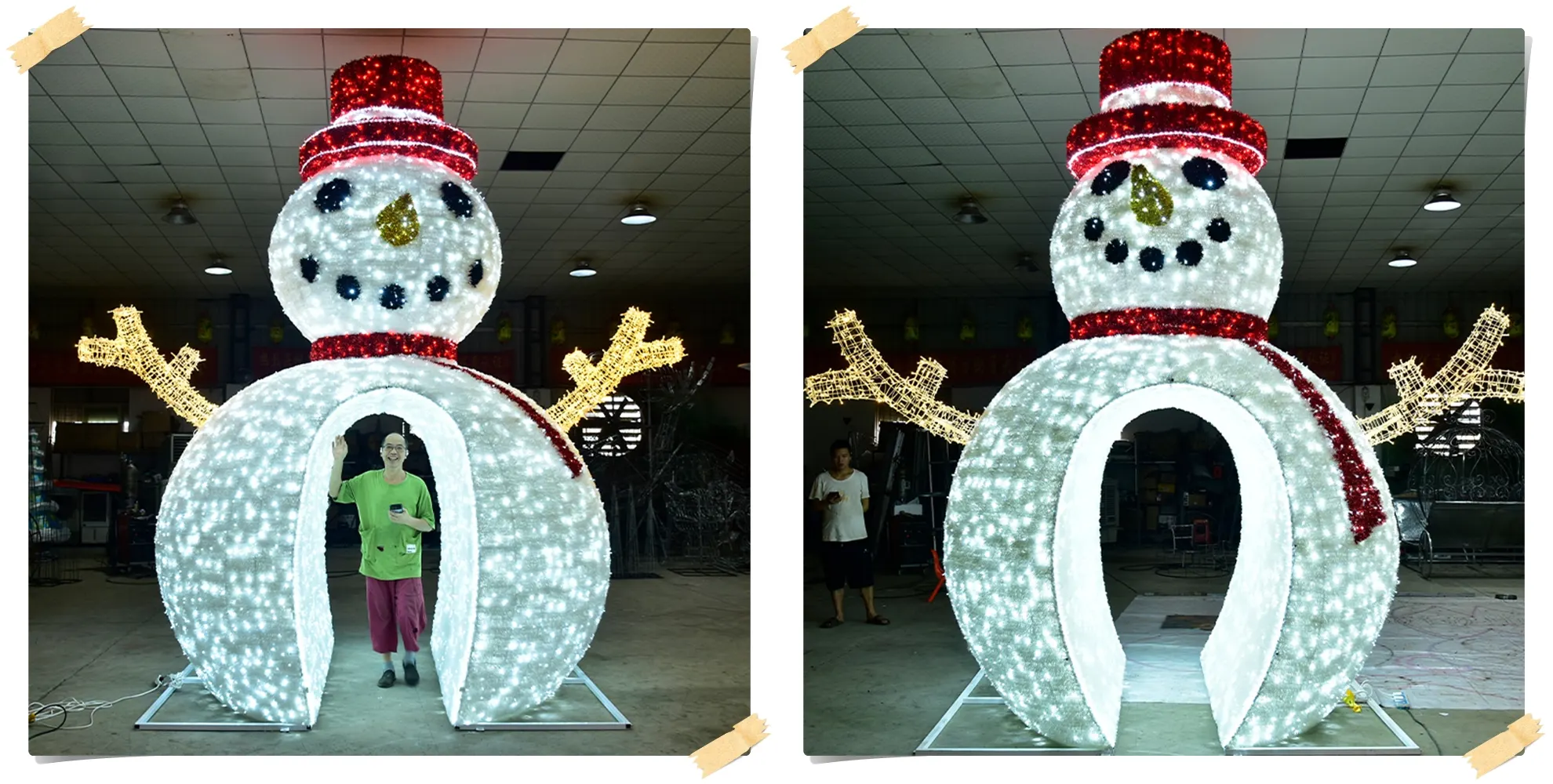
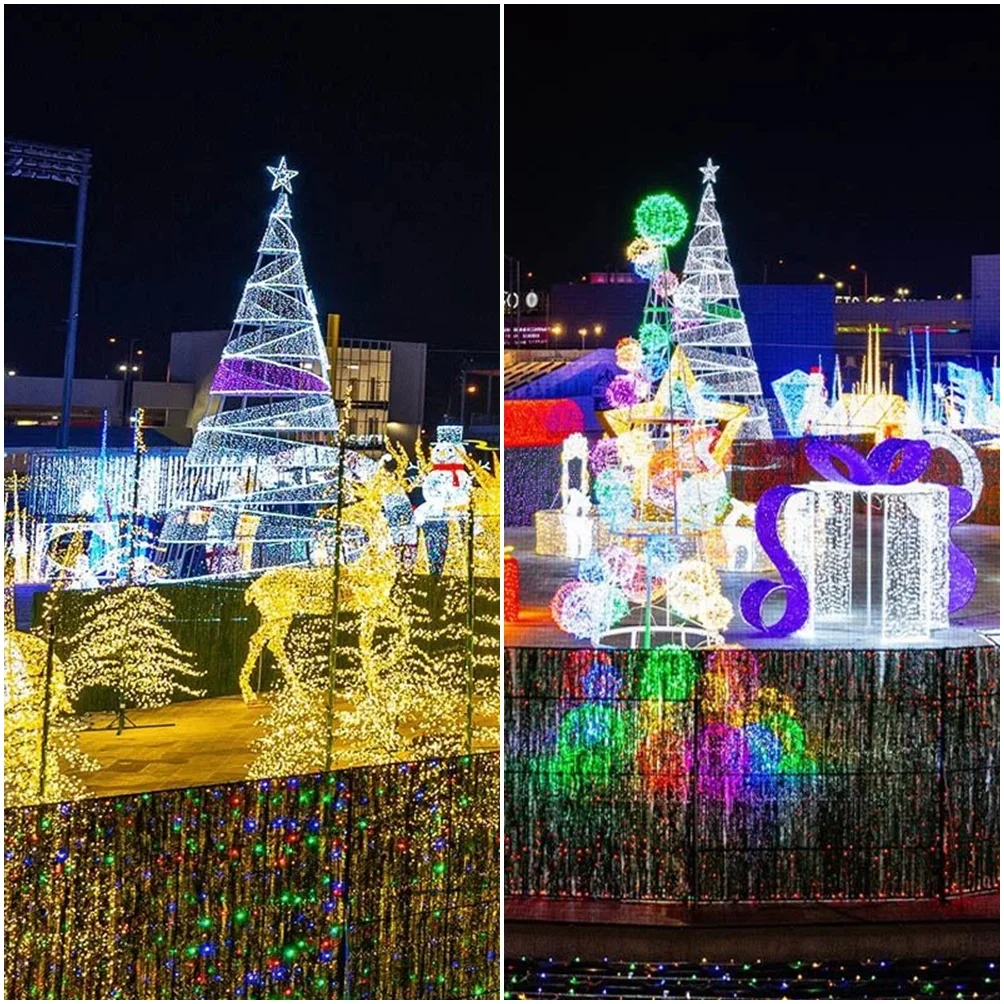
In modern celebrations, Christmas lights are no longer just decorations. They create experiences. People walk through illuminated displays, take photos, and gather around familiar shapes and scenes.
This shift shows how Christmas lights have moved from private symbolism to collective enjoyment. Light brings people together, encourages interaction, and turns ordinary spaces into festive destinations.
Why the History of Christmas Lights Still Matters
Looking back at the history of Christmas lights reveals more than changes in decoration styles. It shows how traditions adapt over time while keeping their core meaning.
From candles on trees to illuminated words, shapes, and storytelling scenes, Christmas lights have always been about more than brightness. They represent warmth, celebration, and shared moments—values that continue to define Christmas today.