What Is the Significance of a Candy Cane at Christmas?
The candy cane is one of the most recognizable visual symbols of Christmas. Its striped appearance, curved shape, and long association with the holiday season have helped it move far beyond its original role as a sweet. Today, it is widely used in trees, retail displays, public decorations, and large outdoor Christmas installations.
A Visual Symbol People Recognize Immediately
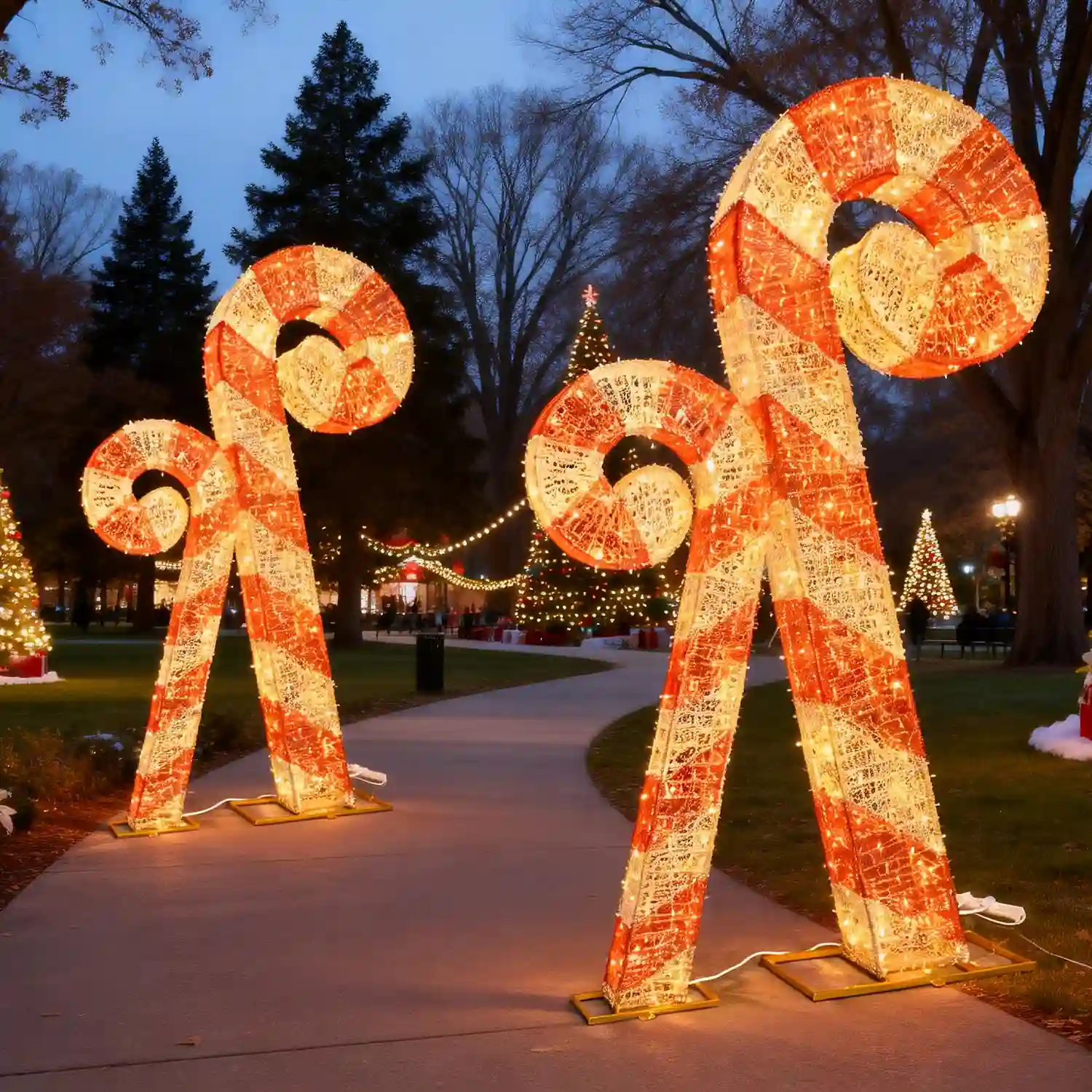
Candy cane decorations work especially well in Christmas displays because the shape is simple, repeatable, and easy to identify from a distance. That makes them suitable for both indoor holiday styling and large commercial outdoor projects.
From Seasonal Sweet to Decoration Motif
What gives the candy cane lasting relevance is not only tradition, but also its ability to function as a reliable design element in festive spaces, pathways, entrances, plazas, and themed holiday installations.
What is the significance of a candy cane at Christmas?
A candy cane represents Christmas tradition, festive identity, and one of the most recognizable visual symbols of the holiday. Its red-and-white stripes are strongly associated with the Christmas color system, while its curved shape makes it practical for hanging and display.
Beyond its original role as a sweet, the candy cane has become a standardized decorative element widely used in Christmas trees, retail displays, christmas lighting decorations, and large-scale holiday installations. Today, its significance lies less in symbolism alone and more in its function as a clear and repeatable design feature that instantly communicates “Christmas” in both private and commercial settings.
The History of the Candy Cane in Christmas Tradition
The candy cane has a long history in Christmas tradition. It began as a simple stick candy and gradually became associated with the holiday season. As its curved form became more common, it developed a stronger visual identity and eventually turned into a standard Christmas symbol.
Its popularity grew because it was easy to produce, easy to display, and easy to connect with festive settings. Over time, the striped red-and-white version became the most familiar form, and that appearance has remained dominant ever since.
What matters most for modern content is not only the exact origin story, but the fact that the candy cane has successfully moved from food culture into decoration culture. That transition is the reason the symbol still has strong search value today.
How the Candy Cane Became a Popular Christmas Decoration
The candy cane became a popular Christmas decoration because its form is clear, repeatable, and visually strong. In holiday design, the best decorative elements are often the ones people can recognize from a distance. Candy canes do that extremely well.
A star may represent Christmas broadly, and a Christmas tree may define the whole season, but a candy cane adds something different. It introduces rhythm, movement, and color contrast. The striped surface creates visual energy, while the hook-shaped top makes the silhouette more distinctive than a straight pole or standard ornament.
That is why candy cane decorations are widely used in entrances, pathways, malls, theme parks, public squares, and festive lighting projects. Even when scaled up into large outdoor installations, the symbol remains clear and effective.
From Sweet Symbol to Light Sculpture: How We Produce Candy Cane Christmas Decorations
As a Christmas decoration manufacturer, we see the candy cane not just as a seasonal icon, but as a highly adaptable design element for holiday lighting displays.
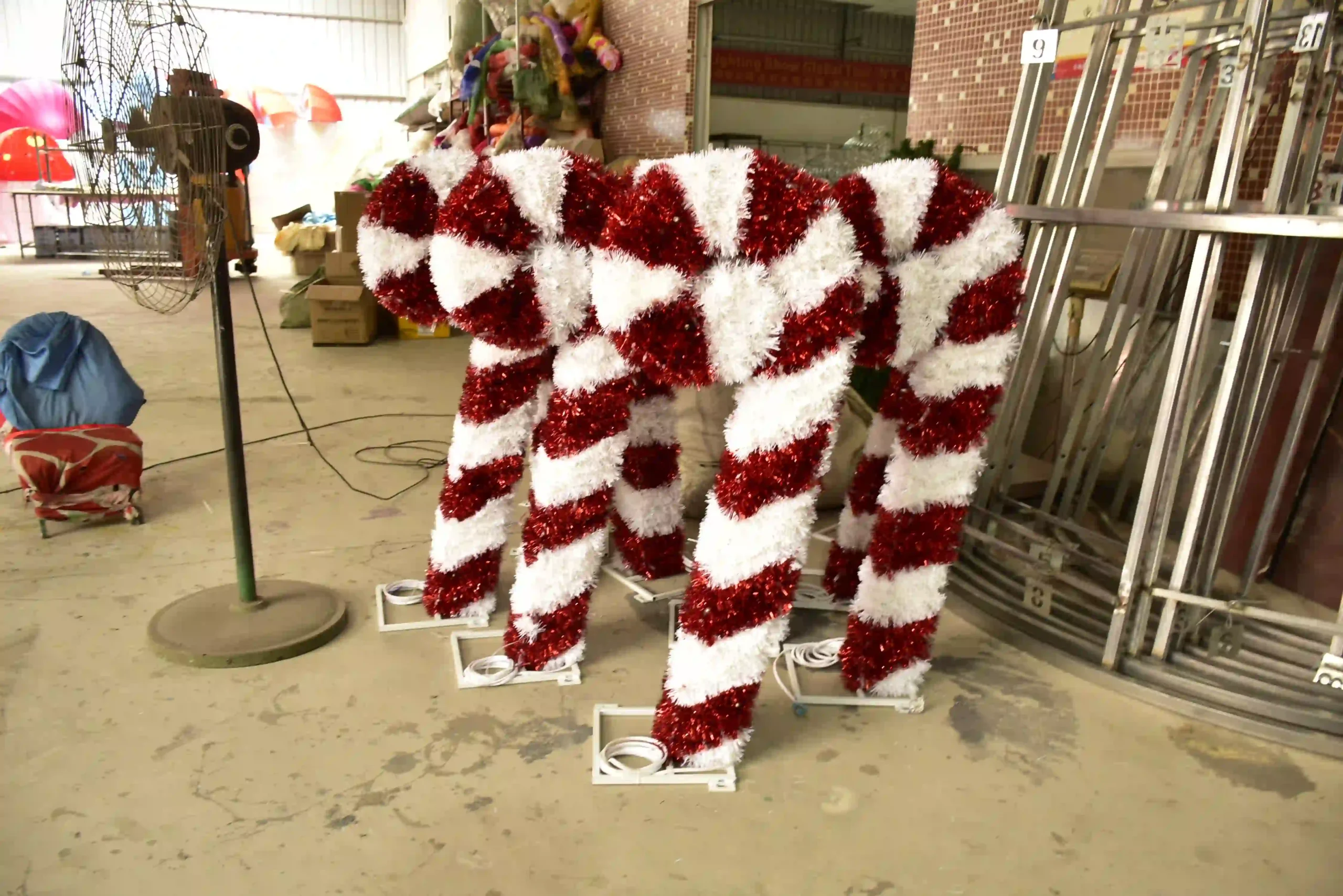
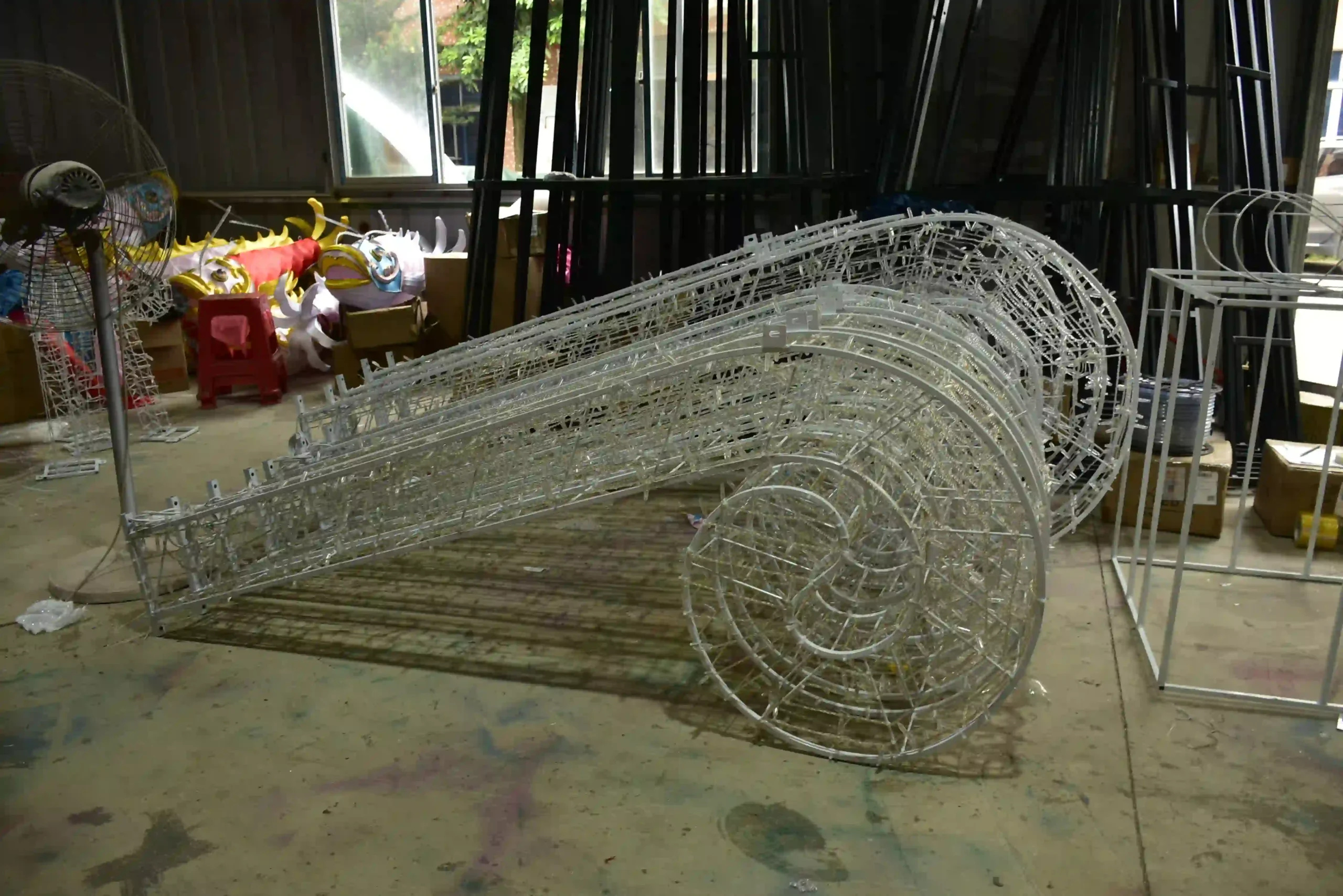
In production, a candy cane decoration usually begins with a metal frame structure. This provides the overall shape and ensures stability for indoor or outdoor installation. After the frame is formed, decorative surface materials are applied to build the classic red-and-white striped appearance. LED lighting is then integrated into the structure so the piece can function as a festive illuminated sculpture rather than a simple static prop.
This is why candy cane light sculptures are so common in modern Christmas projects. They preserve the traditional meaning of the candy cane while transforming it into a commercial decoration product that works in public spaces, shopping areas, event venues, and destination displays.
For large-scale Christmas programs, the candy cane is often one of the most efficient symbolic elements to produce because it can be repeated across different layouts without losing visual impact.
Frame Forming
The production starts with a strong metal frame that defines the candy cane outline and supports the full structure.
Surface Finishing
Decorative wrapping or surface materials are applied to create the classic striped look associated with Christmas.
LED Integration
Lighting is added to turn the product from a static form into an illuminated holiday sculpture suitable for display.
Project Installation
The finished decoration can be used as a single feature or repeated in groups for paths, entrances, plazas, and event zones.
Where Candy Cane Christmas Decorations Are Commonly Used
Candy cane Christmas decorations are commonly used in a wide range of holiday settings, including:
Final Answer: What Does a Candy Cane Represent at Christmas?
A candy cane represents Christmas tradition, festive joy, and one of the most recognizable visual symbols of the holiday season. Its significance comes from both cultural meaning and decorative power.
It began as a seasonal sweet, but it became much more than that. Today, the candy cane stands for the atmosphere of Christmas itself. That is why it continues to appear not only on trees and gifts, but also in large outdoor Christmas decorations, holiday lighting sculptures, and commercial festive displays around the world.