Outdoor Christmas Walkway Decorations: Layout Ideas for Festive Paths
During the Christmas season, outdoor walkways become one of the most important visual areas in parks, commercial streets, and public spaces. A well-designed path does more than provide access — it guides movement, creates atmosphere, and connects different parts of a holiday display.

Among many decoration elements, structured light installations and repeated visual forms are often used to shape a clear and continuous walkway experience.
Candy Cane in Christmas Culture
The candy cane is one of the most recognizable symbols of Christmas. Its origin can be traced back to Europe, where sugar sticks were shaped into a curved form and gradually became associated with the holiday season.
Over time, the red and white striped pattern became standardized. The color combination is visually strong and remains highly visible in both daytime and nighttime environments. This is one of the reasons why the candy cane has been widely adapted beyond food, appearing in decorations, lighting installations, and large-scale displays.
The curved top and elongated body also make the shape easy to repeat in sequence. When placed along walkways or open spaces, it creates a continuous visual pattern that fits naturally into Christmas-themed environments.
Today, the candy cane is no longer limited to small decorative items. It is frequently used in oversized formats for outdoor displays, especially in parks, public spaces, and commercial areas, where clear shapes and strong color contrast are needed to define space and enhance seasonal atmosphere.
Christmas Walkway Lighting Layout
Walkway decoration usually starts with lighting placement. Instead of random distribution, most outdoor Christmas paths follow a structured layout:
- Single-side arrangement for narrow paths
- Double-side alignment for wider walkways
- Consistent spacing to maintain visual rhythm
- Curved paths enhanced with continuous lighting flow
When lights are placed at regular intervals, the walkway naturally forms a guiding line. Visitors tend to follow the illuminated direction, especially in low-light environments such as parks or open outdoor spaces.
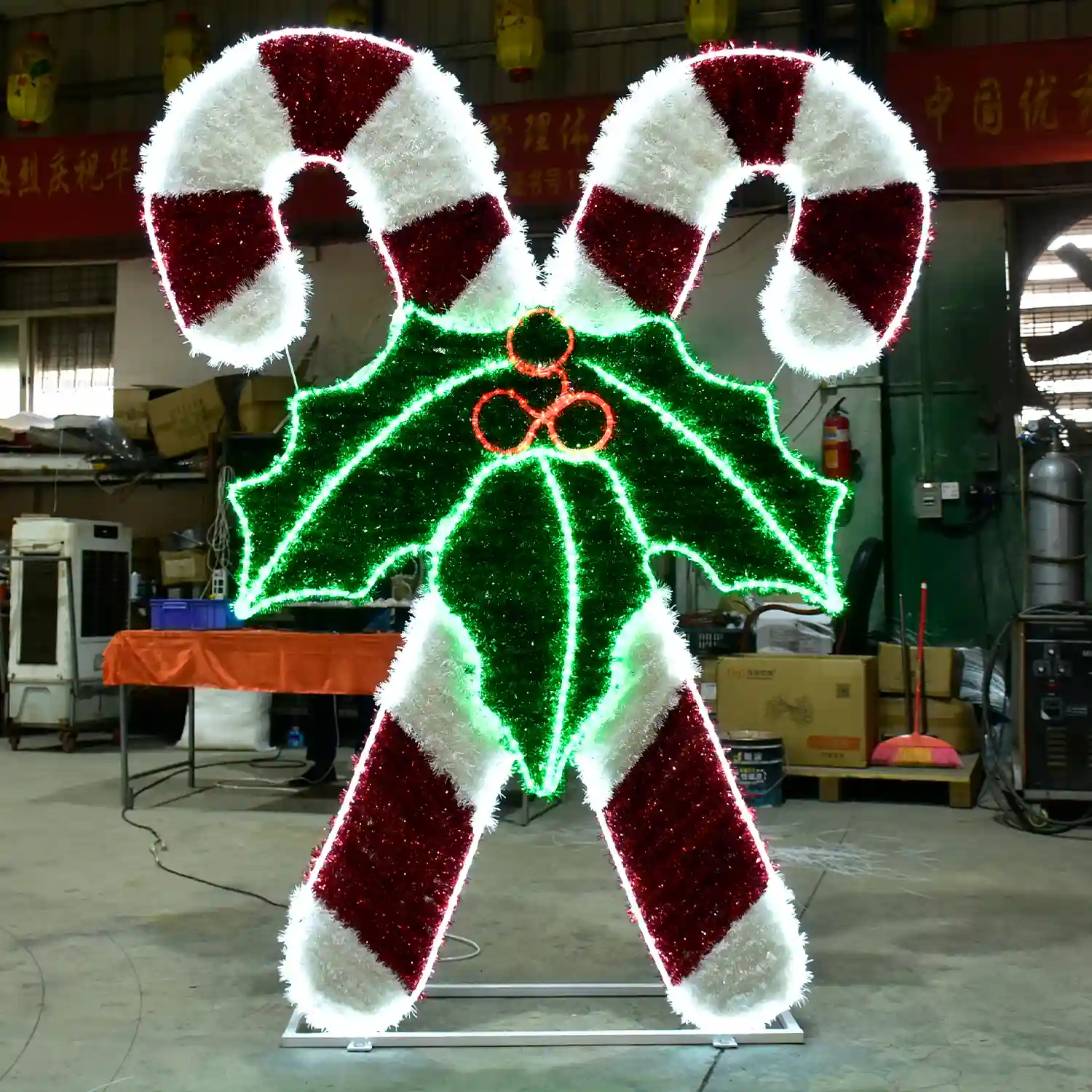
Candy Cane Decorations Along Pathways
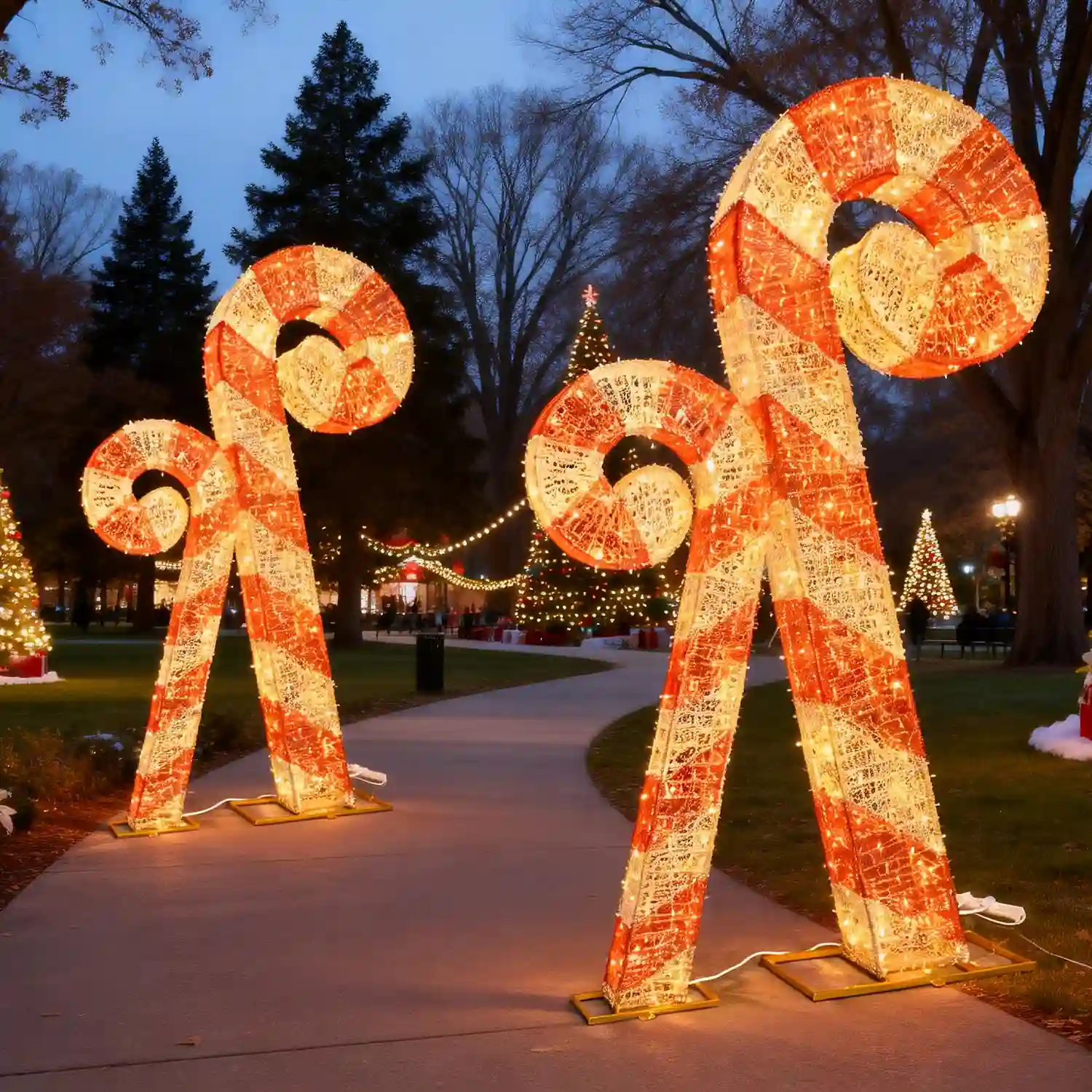
Candy cane–shaped decorations are commonly used along Christmas walkways due to their strong visual contrast and recognizable form.
The red and white color combination remains highly visible at night, while the curved top creates a repeating pattern when installed in sequence. When arranged along a path, this shape produces a consistent visual rhythm that connects one section of the walkway to another.
Compared to flat lighting or ground lights, vertical candy cane structures define the boundary of the path more clearly. This makes them suitable for both guiding movement and enhancing the festive atmosphere at the same time.
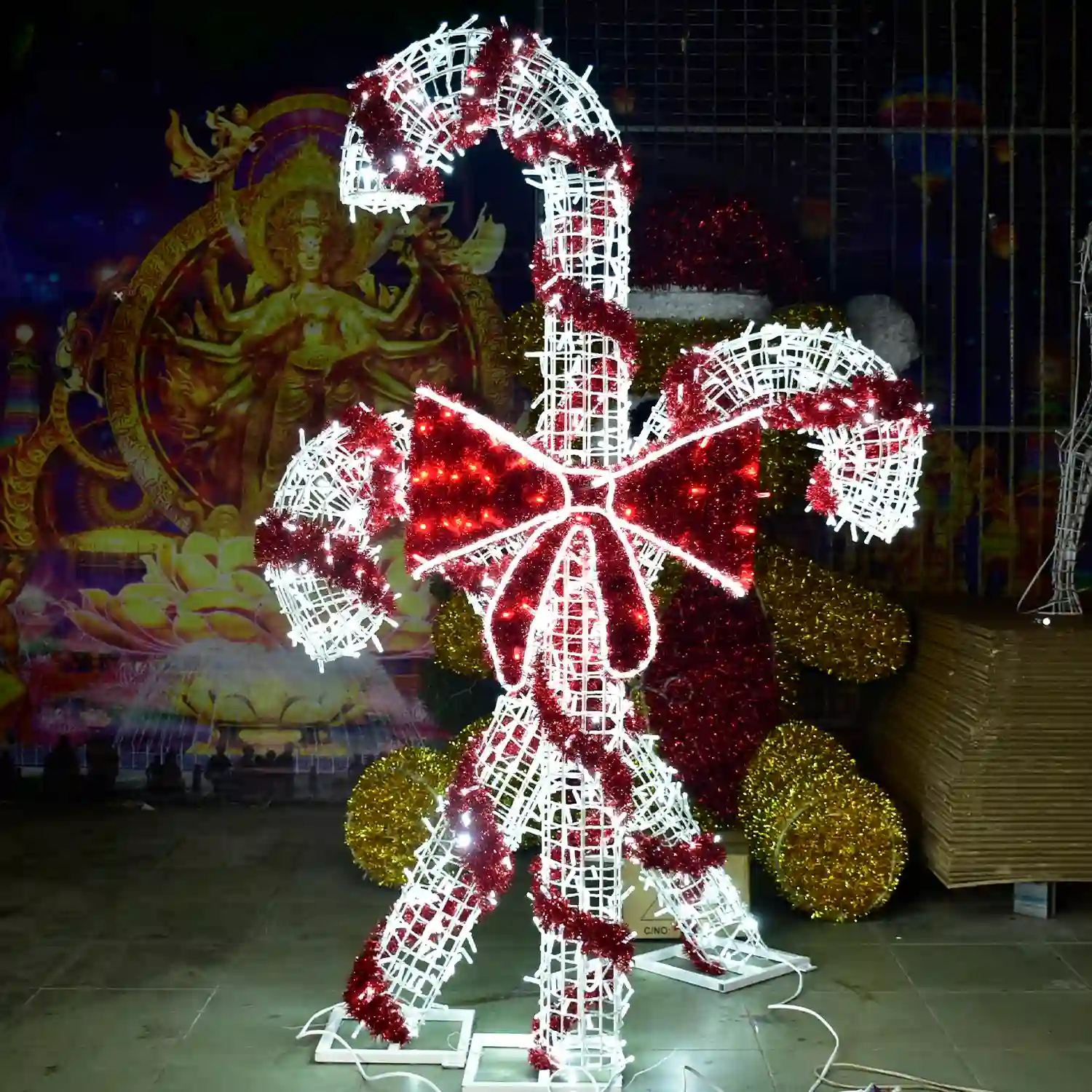
Large-Scale Decorations for Open Areas
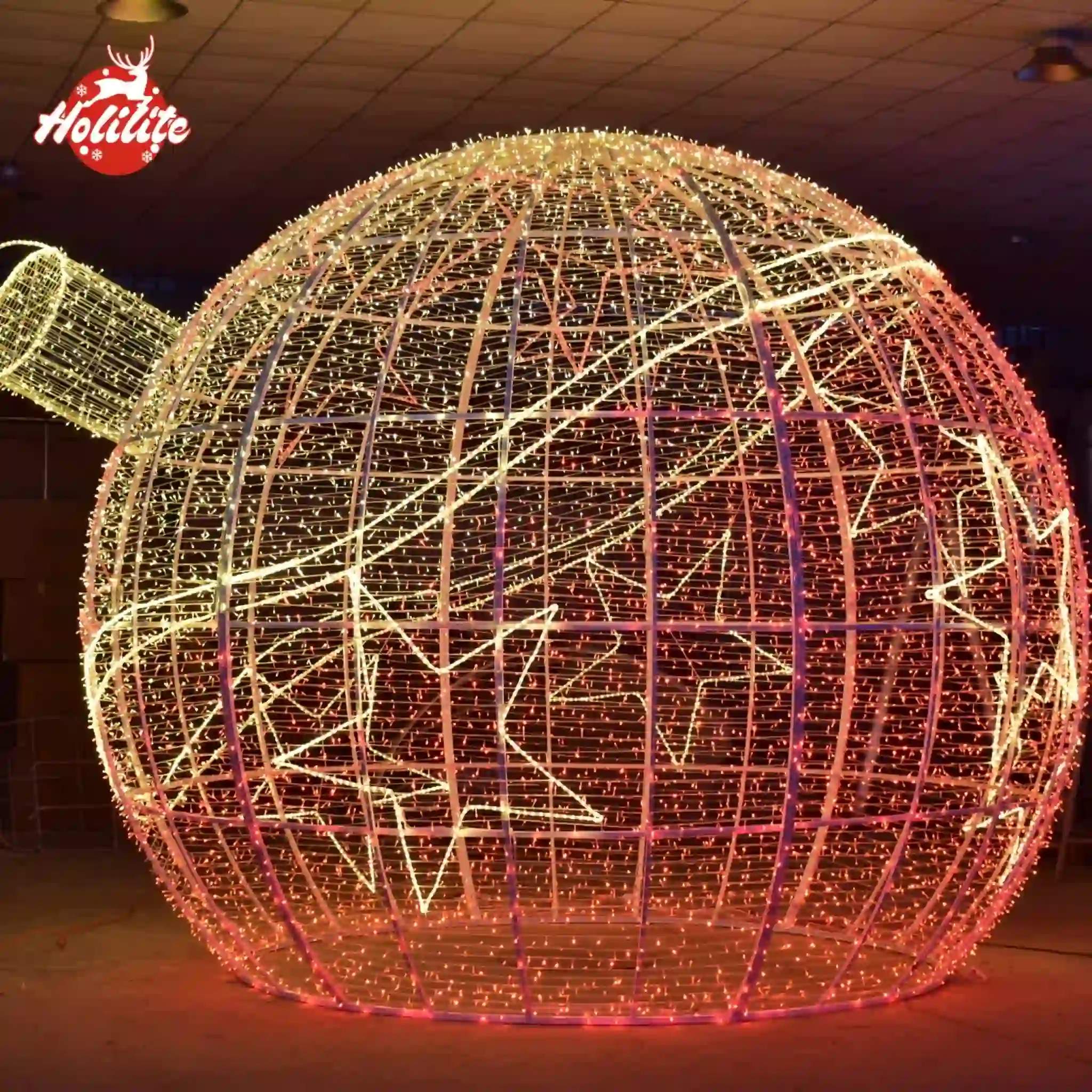
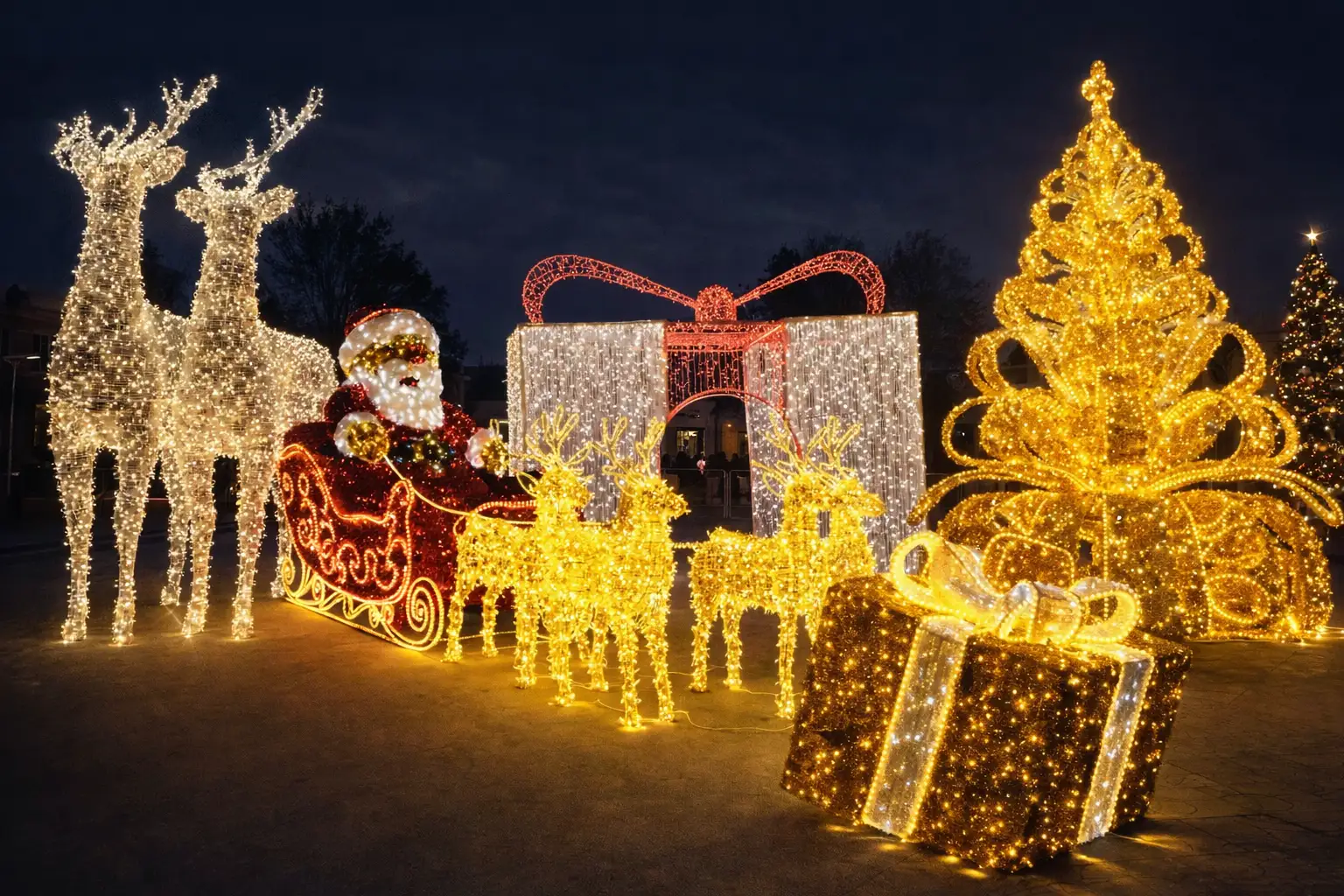
In larger outdoor environments such as parks or plazas, small decorative elements often get lost in the surrounding space. For this reason, oversized installations are frequently used.
Larger structures can be seen from a distance and help establish focal points within the environment. When combined with pathway lighting, they create a layered visual effect:
- Background: trees, ambient lighting
- Mid-ground: walkway decorations
- Foreground: large-scale installations
- Evening scenes become more immersive and visually connected
This layered setup makes the overall display more immersive, especially during evening hours.
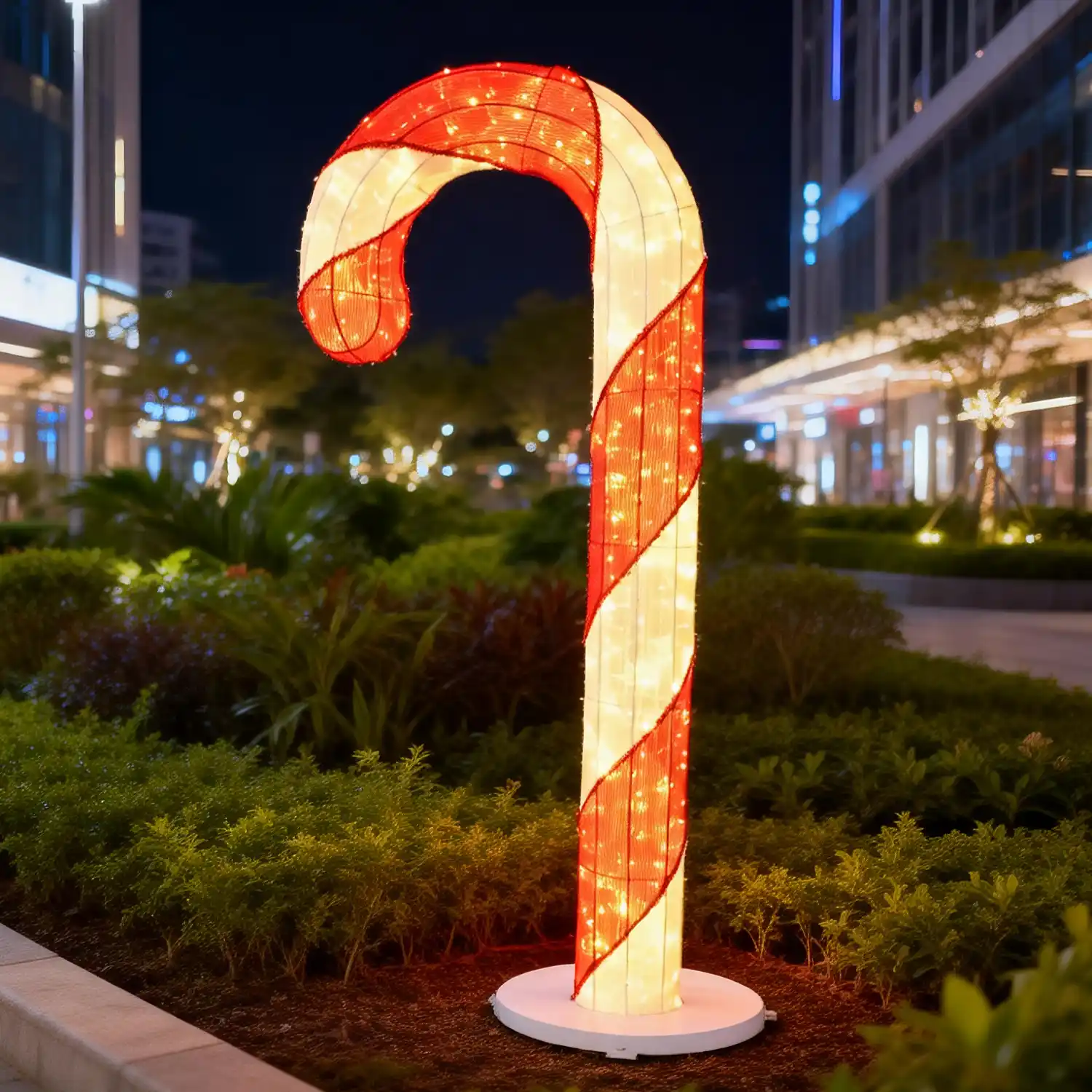
Commercial Walkways and Street Displays
In commercial areas, walkway decorations often serve both visual and functional purposes. Besides guiding pedestrian flow, they also contribute to the overall atmosphere of the space.
Compared to simple string lights, shaped light structures create stronger visual memory. Distinct forms are easier to recognize and more likely to become focal points within a street environment.
In shopping streets or outdoor retail spaces, decorated walkways often extend the visual experience beyond storefronts, making the entire area feel more connected and seasonal.
Feature Installations and Entry Points
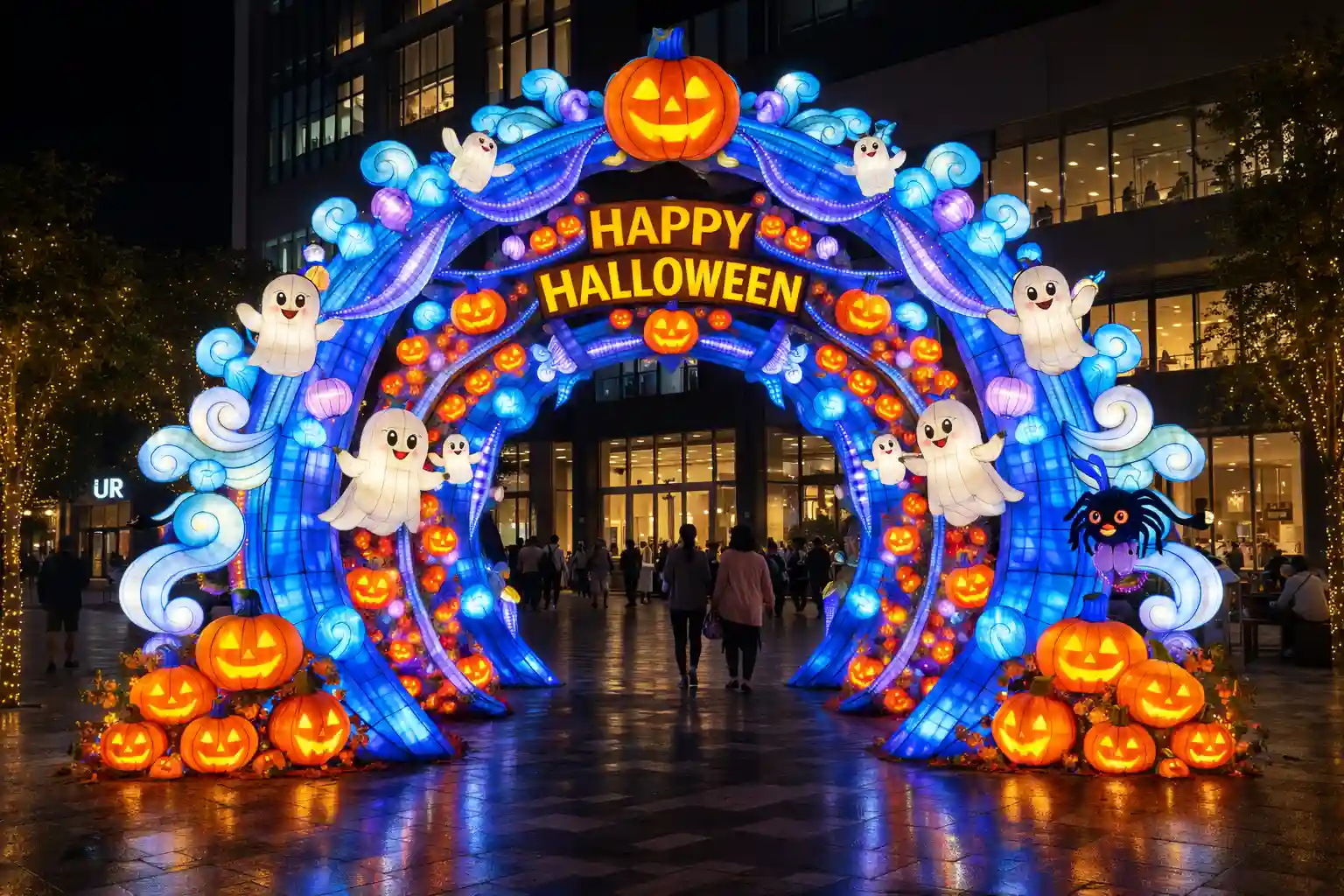
Certain sections of a walkway, such as entrances or intersections, are usually emphasized with larger or more complex designs.
Instead of linear placement, these areas often use:
- Crossed or mirrored structures
- Central decorative elements
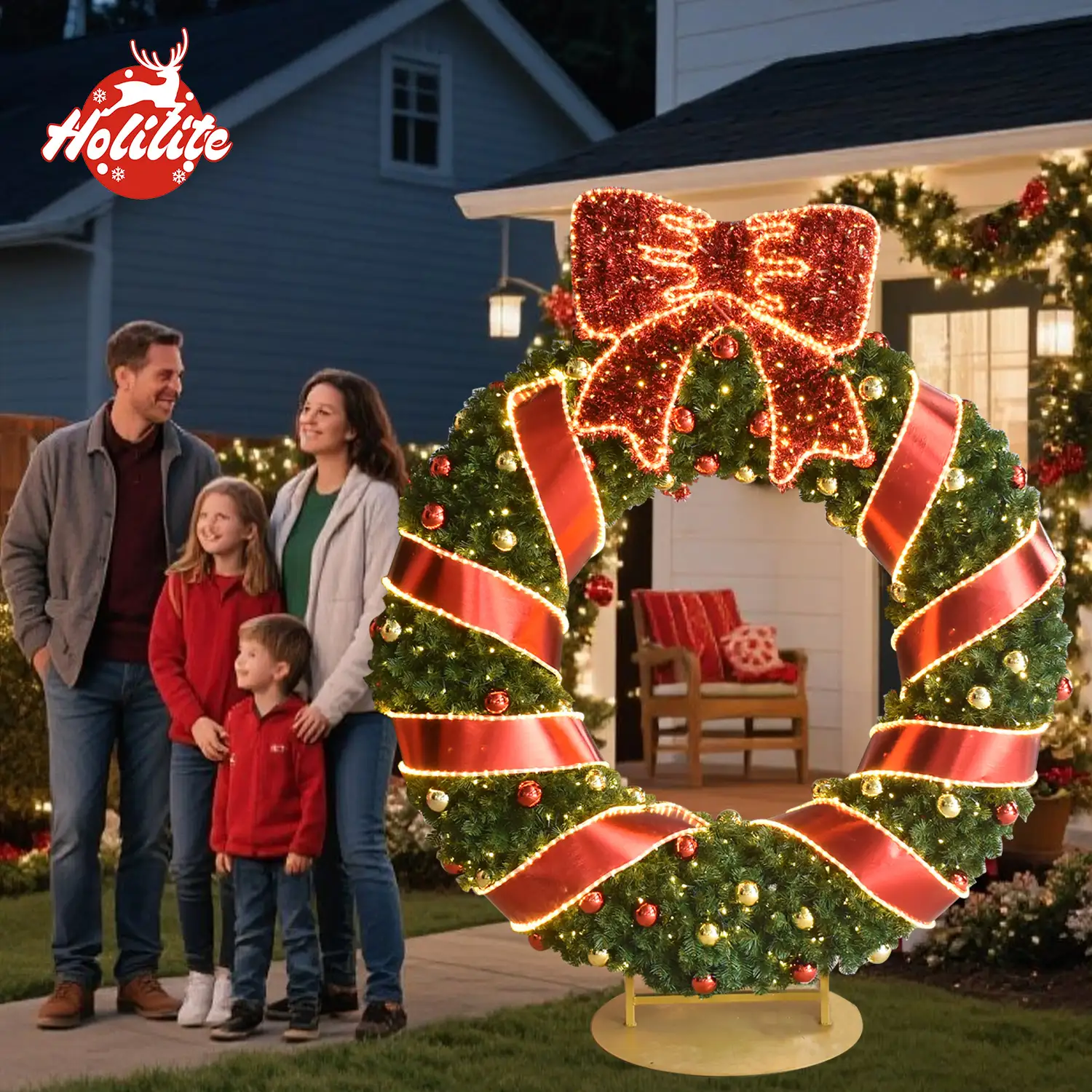
- Additional shapes such as bows or foliage
- Visual breaks that highlight key locations
These compositions create visual breaks along the path and highlight key locations within the display. Visitors naturally slow down or gather around these points, making them important parts of the overall layout.
Combining Structure and Light
Outdoor Christmas walkway decoration is not only about lighting intensity, but also about structure, spacing, and repetition.
When vertical elements, continuous lighting, and consistent layout are combined, the walkway becomes more than just a path. It turns into a guided visual experience that connects different parts of a holiday environment.
This approach is widely used in parks, public installations, and commercial outdoor spaces, where both atmosphere and movement need to be considered together.
Christmas Candy Cane Display Gallery