Halloween Lantern Displays: Bringing the Spirit of the Season to Light
What Is Halloween?
Halloween is celebrated every year on October 31 and is now one of the most recognizable seasonal festivals in Europe and North America. Although it has become highly commercial and entertainment-focused today, its roots are much older and deeper than simple costume parties or candy traditions.
The festival is widely associated with pumpkin lanterns, ghost imagery, witches, skeletons, black cats, and a festive atmosphere that mixes mystery, humor, and imagination. In many cities, Halloween is no longer limited to family celebrations. It has become an important seasonal theme for shopping centers, theme parks, public streets, festivals, resorts, and commercial events.
For businesses and event organizers, Halloween is also a highly visual holiday. It depends heavily on decoration, lighting, and themed installations to create atmosphere. That is why large-scale Halloween lantern displays have become increasingly popular.
The Cultural Meaning Behind Halloween
Halloween originated from ancient seasonal traditions connected with the transition from harvest time into winter. In early cultural belief, this moment of seasonal change was seen as a time when the boundary between the known world and the unknown world became thinner.
Over time, different customs blended together and evolved into the modern Halloween celebration. That is why Halloween carries a layered emotional tone. It is not only about being scary, but also about tradition, curiosity, and storytelling.
Lantern art fits naturally into this context. It transforms abstract cultural symbols into visible, illuminated structures. Instead of flat decoration, lantern displays create depth, scale, and visual continuity.
How Lantern Displays Fit into Halloween Culture
Halloween is a festival built on atmosphere. People are not only observing decoration, but entering a themed environment. Lantern structures allow designers to translate symbolic elements into immersive visual scenes.
A pumpkin becomes a sculptural focal point. A ghost becomes a floating illuminated figure. A witch scene becomes a narrative composition rather than a static image.
Lantern displays also allow flexible control of tone. Through structure design, color selection, and lighting intensity, the same theme can be presented as playful, neutral, or dramatic. This adaptability is important for different types of projects.
Examples of Custom Halloween Lantern Displays
1. Giant Pumpkin Lantern Displays
Pumpkin imagery is the most recognizable symbol of Halloween. A giant pumpkin lantern can be designed as a standalone centerpiece or combined into a full composition with stacked pumpkins, harvest elements, glowing faces, and layered lighting.
The expression can be cheerful, mysterious, classic, or exaggerated depending on the project style.
2. Ghost and Spirit Lantern Figures
Ghost-themed lanterns are highly adaptable and can be designed with different visual tones. By adjusting form, layering, and internal lighting, ghost figures can appear soft, floating, or visually dynamic.
These designs focus on movement perception and light diffusion, creating a more active nighttime effect.
3. Witch-Themed Lantern Scenes
Witch elements bring stronger narrative potential into lantern design. Instead of isolated figures, this type of display often builds a complete scene, including supporting elements such as moon shapes, tree silhouettes, and structured backgrounds.
This approach emphasizes composition and storytelling rather than single-object presentation.
4. Skeleton and Graveyard Lantern Installations
Skeleton and graveyard themes introduce a more structured and graphic visual language. The design usually focuses on contrast, repetition, and rhythm within the layout.
Elements such as skeletal forms, vertical structures, and layered depth help create a more intense visual atmosphere without relying on randomness.
5. Black Cat, Bat, and Spider Lantern Decorations
These secondary elements play a supporting role in overall design. They are used to connect larger installations and maintain visual continuity across the space.
Through repetition and placement, they help complete the thematic structure and avoid empty or disconnected areas in the layout.
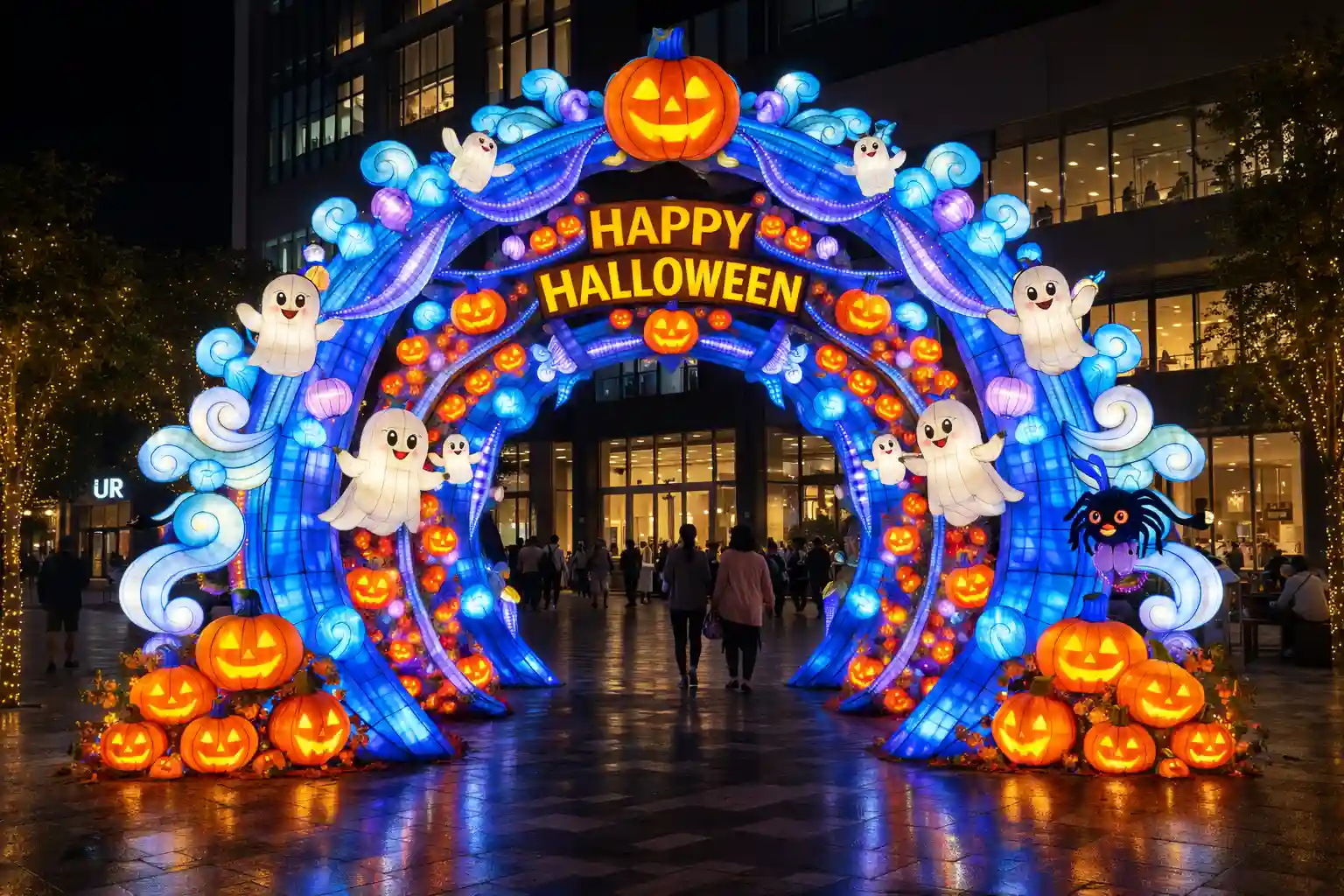
6. Halloween Entrance Arches and Landmark Lanterns
Entrance structures define the visual identity of the entire project. A well-designed lantern arch combines multiple symbolic elements into one integrated composition.
It serves as a focal point and establishes the tone of the environment from the first visual contact.
7. Family-Friendly Cartoon Halloween Lanterns
This design direction focuses on simplified shapes, softer expressions, and controlled color contrast. The goal is to maintain the Halloween theme while reducing visual intensity.
Rounded structures, balanced proportions, and bright lighting help create a more accessible and universally acceptable visual style.
Customization Options for Halloween Lantern Projects
Customization can be applied across multiple aspects of the project:
- overall theme concept
- structural dimensions
- element selection
- color system
- lighting configuration
- installation layout
- branding integration
Each project can be adjusted according to site conditions and design objectives, ensuring consistency between concept and final execution.
Bringing Halloween Culture to Life Through Lantern Art
Halloween is a visually driven festival built on symbolic expression. Lantern displays provide a way to transform these symbols into structured, illuminated environments.
By combining cultural understanding with design execution, Halloween lantern installations can deliver clear visual impact while maintaining thematic coherence.
- Request A Quote! We'll respond as soon as possible(within 12 hours)