Piano Decor: How Piano Light Sculptures Support Music Culture and Promotion
In modern public spaces and cultural events, piano decor has taken on a new role. Rather than decorating the piano itself, piano decor is increasingly used to support, promote, and visually amplify piano culture—especially through large-scale piano light sculptures.
These installations transform the piano from a musical instrument into a powerful visual symbol that attracts attention, conveys cultural value, and enhances music-related environments.
The Piano as the Core of Piano Decor
The piano has long been associated with music education, artistic discipline, and cultural heritage. Its shape is universally recognized and emotionally resonant. Because of this, the piano naturally became a central element in piano decor for festivals, exhibitions, and public displays.
In many settings, however, real pianos alone are not visually prominent enough—particularly in outdoor or night-time environments. Piano decor solves this problem by giving the piano a stronger visual presence without replacing its musical role.
What Is Piano Decor in the Form of Light Sculpture?
In contemporary projects, piano decor often appears as a piano light sculpture—a large, illuminated structure shaped like a piano. This type of piano decor is not designed for performance. Instead, it serves as a visual extension of piano culture.
A piano light sculpture is used to:
Highlight piano-themed spaces or events
Attract visitors from a distance
Create a strong association with music and performance
Act as a promotional landmark for piano-related activities
Through light and scale, piano decor becomes a communication tool rather than a functional instrument.
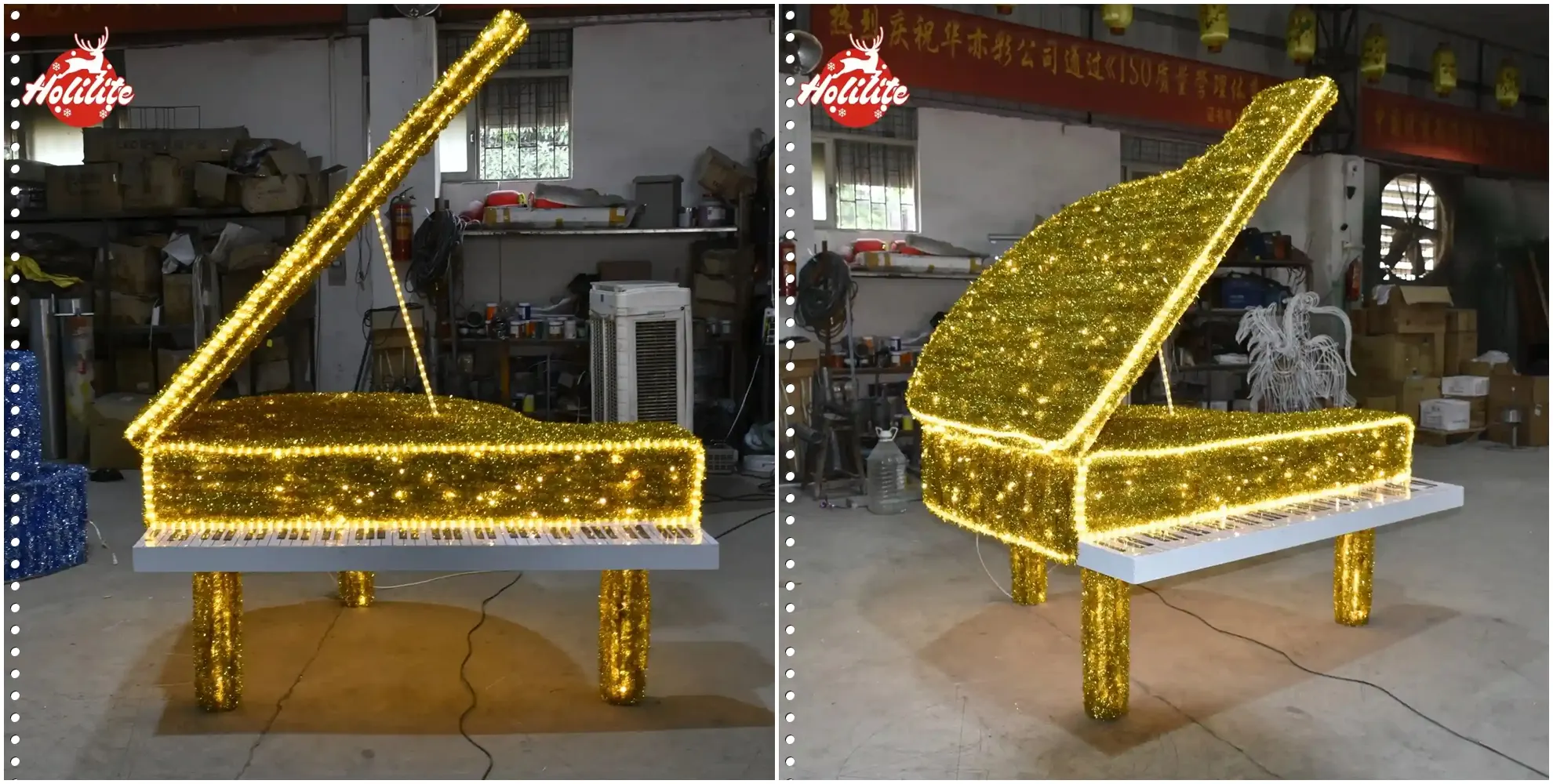
How Lighting Enhances Piano Decor
Lighting is what allows piano decor to function effectively in public environments. By outlining the piano’s form and adding internal illumination, the sculpture becomes visible, expressive, and engaging—especially after dark.
Well-designed piano decor using light can:
Guide audiences toward concert halls or performance areas
Enhance the atmosphere surrounding live piano performances
Encourage photography and social sharing
Strengthen the overall identity of music-focused events
In this way, piano decor supports the piano by creating context and anticipation.
Piano Decor Working Together with Real Pianos
One of the most effective applications of piano decor is its use alongside real pianos. The illuminated sculpture draws attention and sets the mood, while the real piano delivers the musical experience.
This combination allows:
Visual attraction through large-scale piano decor
Cultural depth through live or displayed instruments
A clear narrative from promotion to performance
Rather than competing with the piano, piano decor enhances its visibility and cultural impact.
Where Piano Decor Is Commonly Used
Today, piano decor is widely applied in:
Music festivals and cultural celebrations
Piano exhibitions and brand promotions
Shopping malls hosting music-themed events
Public squares and outdoor performances
Educational spaces focused on music and arts
In each of these environments, piano decor acts as a visual ambassador for piano culture.
Piano Decor as a Cultural and Promotional Tool
At its core, piano decor is not about decoration alone. It is about making piano culture visible in shared spaces. By combining the familiar piano form with sculptural scale and lighting, piano decor communicates music, education, and artistry without relying on language.
This is why piano decor has become an effective tool for cultural promotion, audience engagement, and event visibility.
Conclusion: Piano Decor That Amplifies the Piano Itself
Piano decor does not decorate the piano—it amplifies it. Through piano light sculptures, music culture gains visibility, accessibility, and emotional impact in modern public spaces.
By supporting real instruments, performances, and piano-themed environments, piano decor helps the piano reach broader audiences while preserving its cultural meaning.